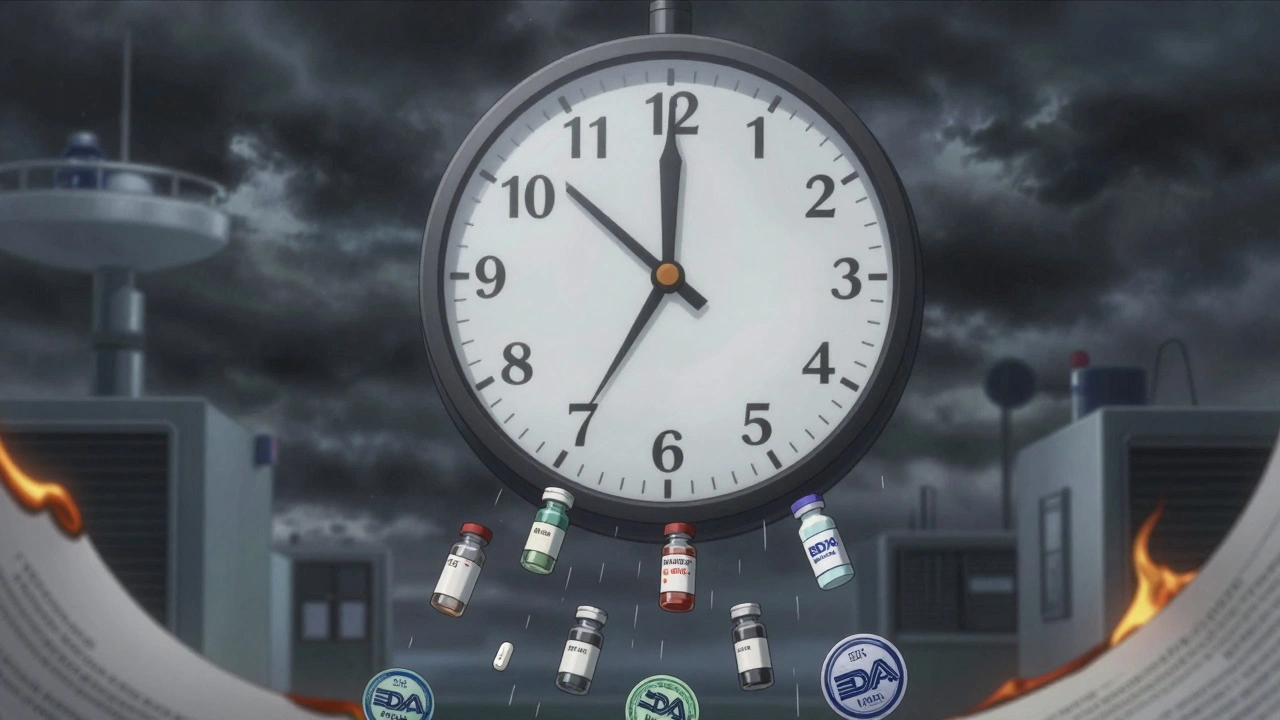
Most people assume that when a drug gets approved, it has 20 years of protection before generics can appear. That’s not how it works. The 20-year patent term starts when the patent is filed-often years before the drug even reaches the market. By the time the FDA approves it, half the clock may already be gone.
Why the 20-Year Clock Starts Before the Drug Is Even Sold
Drug patents are filed during early development, sometimes as early as Phase I clinical trials. That’s because patent law requires you to file before publicly disclosing the invention. The average time from patent filing to FDA approval is 7 to 10 years. So if a company files a patent in 2015 and gets approval in 2023, they’ve already used up 8 years of their 20-year term. That leaves just 12 years of market exclusivity, and even that’s not guaranteed.This delay isn’t a glitch-it’s built into the system. Clinical trials take years. Safety data must be collected. Regulatory reviews are slow. By the time a patient can buy the drug, the patent clock is already ticking down.
How the Patent Term Extension (PTE) Works
To make up for lost time, the Hatch-Waxman Act of 1984 lets drugmakers apply for a Patent Term Extension (PTE). This can add up to 5 extra years of protection-but there’s a catch. The total time a drug has market exclusivity, from FDA approval to patent expiry, can’t exceed 14 years.Here’s how it breaks down: If a drug was approved in 2020 and the original patent expires in 2027, the company can ask for a 3-year extension to push the expiry to 2030. But if the patent would have expired in 2031 anyway, the extension is capped at 14 years from approval-so the patent expires in 2034, not 2031.
There’s another deadline: the company must file for PTE within 60 days of FDA approval. Miss that window, and they lose the extension forever. Many smaller firms miss it because the paperwork is complex and the timeline is tight.
Other Layers of Protection Beyond the Patent
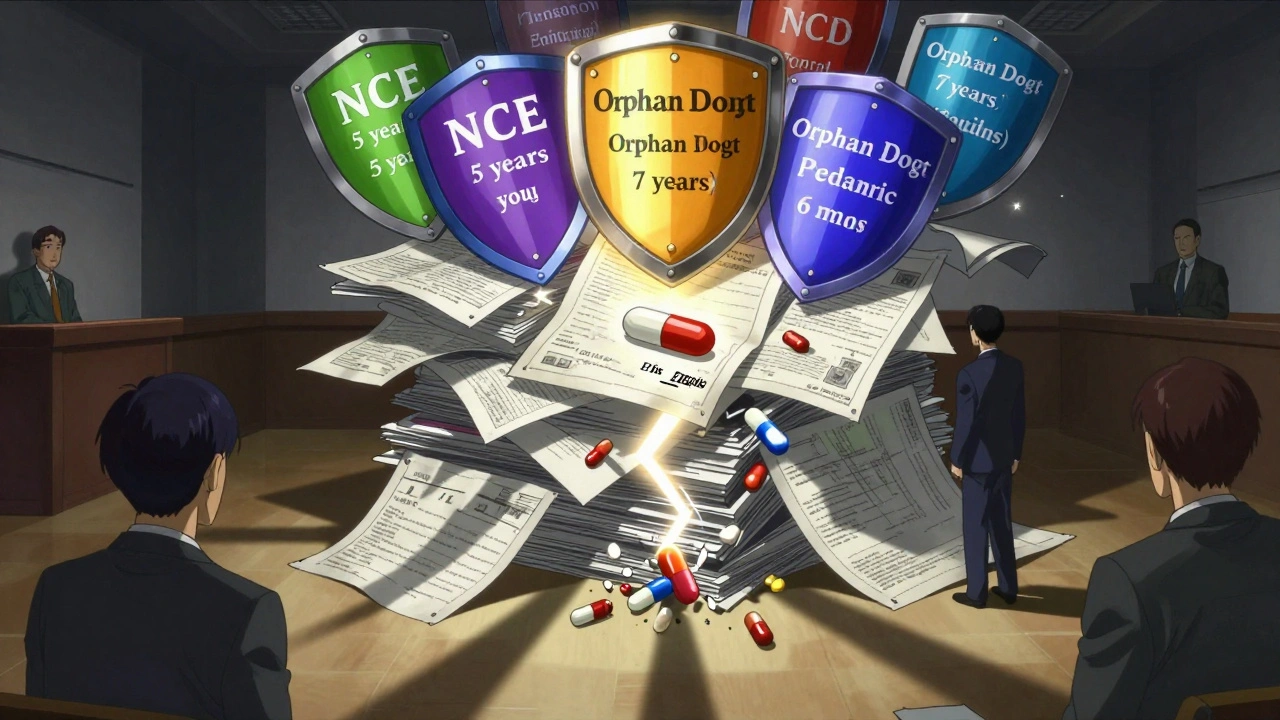
Patents aren’t the only thing blocking generics. The FDA gives out separate exclusivity periods that run parallel to patents:- New Chemical Entity (NCE) exclusivity: 5 years. During this time, the FDA can’t even accept a generic application, no matter what the patent says.
- Orphan Drug Exclusivity: 7 years for drugs treating rare diseases (fewer than 200,000 U.S. patients).
- New Clinical Investigation Exclusivity: 3 years for new uses, dosages, or formulations that require new clinical trials.
- Pediatric Exclusivity: 6 months added to any existing patent or exclusivity period if the company studies the drug in children.
These don’t replace patents-they stack on top. A drug might have a patent expiring in 2028, but if it has NCE exclusivity until 2030 and pediatric exclusivity added on, generics still can’t enter until 2030. This is why some drugs stay brand-only for over a decade, even after their main patent expires.
The Patent Cliff: What Happens When Protection Ends
The moment a drug’s last patent or exclusivity expires, the market shifts fast. Generic manufacturers rush in. Within six months, generics often capture 30-40% of sales. By 18 months, they take over 90% for small-molecule drugs.Price drops follow. Eliquis (apixaban) lost its patent in December 2022. Within a year, its average wholesale price fell 62%. Patients who paid $50 co-pays for the brand now pay $10 for generics. But sometimes, insurance plans don’t switch immediately. One patient reported in an FDA public comment that their co-pay jumped from $50 to $200 during the 6-month pediatric exclusivity extension-because the insurer still classified the brand as the only covered option.
Biologics (like Humira or Enbrel) are slower. Their generics, called biosimilars, take longer to get approved because they’re more complex to replicate. Even after patent expiry, biosimilars often capture only 40-60% of the market after two years.
How Companies Stretch Protection: The Evergreening Strategy
Big pharma doesn’t wait for patents to expire. They file new ones-on delivery methods, salt forms, packaging, or combination therapies. This is called evergreening.Take Tagrisso (osimertinib). Its original patent expired in 2026, but the company filed additional patents on combination therapies and dosing methods. Now, patent protection stretches to 2033. The FTC says this tactic delays generic entry by 2-3 years on average.
These secondary patents are controversial. Critics say they’re not about innovation-they’re about market control. The American Medical Association has called for stricter limits on patent thickets, where dozens of overlapping patents block competition.
How Generic Companies Fight Back
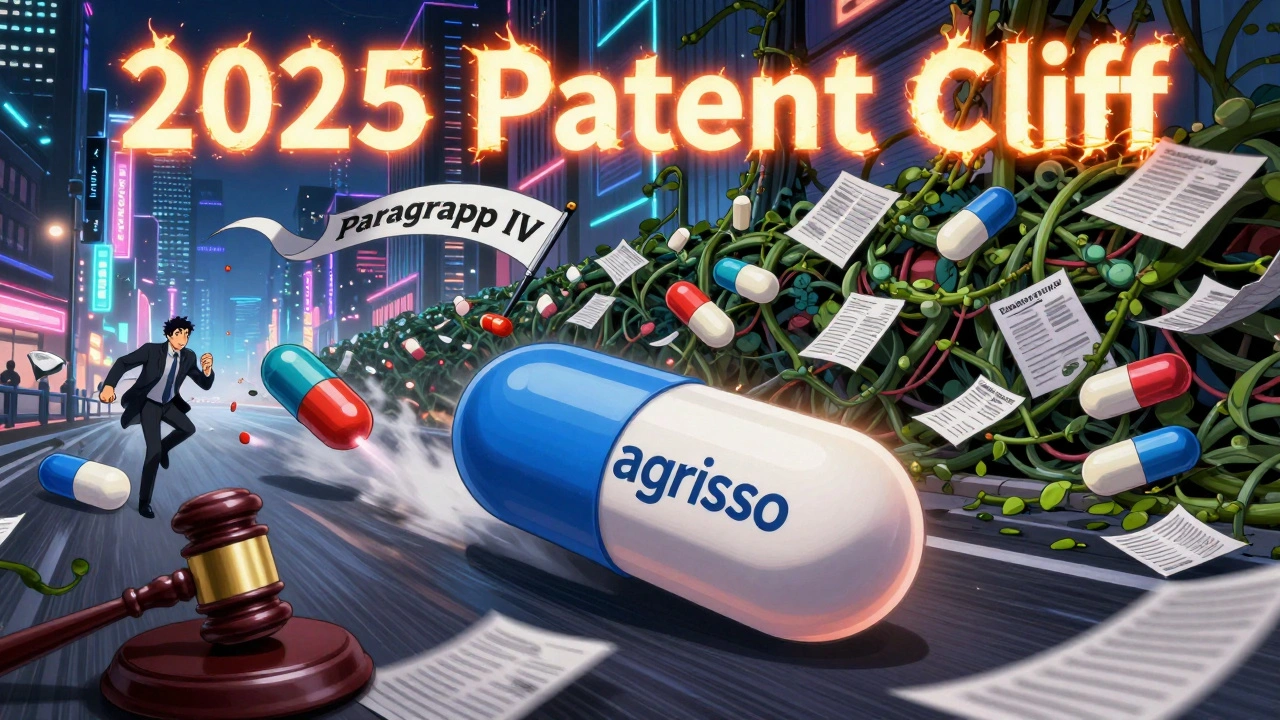
Generic makers don’t wait. They challenge patents before they expire. Under the Hatch-Waxman Act, a generic company can file an “Paragraph IV certification,” claiming the patent is invalid or won’t be infringed. If they’re the first to file, they get 180 days of exclusive market access-no other generics can enter during that time.That’s why you’ll often see one generic hit the market first, then others follow after 6 months. But the innovator can sue, triggering a 30-month stay that blocks FDA approval. Lawsuits can drag on for years. The FTC found that while generics not sued get approved in about 25 months, those caught in litigation wait an average of 37 months.
Patent challenges are now common. Over 60% of pharmaceutical patents filed since 2019 have been challenged through the Patent Trial and Appeal Board (PTAB). Many of these challenges succeed, knocking out patents that were supposed to block generics.
What’s Changing in 2025 and Beyond
New rules are coming. In 2024, the USPTO launched a modernization effort to automate Patent Term Adjustment calculations, making the process faster and more transparent. But Congress is also looking at cutting extensions. The proposed “Restoring the America Invents Act” would eliminate some PTA credits, potentially shortening market exclusivity by 6-9 months.Meanwhile, the World Health Organization is pushing for global patent term reductions to 15 years, arguing that 20 years is too long for life-saving drugs. The pharmaceutical industry fights back, saying the average $2.3 billion cost to develop a drug justifies the full term.
One thing’s clear: 2025 is the peak year for patent expirations. Evaluate Pharma estimates $62 billion in revenue will vanish this year alone. Drugs like Humira, Eliquis, and Stelara are all losing protection in the next 18 months. The next wave includes blockbuster drugs for diabetes, heart disease, and cancer.
How to Find When a Specific Drug’s Patent Expires
The FDA’s Orange Book is the official source for U.S. patent and exclusivity data. Every approved drug listed there shows:- Patent numbers and expiration dates
- Exclusivity periods
- Which patents are being challenged
Third-party tools like DrugPatentWatch and LexisNexis provide more detailed analysis, including litigation status and expected generic entry dates. For patients and pharmacists, knowing the exact expiration date helps anticipate price drops and insurance changes.
Don’t assume the expiration date on the box is accurate. That’s just the patent number. The real date depends on extensions, exclusivity, and legal battles. Always check the Orange Book or a trusted drug database.
Do all drug patents expire exactly 20 years after filing?
No. The 20-year term is the starting point, but most drugs get extensions. Patent Term Extension (PTE) can add up to 5 years, and regulatory exclusivity (like NCE or pediatric) can delay generics even longer. The actual time a drug is protected is usually between 7 and 14 years from FDA approval.
Can a drug still be protected after its patent expires?
Yes. Even if the patent expires, other forms of protection may still be in place. New Chemical Entity (NCE) exclusivity blocks generics for 5 years. Orphan Drug exclusivity lasts 7 years. Pediatric exclusivity adds 6 months to any existing protection. These are separate from patents and can delay generic entry even when no patent remains.
Why do some generic drugs cost more than the brand after the patent expires?
It’s usually not the drug’s fault-it’s the insurance plan. Some insurers require patients to try the brand first, even after generics are available. Others don’t update their formularies quickly. In rare cases, a generic may cost more if it’s a new entrant with limited competition. But over time, prices drop sharply as more generics enter the market.
What’s the difference between a patent and exclusivity?
A patent is a legal right granted by the USPTO that prevents others from making, using, or selling the invention. Exclusivity is a regulatory protection granted by the FDA that prevents other companies from getting approval for a generic version, regardless of patent status. Patents can be challenged in court; exclusivity cannot.
How do biosimilars differ from generic drugs in terms of patent expiration?
Biosimilars are not exact copies like small-molecule generics. They’re complex biological products that require additional testing and FDA approval. Their patents are often more layered and harder to challenge. Even after patent expiry, biosimilars take longer to gain market share-typically 40-60% after two years, compared to 90% for small-molecule generics.
What to Expect in the Next Few Years
The next five years will see the largest wave of patent expirations in history. $268 billion in revenue is projected to vanish between 2023 and 2028. 2025 is the peak year. Drugs like Humira, Eliquis, and Stelara are already losing protection. Next up: drugs for Alzheimer’s, multiple sclerosis, and severe asthma.For patients, this means lower prices and more access. For insurers, it means big savings. For pharmaceutical companies, it means scrambling to develop new drugs or extend existing ones. The system is designed to reward innovation-but it’s also designed to let competition in, eventually. Understanding the timeline helps everyone plan better.




Honestly, I had no idea patents started ticking before the drug even hit shelves. Makes sense now why some meds stay crazy expensive for so long.
Just goes to show how broken the system is.