
When it comes to losing weight with medication, the landscape has changed dramatically in the last few years. If you’ve been following weight loss news, you’ve probably heard a lot about GLP-1 agonists-drugs like Wegovy, Zepbound, and Saxenda. They’re being called game-changers. But what about the older weight loss pills you might have heard of before, like phentermine or orlistat? Are they still worth considering? The truth isn’t as simple as ‘newer is better.’ It’s about matching the right tool to your body, budget, and lifestyle.
How GLP-1 Agonists Actually Work
GLP-1 agonists mimic a natural hormone your body makes after eating. This hormone, called glucagon-like peptide-1, tells your brain you’re full and slows down how fast your stomach empties. It also helps your pancreas release insulin when needed, which is why these drugs were first developed for type 2 diabetes.
Today, they’re used for weight loss because they reduce hunger so powerfully. You don’t feel the urge to snack, eat larger portions, or reach for high-calorie foods. The result? People eat less-naturally, without constant willpower battles.
The most common GLP-1 agonists for weight loss are:
- Semaglutide (Wegovy): Once-weekly injection, 2.4 mg dose
- Tirzepatide (Zepbound): Once-weekly injection, dual GLP-1 and GIP agonist, up to 15 mg
- Liraglutide (Saxenda): Daily injection, 3.0 mg dose
There’s also an oral version of semaglutide called Rybelsus, but it’s only approved for diabetes-not weight loss-so it’s not used for that purpose in most cases.
How Older Weight Loss Drugs Work
Before GLP-1 agonists, the FDA-approved weight loss medications were mostly designed to suppress appetite or block fat absorption. They work differently-and often less effectively.
- Orlistat (Xenical, Alli): Blocks about 30% of dietary fat from being absorbed. The unabsorbed fat passes through your system, which can lead to oily stools and frequent bathroom trips.
- Phentermine-topiramate (Qsymia): Combines a stimulant (phentermine) with an anti-seizure drug (topiramate) that reduces appetite and cravings. It can cause dry mouth, tingling in hands and feet, and increased heart rate.
- Naltrexone-bupropion (Contrave): Targets brain reward pathways to reduce food cravings. It’s not a stimulant, but it can cause nausea, headaches, and trouble sleeping.
- Phentermine: A short-term stimulant used for a few weeks at a time. It’s cheap and effective for some, but not meant for long-term use due to tolerance and side effects.
These drugs have been around for over a decade. They’re not new, but they’re still prescribed-especially when newer options aren’t accessible.
Weight Loss Results: The Numbers Don’t Lie
Let’s cut through the hype. Clinical trials show GLP-1 agonists consistently outperform older drugs in weight loss.
People using Wegovy lost an average of 14.7% of their body weight in 36 weeks. Zepbound users lost up to 20.9% over 72 weeks. That’s not just a few pounds-it’s life-changing for many.
Compare that to older drugs:
- Saxenda: Around 8% weight loss
- Qsymia: About 10%
- Orlistat: 5-10%
- Contrave: Around 5-6%
And here’s the kicker: In a direct head-to-head study, Wegovy led to 16% weight loss while Saxenda-another GLP-1 drug-only reached 6%. That shows even within the GLP-1 class, newer versions are significantly stronger.
But real-world results are different. A 2024 study from NYU Langone Health found that after six months, most people on GLP-1 drugs lost only 4.7%. After a year, it was about 7%. Why? Many stop taking them. Side effects, cost, or just forgetting to inject can derail progress.
Cost and Insurance: The Big Hurdle
GLP-1 agonists are expensive. Without insurance, you’re looking at $1,000 to $1,400 per month. Even with coupons, the out-of-pocket cost can still be $500-$800 a month. That’s more than most people can afford long-term.
Older drugs? Much cheaper. Phentermine can cost as little as $10-$50 a month. Orlistat and Qsymia usually run $50-$150. Many insurance plans cover them without strict requirements.
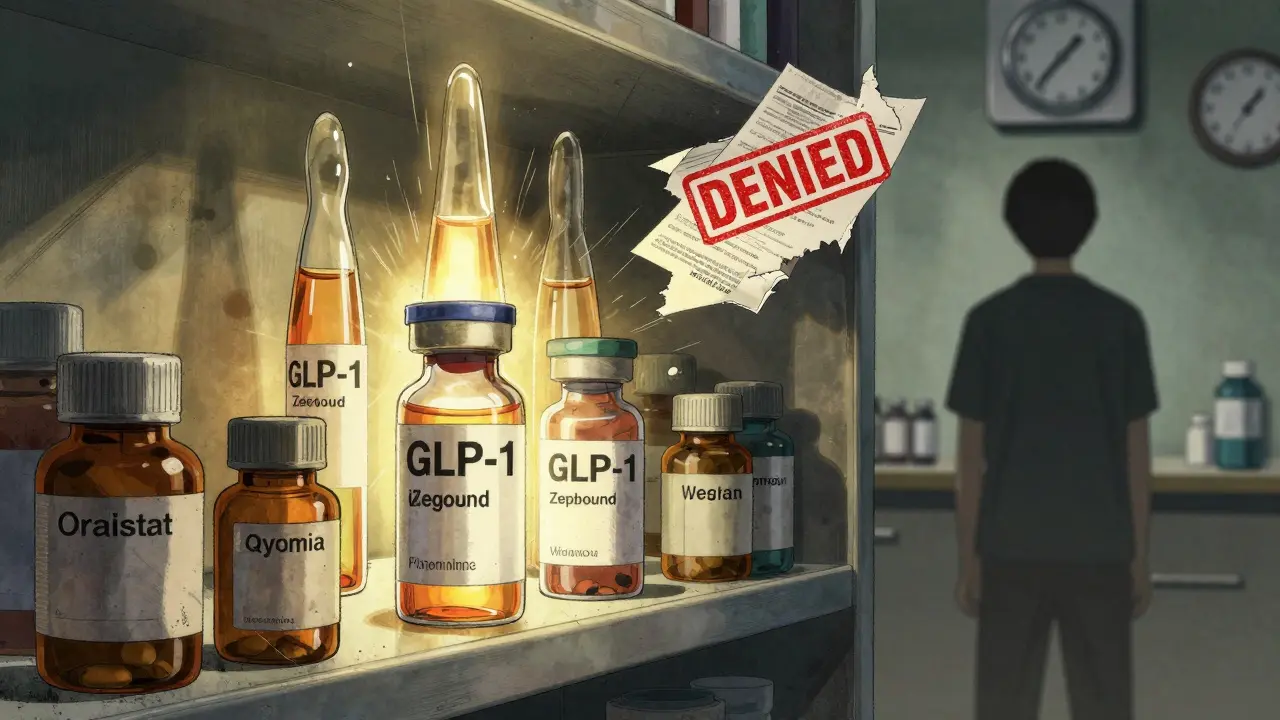
But here’s the problem with GLP-1 coverage: Only about 28% of commercial insurance plans cover them for weight loss-and even then, only if you have a BMI over 35 with a related condition like high blood pressure or diabetes. Many people with a BMI of 30-34.9 (still obese) get denied.
Insurance denials are one of the top reasons people quit. One survey found that 45% of users had prior authorization requests rejected.
Side Effects: What You’re Really Signing Up For
GLP-1 agonists aren’t magic. They come with side effects-and they’re common.
Up to 50% of users experience nausea, vomiting, diarrhea, or constipation, especially when starting or increasing the dose. These usually improve over time, but for some, they’re unbearable. A growing number of users report severe stomach issues, including gastroparesis (delayed stomach emptying), which can require medical care.
Older drugs have side effects too:
- Phentermine: Can raise blood pressure and heart rate, cause insomnia, or anxiety
- Orlistat: Oily stools, gas, bowel urgency-often embarrassing
- Qsymia: Can cause tingling, memory issues, or mood changes
- Contrave: Headaches, dizziness, dry mouth
Neither class is easy. But GLP-1 side effects tend to be more intense at first, while older drugs have more chronic, low-grade discomforts.
Administration: Injections vs. Pills
Most GLP-1 agonists require a weekly injection. Some people are fine with that. Others hate needles. Even if you’ve given yourself insulin shots before, the thought of injecting yourself every week for months-or years-can be a dealbreaker.
Older weight loss drugs are all pills. You take them once a day, like a vitamin. No needles. No training. No fear of needles. For many, that’s a huge advantage.
There’s also the issue of availability. In 2023-2024, shortages of Wegovy and Ozempic meant some patients couldn’t refill their prescriptions for weeks. That’s not a problem with older, generic drugs.
Who Benefits Most From GLP-1 Agonists?
GLP-1 agonists are ideal if:
- You need to lose 15% or more of your body weight
- You have type 2 diabetes or prediabetes (they help control blood sugar too)
- You can afford the cost or have good insurance coverage
- You’re okay with weekly injections and willing to manage side effects
- You’re committed to long-term use-because weight comes back fast if you stop
Older drugs might be better if:
- You’re looking for a cheaper, short-term option
- You can’t tolerate injections
- Your insurance won’t cover GLP-1 drugs
- You have a BMI under 35 and need modest weight loss
- You prefer daily pills over injections

What Happens When You Stop?
This is the part no one talks about enough. If you stop taking a GLP-1 agonist, you’ll likely regain most-if not all-of the weight you lost. Studies show 50-100% of people regain weight within a year of stopping.
It’s not your fault. These drugs don’t change your metabolism permanently. They just suppress appetite while you’re on them. Once they’re gone, hunger returns.
Older drugs have the same issue. But because the weight loss is smaller to begin with, the regain feels less dramatic.
That’s why experts say these medications should be part of a long-term plan-not a quick fix. You still need to eat better, move more, and build habits. The drug just makes it easier.
The Bigger Picture: Surgery Still Wins
Even with GLP-1 agonists, bariatric surgery still delivers better, longer-lasting results. A 2024 study comparing over 50,000 people found that surgery patients lost 24% of their body weight after two years. GLP-1 users? Only 4.7% after six months.
And surgery is often cheaper over time. While GLP-1 drugs cost thousands a year, bariatric surgery is a one-time cost. Many insurance plans cover it for people with BMI over 40-or over 35 with health problems.
Some people use GLP-1 drugs before surgery to lose weight and reduce surgical risk. Others use them after surgery if they start gaining weight again. They’re becoming part of a broader toolkit-not a replacement.
What’s Coming Next?
The next wave of drugs is already here. Retatrutide, a triple agonist (GLP-1, GIP, and glucagon), showed 24.2% weight loss in early trials. That’s higher than most surgeries.
Amgen is testing a monoclonal antibody called MariTide that boosts GLP-1 activity. Phase 3 trials started in early 2025.
And by 2030, semaglutide’s patents will expire. Generic versions could drop the price to under $100 a month. That could change everything.
For now, though, the choice is clear: GLP-1 agonists are more effective-but not for everyone. The best drug is the one you can take consistently, afford, and tolerate.
Final Thoughts
There’s no single best weight loss medication. What works for one person might fail for another. GLP-1 agonists are powerful, but they’re not a cure. They’re a tool-expensive, injectable, and demanding.
Older drugs are modest, but they’re accessible, affordable, and easy to take. For many, that’s enough.
If you’re considering a weight loss drug, talk to your doctor-not just about which one works best, but which one you can stick with. Because the real winner isn’t the drug with the biggest number on the label. It’s the one you can take for years without quitting.
Are GLP-1 agonists better than older weight loss drugs?
Yes, in terms of weight loss effectiveness. GLP-1 agonists like Wegovy and Zepbound typically lead to 15-20% body weight loss, while older drugs like orlistat or phentermine usually result in 5-10%. But effectiveness isn’t just about numbers-it’s about what you can tolerate and afford long-term.
Can I switch from an older drug to a GLP-1 agonist?
Yes, but it requires medical supervision. Your doctor will likely stop your old medication first, then start you on a low dose of the GLP-1 agonist and gradually increase it. This helps reduce side effects like nausea and vomiting.
Why are GLP-1 drugs so expensive?
They’re brand-name biologics with complex manufacturing processes. Companies like Novo Nordisk and Eli Lilly invested billions in research and development. Without generic competition yet, they can set high prices. Insurance often doesn’t cover them for weight loss unless you have severe obesity or diabetes.
Do GLP-1 agonists work for people without diabetes?
Yes. Wegovy and Zepbound are FDA-approved specifically for weight loss in adults with obesity or overweight-even without diabetes. They work by reducing appetite, not by lowering blood sugar.
What happens if I miss a dose of my GLP-1 agonist?
If you miss a weekly injection, take it as soon as you remember-if it’s within 5 days. If it’s been more than 5 days, skip the missed dose and wait for your next scheduled injection. Don’t double up. Missing doses can reduce effectiveness and increase side effects when you restart.
Are there any natural alternatives to GLP-1 agonists?
There’s no natural supplement that matches the power of GLP-1 drugs. Some foods-like high-protein meals, fiber-rich vegetables, and healthy fats-can boost natural GLP-1 release. But they won’t produce the same level of appetite suppression. Don’t rely on supplements like garcinia cambogia or green tea extract-they don’t work like prescription medications.
Can I take GLP-1 agonists forever?
There’s no set time limit. Many people take them for years. But since weight returns after stopping, long-term use is often necessary to maintain results. Doctors monitor for side effects and adjust treatment based on your health, goals, and tolerance.





Let’s be real-GLP-1 agonists are just pharmaceutical luxury goods wrapped in medical jargon. You’re not losing weight, you’re renting appetite suppression from Big Pharma. And don’t even get me started on the ‘weight regain’ cliff you fall off the second you stop injecting your way to a smaller waistline. This isn’t medicine-it’s a subscription service with side effects.
Meanwhile, people on phentermine for $15 a month are out here building sustainable habits while you’re crying over your $1,200 monthly injection bill. The real epidemic isn’t obesity-it’s the delusion that biology can be outsourced.
And yes, I’ve seen the data. Yes, the numbers look sexy. But when 45% of people get denied coverage and 50% quit because they can’t stomach the nausea, you’re not curing anything-you’re creating a class divide in health outcomes. The rich get sleek, the rest get left behind with a $50 pill and a guilt complex.
It’s not about which drug works better. It’s about which drug the system lets you have.