
When your body stops making insulin, everything changes. Type 1 diabetes isn’t caused by diet or lifestyle-it’s an autoimmune condition where your immune system attacks the insulin-producing cells in your pancreas. No more insulin means your blood sugar goes unchecked, and without treatment, it can turn dangerous fast. This isn’t something that sneaks up over years. Symptoms can hit hard in just days or weeks. If you’ve been drinking more water than usual, losing weight without trying, or feeling exhausted even after a full night’s sleep, it might not be stress. It could be type 1 diabetes.
What Are the Warning Signs?
The classic trio of symptoms-frequent urination, extreme thirst, and unexplained weight loss-don’t always show up together, but they’re the biggest red flags. You might notice yourself heading to the bathroom more often, especially at night. Your mouth feels dry no matter how much you drink. Even if you’re eating more, you’re losing weight. That’s because your body can’t use glucose for energy, so it starts breaking down fat and muscle instead.
Other signs are easy to miss. Blurry vision? That’s your blood sugar pulling fluid out of your eyes. Slow-healing cuts? High glucose messes with circulation and healing. Constant hunger? Your cells are starving, even if you’ve just eaten. Fatigue hits hard-not just tiredness, but a deep, heavy exhaustion that doesn’t lift. Some people get nausea or stomach pain, which can be mistaken for the flu. In kids, bedwetting after being dry for months is a clue.
What’s scary is how fast it can escalate. If left untreated, type 1 diabetes can lead to diabetic ketoacidosis (DKA) in under 24 hours. DKA happens when your body starts burning fat for fuel, producing toxic acids called ketones. Signs include fruity-smelling breath, confusion, rapid breathing, and vomiting. This is a medical emergency. It’s why so many people are diagnosed in hospital emergency rooms.
How Is It Diagnosed?
Diagnosis isn’t based on symptoms alone. Blood tests are required. The most common test is the A1C, which shows your average blood sugar over the past 2 to 3 months. A result of 6.5% or higher on two separate tests confirms diabetes. If you’re already feeling awful, doctors might skip the wait and check your blood sugar right away. A random blood glucose level of 200 mg/dL or higher, especially with symptoms, is enough to diagnose diabetes.
But here’s the key: not all diabetes is the same. To confirm it’s type 1 and not type 2, doctors test for autoantibodies. The most common one is GAD65. If it’s present, your immune system is attacking your pancreas. Other antibodies like IA2 or ZNT8 can also be checked. If all are negative, it might not be type 1. Another test looks at C-peptide. This is made when insulin is produced. In type 1, C-peptide levels are very low-even when blood sugar is high. In type 2, they’re usually normal or high.
If there’s any chance of DKA, doctors will check your blood pH and ketone levels. Urine tests can also spot ketones. These tests aren’t just for diagnosis-they’re lifesavers. Catching DKA early can prevent coma or death.
Insulin Therapy: The Only Treatment
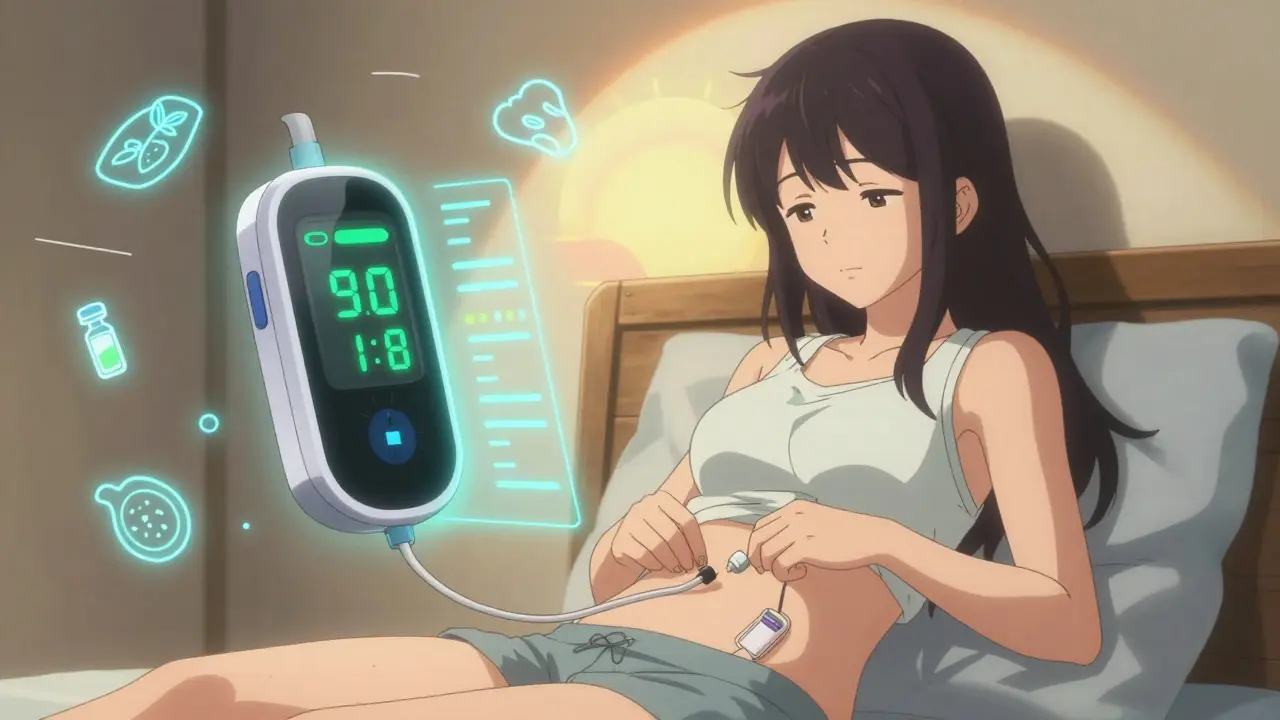
There’s no cure yet. Insulin is not optional-it’s essential. Without it, your body can’t process glucose. You’ll need insulin for life. There are two main ways to get it: multiple daily injections (MDI) or an insulin pump.
MDI, also called basal-bolus therapy, means taking two types of insulin every day. A long-acting insulin (like glargine or detemir) gives you steady background coverage, usually once or twice a day. Then, before each meal, you take a rapid-acting insulin (like aspart, lispro, or glulisine) to cover the carbs you eat. You’ll need to count carbs, check your blood sugar 4 to 10 times a day, and adjust doses based on what you eat, how active you are, and your current glucose level.
An insulin pump is a small device worn on your body that delivers rapid-acting insulin 24/7 through a tiny tube under your skin. It can be programmed to give a steady low dose (basal) and extra doses (bolus) at meals. Modern pumps now talk to continuous glucose monitors (CGMs). This is called hybrid closed-loop technology. The pump automatically adjusts insulin based on your real-time glucose levels. Systems like Medtronic’s MiniMed 780G or Tandem’s Control-IQ can reduce the number of manual adjustments you need to make.
Studies show people using CGMs with pumps spend about 70-75% of their time in the ideal glucose range (70-180 mg/dL), compared to just 50% with older methods. That means fewer highs, fewer lows, and less long-term damage.
What Are the Targets?
There’s no one-size-fits-all goal. The American Diabetes Association recommends most adults aim for an A1C below 7%. But if you’re older, have other health issues, or are prone to low blood sugar, your target might be 7.5% or even 8%. For kids, the goal is often tighter, around 7% or lower, because their bodies are more sensitive to high glucose over time.
For daily control, pre-meal blood sugar should be between 80 and 130 mg/dL. Two hours after eating, it should be under 180 mg/dL. These aren’t rigid rules-they’re starting points. Your doctor will adjust them based on your life, your risks, and how you respond to treatment.
Testing frequency matters. If your A1C is stable and you’re not changing therapy, check it twice a year. If you’re adjusting insulin, recovering from illness, or struggling to hit targets, test it every three months. CGMs make this easier. You don’t need to poke your finger as often, but you still need to calibrate them and check trends.

What Else Matters Beyond Insulin?
Managing type 1 diabetes isn’t just about insulin and glucose. You need regular checkups for your kidneys, eyes, heart, and nerves. Blood tests for cholesterol, liver function, and thyroid health are part of routine care. High blood sugar damages blood vessels over time. That’s why kidney disease, vision loss, and heart problems are common complications-but they’re preventable with good control.
Hypoglycemia is a daily risk. If your blood sugar drops below 70 mg/dL, you need to act fast. Eat 15 grams of fast-acting sugar: 4 glucose tablets, ½ cup of juice, or 1 tablespoon of honey. Wait 15 minutes, check again. Repeat if needed. Don’t skip meals. Don’t over-exercise without adjusting insulin. Always carry a snack and a glucagon kit if you’re at risk for severe lows.
Education is critical. Most people need 10 to 20 hours of training when they’re first diagnosed. That includes learning how to use a CGM, calculate insulin doses, recognize symptoms, and handle sick days. Many hospitals and clinics offer diabetes education programs. Don’t skip them. This isn’t optional-it’s survival.
What’s New in Treatment?
There’s hope on the horizon. In late 2022, the FDA approved teplizumab (Tzield), the first drug that can delay the onset of type 1 diabetes in high-risk people. It’s given as a 14-day IV infusion and can push off diagnosis by more than two years on average. It doesn’t cure it, but it buys time.
Stem cell therapies are showing promise too. Vertex Pharmaceuticals’ VX-880 treatment uses lab-grown islet cells to replace the ones your body destroyed. In early trials, 89% of patients stopped needing insulin within 90 days. It’s still experimental, but it’s the closest thing to a cure we’ve seen.
Cost remains a huge barrier. The average person with type 1 diabetes spends over $20,000 a year on care. Insulin alone makes up nearly a third of that. Even with insurance, out-of-pocket costs for pumps, sensors, and insulin can be crushing. Advocacy and access programs are growing, but they’re not enough yet.
One thing hasn’t changed: managing type 1 diabetes takes time. Most people spend 2 to 4 hours a day on monitoring, dosing, eating, and problem-solving. It’s exhausting. But with the right tools and support, it’s manageable. You can live a full life-travel, work, raise kids, play sports. You just need to stay on top of it.
Can type 1 diabetes be cured?
No, there is no cure yet. Type 1 diabetes is a lifelong condition. The pancreas stops producing insulin permanently, so insulin therapy is required for survival. However, new treatments like teplizumab can delay onset in high-risk individuals, and stem cell therapies like VX-880 have shown potential to restore insulin production in early trials. These are not cures, but they represent major advances.
Is type 1 diabetes the same as juvenile diabetes?
Yes, type 1 diabetes was once called juvenile diabetes because it often appears in children and teens. But now we know it can develop at any age-even in adults. About half of all new diagnoses happen in people over 18. The term "juvenile diabetes" is outdated and misleading. The correct term is type 1 diabetes, regardless of age at diagnosis.
Do I need to avoid sugar completely?
No. People with type 1 diabetes can eat sugar, but they need to account for it in their insulin dosing. The key is carbohydrate counting, not elimination. A cookie or a piece of fruit won’t hurt if you match it with the right amount of insulin. The real danger is uncontrolled blood sugar over time-not occasional treats. Balance and precision matter more than restriction.
Can I use an insulin pump instead of injections?
Yes, and many people prefer it. Insulin pumps deliver rapid-acting insulin continuously and can be programmed for meals and activity. Modern pumps integrate with continuous glucose monitors (CGMs) to automatically adjust insulin, reducing highs and lows. While not for everyone, pumps offer more flexibility than injections. Most endocrinologists recommend them for active people, children, and those who struggle with frequent injections or unpredictable blood sugar swings.
How often should I check my blood sugar?
If you’re using fingerstick testing, most people check 4 to 10 times a day-before meals, at bedtime, after exercise, and if they feel off. If you use a CGM, you still need to check your glucose levels, but less often. CGMs give real-time data and alerts, so you might only need to confirm with a fingerstick once a day for calibration. Your doctor will help you decide based on your treatment plan and stability.
What should I do if I miss an insulin dose?
If you miss a long-acting insulin dose, contact your healthcare provider immediately. Missing a bolus (mealtime) insulin is less urgent, but your blood sugar will rise. Check your glucose, drink water, and avoid carbs until you’re back on track. If your glucose is over 250 mg/dL and you feel nauseous or dizzy, test for ketones. If ketones are moderate or high, seek medical help. Never skip insulin without guidance-this can lead to DKA.






This post is FIRE 🔥. Type 1 ain't a lifestyle choice-it's a daily war. I've been at it 12 years and still get mad when people say 'just eat less sugar'. Bro, I'm not the villain here. My pancreas is dead. I'm just trying to keep my organs from shutting down. Insulin isn't a preference. It's oxygen.