
Traveling doesn’t have to wreck your weight management goals. But let’s be honest-airports and restaurants are designed to make unhealthy choices easy. A grab-and-go salad might look clean, but pile on the dressing and it’s a calorie bomb. A protein bar you grab at the terminal? Could have more sugar than a candy bar. The good news? You don’t need to starve or give up eating altogether. With a few smart strategies, you can enjoy meals on the go without derailing your progress.
Why Airports Are a Weight Management Trap
Airports used to be a nightmare for anyone trying to eat well. Think greasy burgers, giant pretzels, and sugary smoothies. But things have changed. In 2023, 71.3% of U.S. airports now offer at least one high-fiber, plant-based meal option. That’s up from less than 20% in 2018. Major hubs like JFK, LaGuardia, and Chicago O’Hare now require restaurants to meet basic nutrition standards. But here’s the catch: just because it’s labeled “healthy” doesn’t mean it is.
Take salads. They’re everywhere. But a “grilled chicken salad” can easily hit 800 calories if it’s loaded with cheese, croutons, and creamy dressing. Ranch alone? Two tablespoons = 140 calories and 14 grams of fat. Oil and vinegar? About half that. The difference isn’t just calories-it’s blood sugar control. When you eat carbs without protein or fat, your energy spikes and crashes. That’s when hunger creeps back in, and you end up buying another snack just to feel okay.
What to Look for: The Protein-Fiber-Fat Rule
Registered dietitian Hernandez says the key is simple: pair protein with fiber and a little fat. This combo keeps you full, balances your blood sugar, and prevents the post-meal crash that leads to overeating. Here’s what to aim for in every airport meal or restaurant order:
- 15-20 grams of protein - This is your anchor. It tells your body you’re getting real fuel.
- At least 3 grams of fiber - Helps digestion and keeps you satisfied longer.
- Under 25 grams of carbs - Especially from refined sources like white bread or rice.
Let’s break this down with real examples.
- Hard-boiled eggs - One egg = 6 grams of protein. Two eggs = 12 grams. Add a small apple? You’ve got fiber, protein, and natural sugar without the crash.
- Greek yogurt cups - Look for plain, unsweetened versions. Most offer 10-20 grams of protein. Avoid flavored ones-they often have 20+ grams of sugar.
- Protein bars - Not all are created equal. Stick to ones with at least 15g protein and under 25g carbs. GoMacro bars (10g protein, 18g carbs) and Quest bars (20g protein, 22g carbs) fit the bill.
- Fruit cups - A 100-gram serving gives you 3-4 grams of fiber. Pair it with a small packet of nut butter for healthy fat and extra protein.
Smart Airport Meal Choices (2026 Edition)
Here’s what actually works at major airports right now.
Salads: The Hidden Danger
Salads are popular, but they’re also the #1 trap. A “healthy” salad from a grab-and-go case can have 600-900mg of sodium-that’s almost half your daily limit. And don’t trust the calorie count on the menu. One Reddit user reported a “Fiesta Taco Salad” at Buffalo Wild Wings listed at 590 calories… but it was actually 1,190. That’s a 100% error.
Instead:
- Choose grilled chicken or tofu as your protein.
- Ask for oil and vinegar on the side. Use half.
- Skip croutons, cheese, bacon bits, and fried toppings.
- At Denver International’s Mod Market, travelers rave about ordering “double vegetables, half rice.” That cuts calories by 300+ without sacrificing fullness.
Breakfast: Skip the Biscuit
Starbucks oatmeal with fruit and nuts? Around 300-350 calories, 8g protein, 5g fiber. A sausage-egg-cheese biscuit? Over 500 calories, 25g fat, only 2g fiber. The choice is obvious.
Snacks: Portion Control Is Everything
Trail mix? Great-until you eat the whole bag. One handful = 300 calories. Look for pre-portioned packs: 100-calorie almond packs from Walmart or Justin’s 1.15-ounce nut butter packets (190 calories, 2g protein). Both are TSA-friendly and won’t melt or spill.
Asian & Mexican Bowls: Customize Like a Pro
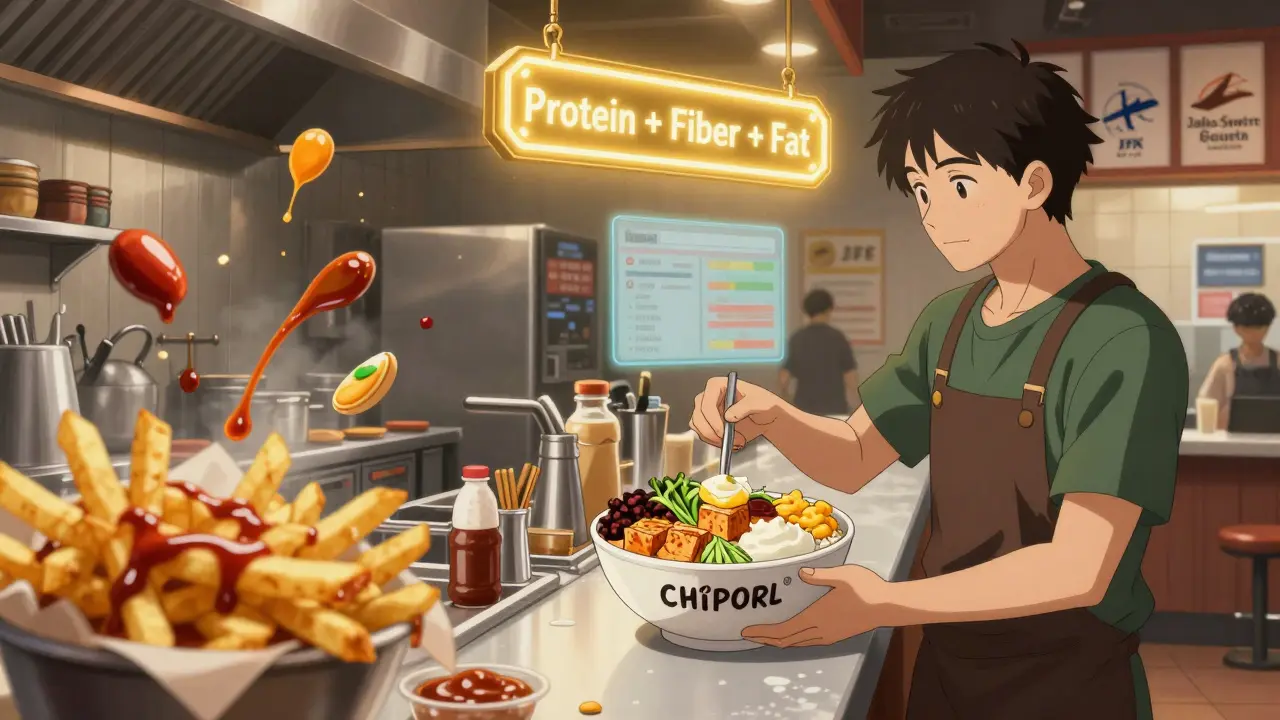
At places like Mod Market or Chipotle-style spots:
- Start with protein (chicken, tofu, beans).
- Load up on vegetables-they’re low-calorie and high-fiber.
- Go easy on rice and beans-they add up fast.
- Ask for no cheese, no sour cream.
- Aim for a bowl under 600 calories. You can still feel full.
What to Pack: The Smart Traveler’s Kit
You don’t have to rely on airport food. Bring your own.
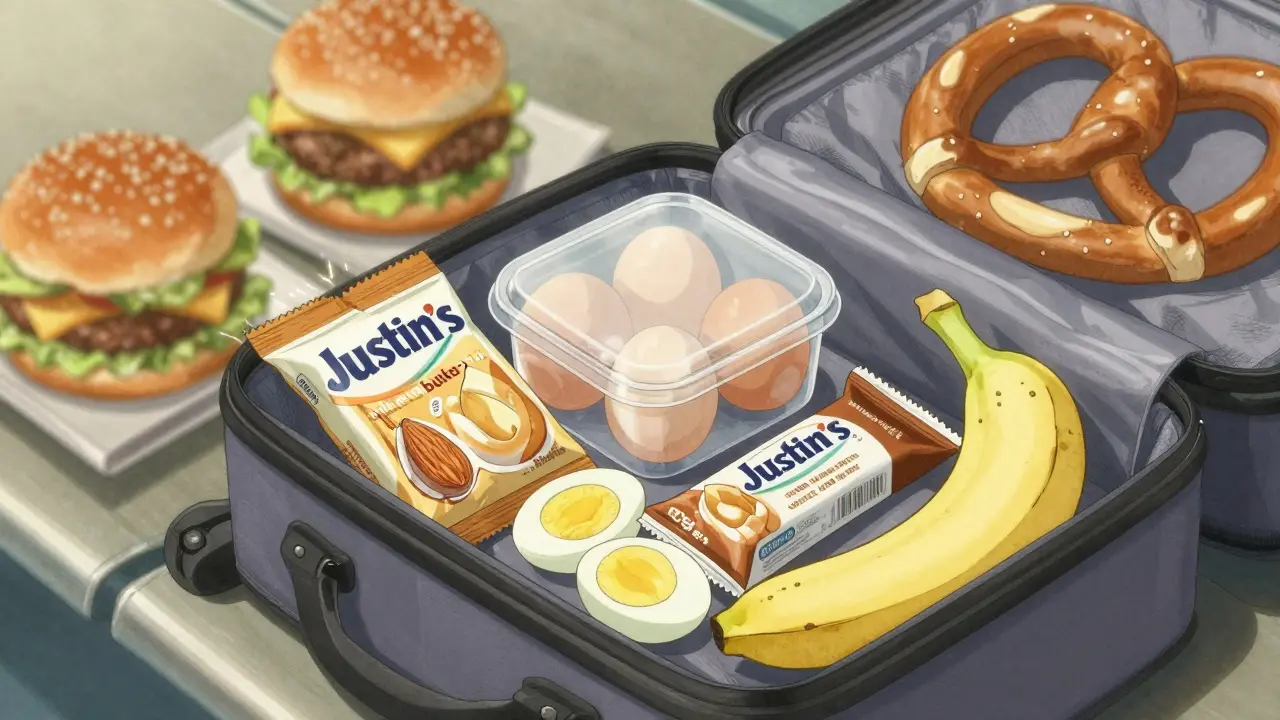
- Hard-boiled eggs - Peel them, store them in a small container with a splash of water. They stay fresh for 4-5 hours at room temperature (USDA-approved).
- Protein bars - Keep 2-3 in your carry-on. Choose ones with 15g+ protein.
- Nut butter packets - Justin’s, Trader Joe’s hummus cups (70 calories, 4g fat). No spills, no mess.
- Fruit - Bananas, apples, oranges. Easy, natural, no prep.
- Water bottle - Fill it after security. Dehydration makes you feel hungrier than you are.
Travelers who pack ahead report 70-85% success in sticking to their goals. Those who don’t? They average 227 extra calories per meal-just from impulse choices.
Restaurant Eating: The Same Rules Apply
Whether you’re in Chicago, Dallas, or Tokyo, restaurant food follows the same patterns:
- Ask for sauces and dressings on the side.
- Choose grilled, baked, or steamed over fried.
- Swap fries for vegetables or a side salad.
- Order an appetizer as your main. Many are smaller and more balanced.
- Don’t feel pressured to finish everything. Take leftovers or share.
McDonald’s now offers a grilled chicken sandwich with 360 calories and 33g protein. That’s a solid option. Same goes for Subway’s 6-inch turkey sub on whole wheat (no cheese, no mayo). You don’t need fancy places to eat well.
Technology Helps-Use It
Many airports now have digital nutrition tools. Dallas-Fort Worth launched “Nutrition Navigator” kiosks in early 2024. They show calorie counts, protein, fiber, and sodium for every item. Apps like Lose It! and MyFitnessPal help too. Travelers who use them cut their intake by 18.7% on average.
Also, check the airport’s website before you fly. Most list restaurant menus. Spend 10 minutes researching. You’ll save hundreds of calories before you even get to the gate.
What’s Changing (And Why It Matters)
The food landscape at airports is evolving fast. In 2018, healthy options made up 19.2% of offerings. By 2023, that jumped to 38.7%. Why? Because travelers demanded it. Corporate travel policies now require healthy meal options. United Airlines partnered with Beyond Meat to serve plant-based meals in 87 lounges. JetBlue launched “Evening Well” meals at JFK in March 2024-each one has 25-30g protein and 8-10g fiber.
But progress isn’t uniform. Some terminals still serve fried chicken nuggets with a side of soda. Your job? Be the exception. Don’t wait for the airport to fix it. Fix it for yourself.
Final Rule: Plan Ahead, Stay Flexible
You can’t control every menu. But you can control your choices. The best travelers don’t rely on willpower. They rely on preparation.
- Research airport food options 24-48 hours before departure.
- Pack 2-3 snacks you know are safe.
- Know your protein, fiber, and carb targets.
- When in doubt, choose protein first, then vegetables, then a small carb.
Traveling is about freedom-not restriction. You don’t have to eat like a monk to stay on track. Just be smart. The food is better than you think. You just have to know what to look for.
Can I bring hard-boiled eggs through airport security?
Yes. The USDA confirms that peeled hard-boiled eggs are safe to carry at room temperature for up to 5 hours. Store them in a small sealed container with a teaspoon of water to keep them moist. They’re not considered liquids, so they don’t need to go in your quart-sized bag. Just be ready to explain if a TSA agent asks.
Are protein bars really better than candy bars at airports?
It depends on the bar. Many protein bars have just as much sugar as candy bars. Look for ones with at least 15 grams of protein and under 25 grams of total carbs. Avoid bars with more than 5 grams of sugar. Quest, GoMacro, and RXBAR are reliable options. If it looks like a candy bar, it probably is.
Why do airport salads have so much sodium?
Pre-made salads often use pre-sliced meats, cheeses, pickled veggies, and bottled dressings-all high in sodium. A single container can have 600-900mg, which is 25-40% of your daily limit. That’s why it’s better to order a build-your-own salad and ask for no added salt or cured meats.
What’s the best airport snack under 150 calories?
Trader Joe’s 2-ounce hummus cup (70 calories, 4g fat, 2g protein) paired with baby carrots or cucumber slices. Justin’s 1.15-ounce almond butter packet (190 calories) is slightly over, but it’s very filling. For under 150, go with a small apple and a single hard-boiled egg.
Is it worth paying more for healthy food at the airport?
Yes-if you’re serious about your health. Healthy entrees cost $12.50-$18, while fast food runs $8-$12. But think of it this way: spending $15 on a balanced meal prevents you from eating 400 extra calories later. That’s like a 20-minute walk down the drain. Paying more upfront saves you energy, hunger, and guilt.
Traveling with weight management in mind isn’t about perfection. It’s about consistency. One smart choice at the airport adds up over time. And those choices? They’re easier than you think.





I swear airport food is designed to make you fail 😭 Just bought a "healthy" salad at JFK and it had MORE sugar than my last birthday cake. Who even designs this stuff? I’m done trusting labels. 🤦♀️