FDA Adverse Event Reporting: What It Is and Why It Matters
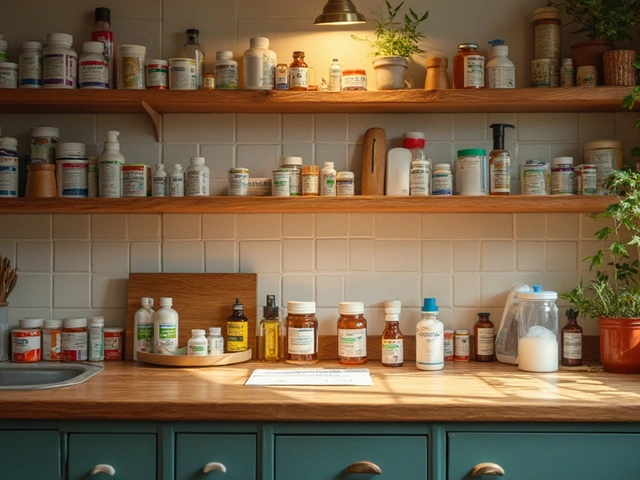
When you take a medicine and something goes wrong—like a rash, dizziness, or worse—that’s not just bad luck. It’s data. The FDA adverse event reporting, a system that collects and analyzes reports of harmful side effects from medications, medical devices, and supplements. Also known as MedWatch, it’s the backbone of post-market drug safety in the U.S. This isn’t a theoretical process. Every year, hundreds of thousands of reports come in from doctors, pharmacists, patients, and manufacturers. Some are minor. Others reveal serious risks that lead to black box warnings, label changes, or even drug withdrawals.
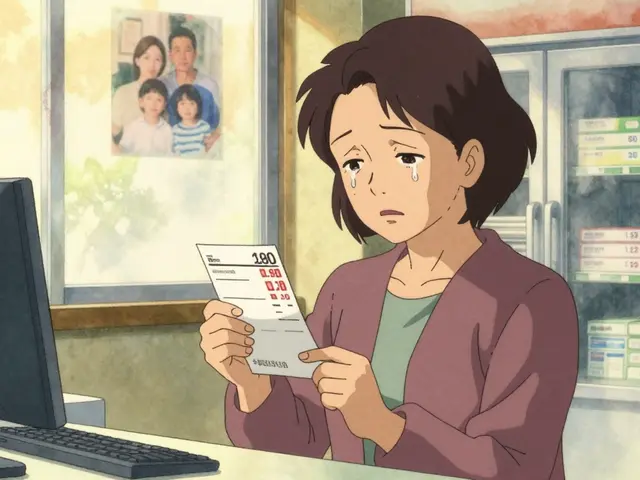
How does this affect you? If a new blood pressure drug causes unexpected heart rhythm issues in 1 in 10,000 people, the FDA won’t know until real people start reporting it. Clinical trials only catch the most common side effects—rare ones show up later, when millions are using the drug. That’s why your report matters. You don’t need to be a doctor to file one. If you or a loved one had an unexpected reaction, even if you’re not sure it was the medication, reporting it helps others stay safe. The system relies on real-world experiences, not just lab studies.
Related entities like MedWatch, the FDA’s official portal for submitting adverse event reports and post-market surveillance, the ongoing monitoring of drugs after approval are built on this same idea: safety doesn’t end at approval. Drugs like Vioxx and Avandia were pulled from the market because of patterns seen in these reports—not because of early trials. Meanwhile, newer drugs like GLP-1 agonists are being watched closely for rare side effects like pancreatitis or bowel obstruction. The FDA doesn’t wait for perfect data. It uses what’s available to act fast.
You’ll find posts here that dig into how drug patents affect access to generics, how patients can reduce medication errors, and how side effects like those from isotretinoin or methotrexate are tracked. These aren’t random topics—they’re all connected. Every time someone reports an adverse reaction, it feeds into the bigger picture of drug safety. Whether you’re managing multiple prescriptions, helping an aging parent, or just curious about how medicines are monitored, this collection gives you the real stories behind the headlines. What you read here isn’t theory. It’s what happens after the pill is taken.
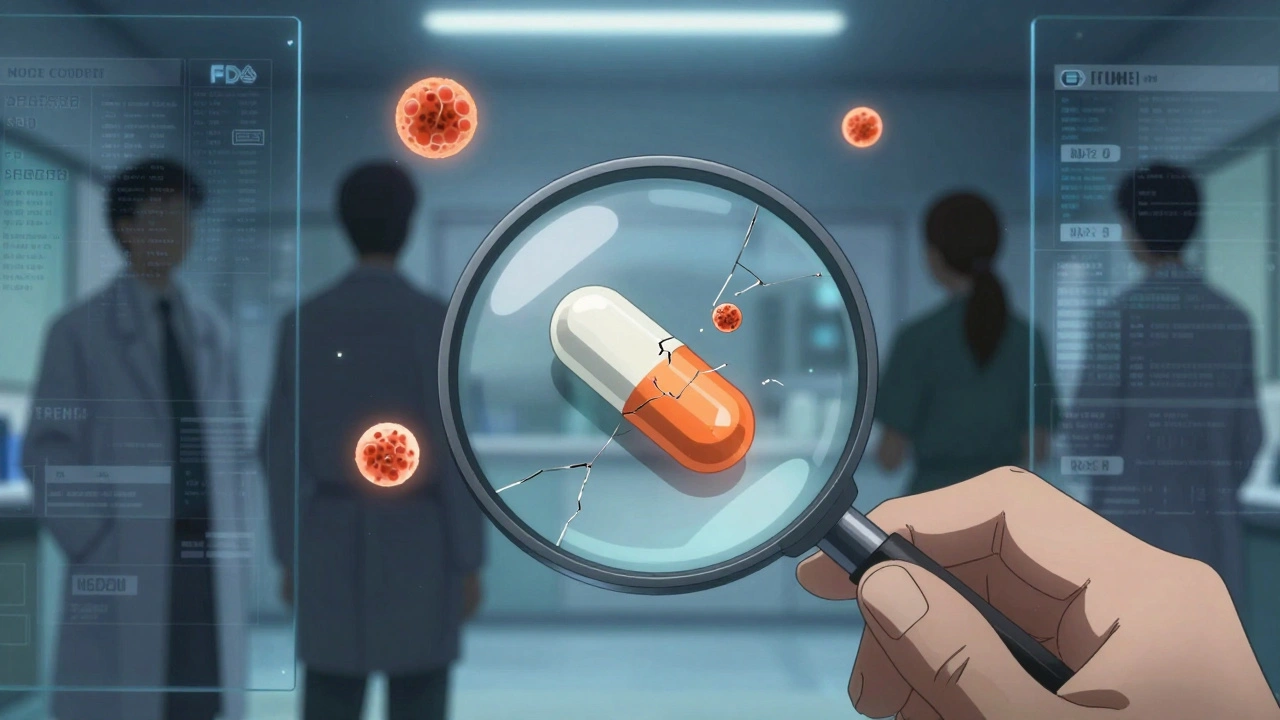
How the FDA Monitors Generic Drug Safety After Approval
- Date: 2 Dec 2025
- Categories:
- Author: David Griffiths
The FDA doesn't stop monitoring generic drugs after approval. Learn how it tracks quality issues, adverse events, and manufacturing flaws using real-world data, signal detection, and emerging tech like AI to keep patients safe.