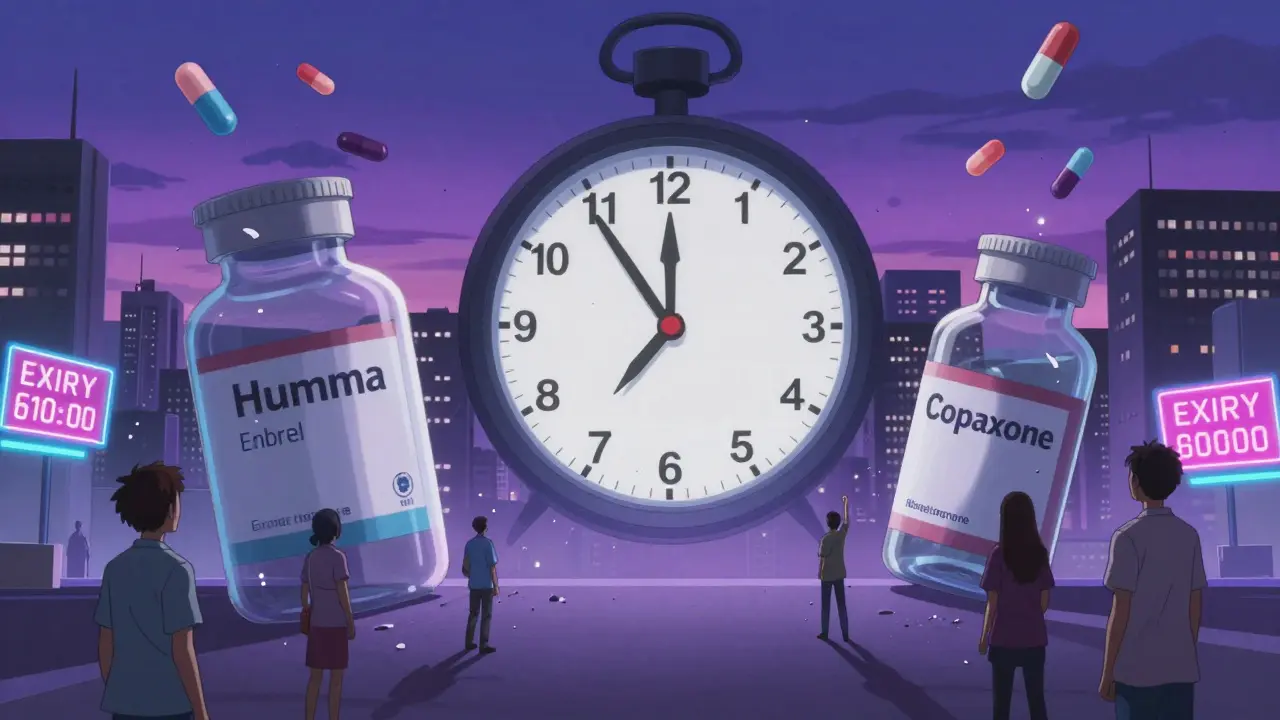
When a drug’s patent runs out, prices don’t just drop-they crash. For patients, that means lower copays. For hospitals and insurers, it means millions in savings. But none of that happens automatically. If you’re a patient on a long-term medication or part of a healthcare system managing drug costs, patent expiry is not a future event-it’s a countdown you need to start preparing for today.
Why Patent Expiry Matters More Than You Think
Most people assume that when a drug’s patent expires, generics instantly appear and prices plummet. That’s the theory. The reality? It’s messy. Brand-name drugmakers spend years building legal walls around their products. They file dozens of secondary patents on tiny changes-new coatings, delayed-release forms, combo pills-just to delay competition. This is called a patent thicket. Nearly 80% of the top 100 selling drugs in the U.S. have more than 20 patents tied to them. That means even if the original patent expires, you might still be stuck paying brand prices for years. The numbers are staggering. Between 2025 and 2029, over $90 billion in U.S. drug sales will lose patent protection. That’s not just corporate revenue-it’s patient out-of-pocket costs, insurance premiums, and hospital budgets. Drugs for autoimmune diseases, cancer, and mental health are among the most affected. For example, Humira, which had over $20 billion in annual sales, lost its patent in 2023. Within a year, biosimilars entered the market. Prices dropped-but not as fast as they should have. Why? Because of complex rebate systems and slow formulary changes.What Happens When a Patent Expires?
Once a patent expires, generic manufacturers can apply to the FDA to sell identical versions of the drug. For small-molecule drugs (like statins or blood pressure pills), this process is relatively straightforward. Generics must prove they’re bioequivalent-meaning they deliver the same active ingredient at the same rate and amount as the brand. They’re allowed to differ in fillers, colors, or shape, but not in how the body absorbs the medicine. Within a year of generic entry, prices for these drugs typically fall 80-85%. That’s huge. A $500 monthly brand drug can drop to $75. But it’s not that simple. Sometimes, multiple generics enter at once, creating price wars. Other times, only one or two come in, and prices stay higher. The timing depends on who filed first, whether there were legal delays, and how aggressively the brand company fights. For biologics-complex drugs made from living cells like insulin, rheumatoid arthritis treatments, or cancer therapies-the story is different. These aren’t copied like pills. They’re imitated through biosimilars. Developing a biosimilar takes years and costs hundreds of millions. So even after patent expiry, biosimilar entry is slow. Only 38% of biologic prescriptions switch to biosimilars within two years. Prices drop only 20-40% initially. That’s why patients on drugs like Enbrel or Rituxan still pay high prices years after patents expire.How Healthcare Systems Should Prepare (24 Months Out)
Hospitals, insurers, and pharmacy benefit managers (PBMs) can’t wait until the patent expires to act. The most successful organizations start planning two years ahead. Here’s what they do:- Track every patent expiration-There are over 1,400 U.S. drug patents expiring each year. Systems use software like Symphony Health’s PatentSight to monitor them.
- Build a cross-functional team-Pharmacists, finance officers, clinicians, and contract negotiators meet monthly. No single department can handle this alone.
- Forecast savings-They model what the drug will cost with generics versus brand, factoring in rebates, discounts, and patient copays.
- Update formularies-By 12 months out, they decide which generic or biosimilar to prefer. Sometimes they choose multiple to encourage competition.
- Negotiate contracts-They lock in pricing deals with generic makers before the drug hits the market. This locks in savings before prices start climbing again.

What Patients Need to Know and Do
If you’re taking a brand-name drug that’s nearing patent expiry, here’s what you should do:- Ask your pharmacist or doctor-“Is this drug going generic soon?” If yes, ask if switching is safe and recommended.
- Don’t assume generics are identical-They contain the same active ingredient, but different fillers can cause side effects. Some patients report bloating, headaches, or nausea when switching. Tell your doctor if something feels off.
- Check your copay-Sometimes, insurers make generics more expensive than the brand during transition periods. Call your plan. Ask for a cost comparison.
- Watch for multiple versions-If three generics hit the market, prices will drop fastest. But if only one comes in, your insurer might still push the brand. Push back.
- For biologics, ask about biosimilars-If you’re on Humira, Enbrel, or similar, ask if a biosimilar is available. They’re safe, FDA-approved, and often cheaper. But not all doctors know to offer them.
Why Some Drugs Don’t Get Cheaper-Even After Patents Expire
You might wonder: if generics are legal, why aren’t prices lower everywhere? The answer lies in how U.S. drug pricing works. In Europe, governments set reference prices. If a brand costs $100, generics can’t charge more than $30. In the U.S., it’s a mess. PBMs negotiate rebates with drugmakers. The brand company might give a 50% rebate to the PBM, so the net price stays high-even if the list price drops. The patient still pays the full list price at the pharmacy counter. Another trick: product hopping. A company stops selling the original pill and only offers a new version-say, a once-daily capsule-just before the patent expires. Then they patent that new version. Patients are forced to switch, even if the old pill worked fine. The FTC cracked down on this in 2023 with the CREATES Act, but it still happens. And then there’s pay-for-delay. Sometimes, the brand company pays a generic maker to hold off on selling. That’s illegal, but it’s been common. In 2023, the FTC reported a 35% drop in these deals-thanks to lawsuits and new laws-but they haven’t disappeared.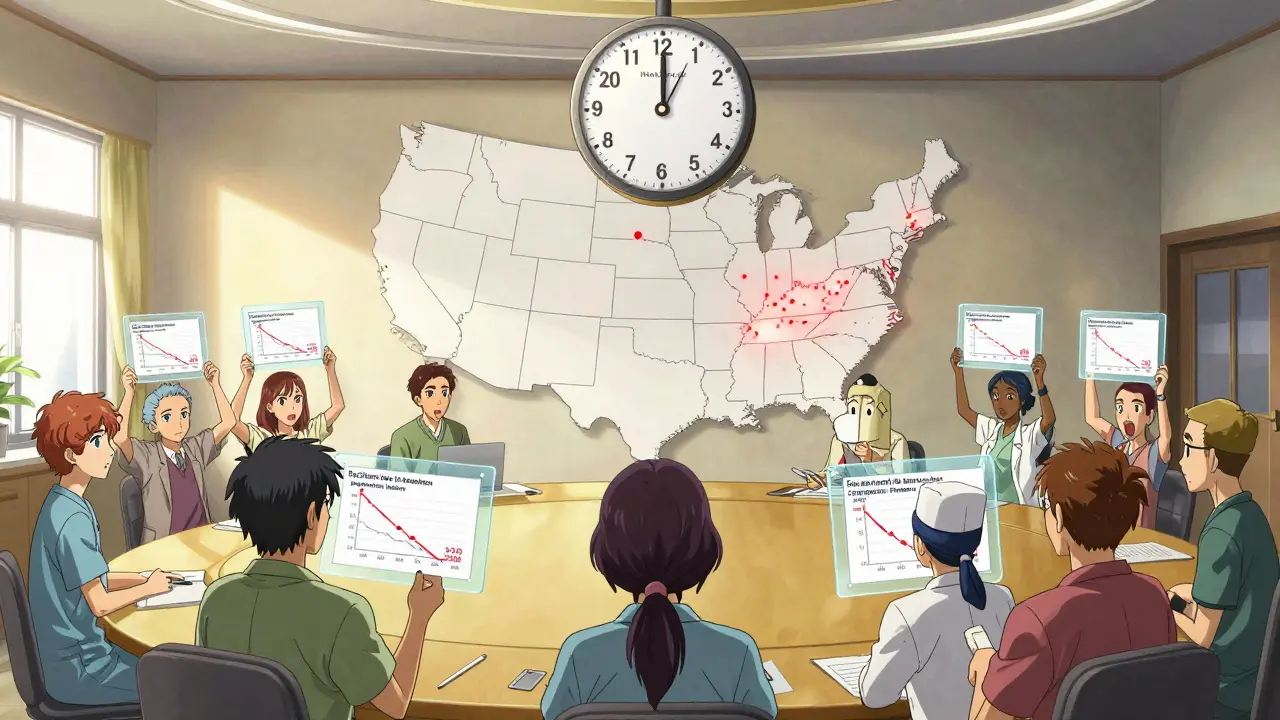
The Future: AI, New Laws, and Faster Generics
Things are changing. The FDA’s new GDUFA III rules are speeding up approval of complex generics. AI tools are now predicting patent expirations with 89% accuracy-up from 65% just two years ago. Health systems using AI are catching patent extensions before they happen. The Inflation Reduction Act, starting in 2026, will let Medicare negotiate prices for 10-20 drugs per year-those that just lost patent protection. That’s a game-changer. It will force companies to lower prices or lose access to a huge market. And new legislation, like the 2024 Pharmaceutical Patent Reform Act, could shorten the 180-day exclusivity window for the first generic filer. That means more companies can enter faster, driving prices down quicker.What’s Not Working
Smaller clinics and rural hospitals struggle. They don’t have staff to track 50+ expiring patents. One 2022 survey found 58% of small medical groups couldn’t plan properly because they lacked tools or time. Patients in these areas often get stuck with brand drugs longer. Also, doctors don’t always know what’s happening. A 2022 AMA survey showed 62% of physicians were unsure if switching to a generic would affect outcomes. That’s not because they’re resistant-it’s because they’re overwhelmed. They need better tools and training.Bottom Line: Act Now, Not Later
Patent expiry isn’t a theoretical risk. It’s happening right now. Humira, Enbrel, Copaxone, and dozens more have already lost protection. More are coming. The savings are real-but only if you’re ready. For patients: Ask questions. Don’t assume your drug will stay expensive. Check your copay. Talk to your pharmacist. If you’re on a biologic, ask about biosimilars. For systems: Start planning 24 months out. Use tracking tools. Involve finance and clinical teams. Don’t wait for the patent to expire-plan for it like you plan for flu season. The system is broken in places. But the tools to fix it exist. The question isn’t whether we can save money-it’s whether we’ll act before the next patent drops.What happens to drug prices after a patent expires?
After a patent expires, generic versions of the drug enter the market. For small-molecule drugs, prices typically drop by 80-85% within a year. For biologics, prices fall more slowly-20-40%-because biosimilars are harder and more expensive to make. However, in the U.S., actual savings can be delayed by rebate structures, formulary restrictions, and manufacturer tactics like product hopping.
Are generic drugs as safe and effective as brand-name drugs?
Yes, FDA-approved generics must meet the same safety and effectiveness standards as brand-name drugs. They contain the same active ingredient, dosage, and route of administration. However, they may contain different inactive ingredients (like fillers or dyes), which can cause minor side effects in some patients-such as stomach upset or headaches. If you notice new symptoms after switching, tell your doctor.
Why don’t all drugs get cheaper right away after patent expiry?
Several factors delay price drops: patent thickets (extra patents on minor changes), pay-for-delay deals (brand companies paying generics to wait), product hopping (replacing the old drug with a patented new version), and complex rebate systems that hide true net prices. In the U.S., these tactics are more common than in countries with government price controls.
What’s the difference between a generic and a biosimilar?
Generics are exact copies of small-molecule drugs made from chemicals. Biosimilars are highly similar-but not identical-to complex biologic drugs made from living cells. Biosimilars require more testing and cost more to produce, so they enter the market slower and cause smaller price drops. Only about 38% of biologic prescriptions switch to biosimilars within two years, compared to over 90% for small-molecule generics.
How far in advance should healthcare systems plan for patent expiry?
Successful systems start planning 24 months before a patent expires. This allows time to track patent filings, assess generic pipeline status, negotiate contracts, update formularies, train staff, and educate patients. Systems that wait until 12 months out typically save 22% less. Smaller organizations often lack the resources to plan this early, putting patients and budgets at risk.
Can I ask my doctor to switch me to a generic before the patent expires?
You can ask, but your doctor can’t switch you until the generic is legally available. Before patent expiry, the brand drug is the only option. However, you can ask your doctor to monitor for when generics arrive and be ready to switch as soon as possible. Some doctors will pre-authorize a generic substitution for when it becomes available.
Are there tools to track when patents expire?
Yes. Health systems use tools like Symphony Health’s PatentSight, IQVIA’s LOE Tracker, and FDA’s Orange Book database. Patients can check the FDA’s Orange Book online to see if a drug has generic equivalents approved. AI-powered forecasting tools are now used by 42% of top health systems and can predict patent extensions with 89% accuracy.
Will the Inflation Reduction Act help lower drug prices after patent expiry?
Yes. Starting in 2026, Medicare will be allowed to negotiate prices for up to 20 drugs per year that have lost patent protection. This will force manufacturers to lower prices or lose access to Medicare patients. It’s expected to cut costs significantly for high-priced drugs like biologics and cancer treatments.



The idea that generics are just as safe as brand-name drugs is a myth perpetuated by pharmaceutical lobbyists. I've seen patients develop rashes, insomnia, and GI distress after switching-even when the FDA says they're 'bioequivalent.' The inactive ingredients aren't tested for long-term effects, and doctors don't warn patients. This isn't science-it's corporate convenience dressed up as cost-saving.