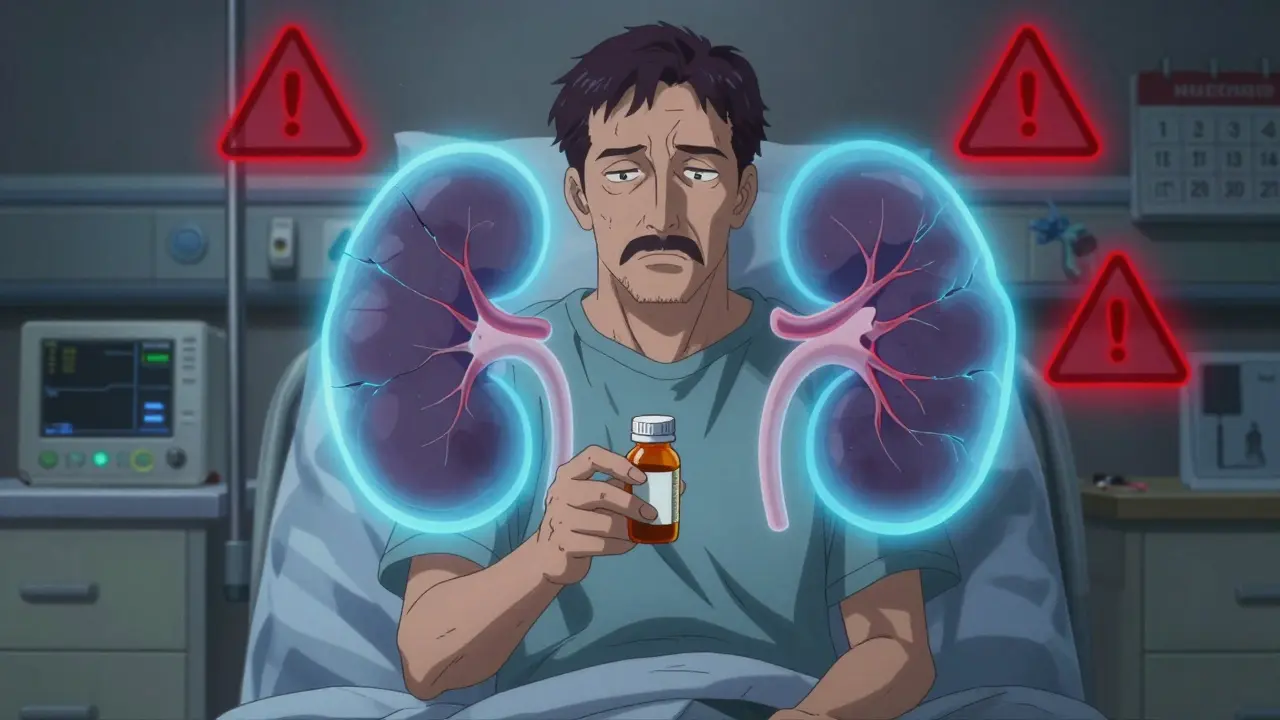
NSAID Kidney Injury Risk Calculator
This tool estimates your risk of developing acute kidney injury from NSAID use based on key medical factors. Please note: this is for informational purposes only and should not replace professional medical advice.
Every year, tens of thousands of people end up in the hospital not because of a heart attack or infection, but because they took something they thought was completely safe: an over-the-counter painkiller. Ibuprofen. Naproxen. Aspirin. These are NSAIDs-nonsteroidal anti-inflammatory drugs-and while they help with headaches, back pain, and arthritis, they can quietly damage your kidneys, especially if you already have kidney disease or are older, dehydrated, or taking other common medications.
How NSAIDs Hurt Your Kidneys
Your kidneys don’t just filter waste-they also help control blood pressure and maintain fluid balance. To do this, they rely on tiny chemical signals called prostaglandins. These are made by enzymes called COX-1 and COX-2. NSAIDs block those enzymes. That’s why they reduce pain and swelling. But it’s also why they can cut off blood flow to your kidneys.
In healthy people, this effect is usually temporary. But if you’re dehydrated, have high blood pressure, or already have reduced kidney function, blocking prostaglandins can cause your kidneys to go into survival mode. Blood flow drops by 20-40% within hours. Glomerular filtration rate (GFR)-the measure of how well your kidneys filter blood-plummets. That’s acute kidney injury (AKI). And it doesn’t always come with warning signs.
Some people feel fine until their creatinine levels spike on a routine blood test. In fact, up to 30% of early NSAID-related kidney damage shows no symptoms at all. By the time swelling in the ankles, fatigue, or reduced urine output appear, the damage may already be significant.
The Triple Whammy: When NSAIDs Combine With Other Drugs
One of the most dangerous combinations isn’t obvious to most patients. It’s called the “triple whammy”: NSAIDs + ACE inhibitors or ARBs + diuretics.
ACE inhibitors and ARBs are common blood pressure meds. Diuretics (water pills) help reduce fluid buildup. All three are prescribed for heart failure, hypertension, or chronic kidney disease. But together, they create a perfect storm for kidney failure.
Here’s why: ACE inhibitors and ARBs dilate the blood vessels leading into the kidney. Diuretics reduce blood volume. NSAIDs constrict the vessels leaving the kidney. The result? Your kidneys get squeezed from both sides. A 2013 Medsafe analysis found this combo increases AKI risk by 82% in the first 30 days. The risk is highest in seniors, people with diabetes, or those with an eGFR below 60.
Many patients don’t realize their doctor prescribed all three. They take their blood pressure pill, their water pill, and then grab an ibuprofen for their stiff knee. No one warned them. That’s why nearly 70% of NSAID-related kidney injuries happen in people taking multiple medications.
Who’s at Highest Risk?
Not everyone is equally vulnerable. Certain groups are at much higher risk:
- People over 65 - Kidney function naturally declines with age. By 70, most people have lost 30-40% of their kidney filtering capacity.
- Those with eGFR below 60 - This means their kidneys are already working at less than normal capacity. NSAIDs can push them into failure.
- People with diabetes or heart failure - These conditions already stress the kidneys. Adding NSAIDs is like adding weight to a fraying rope.
- Those taking diuretics or blood pressure meds - Especially if they’re also dehydrated.
- Athletes who take NSAIDs during endurance events - Marathon runners who pop ibuprofen before a race while losing fluids through sweat increase their risk of kidney injury by 30-50% compared to those who don’t.
Even people who think they’re healthy can be at risk. A 2020 case study from the University of Rhode Island followed a 72-year-old man with no prior kidney issues. His eGFR was 58-just below normal. He started taking 800 mg of ibuprofen three times a day for arthritis. Within 72 hours, his eGFR dropped to 22. He needed hospitalization. No one told him this could happen.
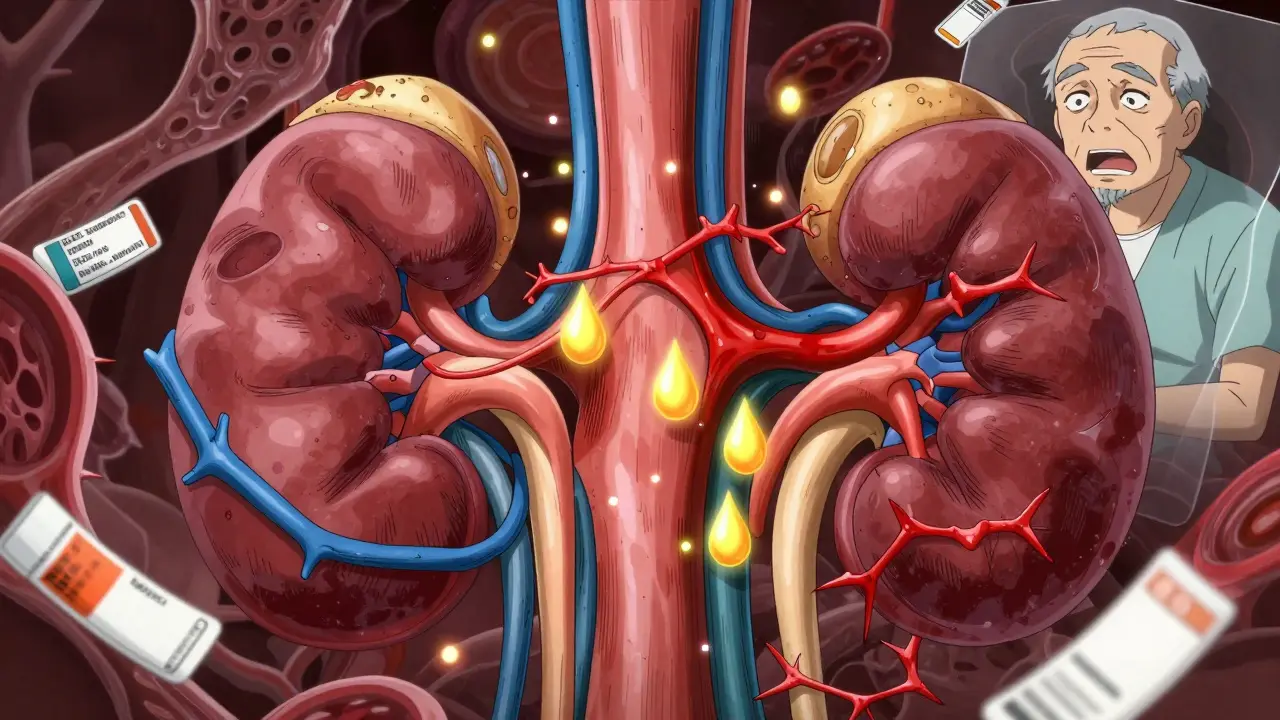
NSAID Types: Not All Are Created Equal
Some NSAIDs are riskier than others. But the difference isn’t always what you think.
Traditional NSAIDs like ibuprofen and naproxen are non-selective-they block both COX-1 and COX-2. They’re cheap, widely available, and effective. But they carry the highest risk of kidney injury. Studies show they’re responsible for 70-80% of NSAID-related AKI cases.
Celecoxib, a COX-2 selective inhibitor, was developed to reduce stomach ulcers. It’s also slightly gentler on the kidneys-about 20-30% lower risk of AKI in healthy people. But here’s the catch: that advantage disappears if your eGFR is already below 60. In people with existing kidney disease, celecoxib is just as dangerous as ibuprofen.
Aspirin is different. Low-dose aspirin (81 mg) for heart protection doesn’t seem to harm kidneys the same way. But high-dose aspirin (over 1,000 mg daily) carries similar risks to other NSAIDs. So don’t assume “aspirin is safe” just because it’s old.
What About Acetaminophen? Is It Safer?
Yes-mostly. Acetaminophen (Tylenol) doesn’t block COX enzymes in the kidneys. It doesn’t reduce blood flow. It doesn’t cause the same kind of kidney injury. Studies show it’s 40-50% less likely to trigger AKI than NSAIDs.
But it’s not a magic bullet. It doesn’t reduce inflammation. So if you have arthritis, tendonitis, or bursitis, it won’t touch the swelling. And if you take too much-over 4,000 mg per day-it can damage your liver. That’s a different kind of crisis.
For people with kidney disease who need pain relief, acetaminophen is usually the first choice. But only if taken within safe limits. And never with alcohol.
What About Topical NSAIDs?
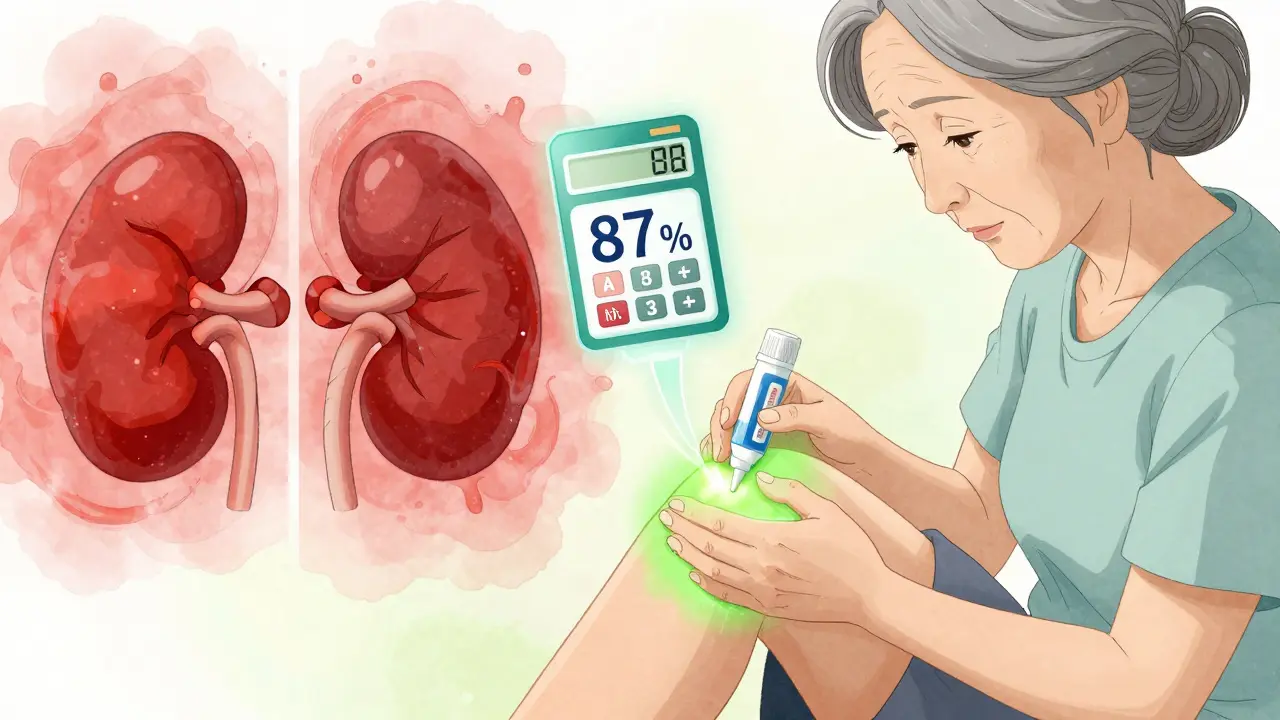
If you have joint pain in your knee or shoulder, you might not need to swallow a pill at all. Topical NSAIDs-gels, creams, patches-deliver the drug directly to the sore spot. Less than 6% of the dose enters your bloodstream.
A 2024 JAMA Internal Medicine trial with 3,200 patients found topical NSAIDs caused 40-50% fewer kidney problems than oral versions. They’re just as good for localized pain. And they’re available over the counter in most countries now.
For older adults with osteoarthritis, switching from oral ibuprofen to diclofenac gel can cut kidney risk dramatically. No more stomach upset. No more kidney strain. Just relief where you need it.
How to Protect Your Kidneys
Preventing NSAID-related kidney injury isn’t about avoiding painkillers altogether. It’s about using them wisely.
- Check your eGFR first. If you’re over 60 or have high blood pressure, diabetes, or heart disease, ask your doctor for a simple blood test. If your eGFR is below 60, NSAIDs should be avoided unless absolutely necessary.
- Avoid the triple whammy. Never take NSAIDs with ACE inhibitors, ARBs, and diuretics at the same time. If you’re on all three, talk to your doctor about alternatives.
- Use the lowest dose for the shortest time. For acute pain, don’t take NSAIDs for more than 7-10 days without checking in with your doctor. Daily use for months? That’s how chronic kidney disease starts.
- Stay hydrated. Drink water before, during, and after exercise. If you’re sweating a lot, aim for 5-10 mL per kg of body weight two hours before activity. During long runs or hikes, drink 0.4-0.8 liters per hour. This keeps your urine specific gravity below 1.020-signaling you’re not dehydrated.
- Consider topical options. For joint or muscle pain, try a gel or patch. It’s safer and just as effective for localized issues.
- Watch for early signs. Decreased urine output, swelling in the legs, unexplained fatigue, or nausea could be early signs of kidney trouble. Don’t wait for severe symptoms.
What You Should Know About Over-the-Counter NSAIDs
The biggest problem? People think “over-the-counter” means “safe.” It doesn’t. In the U.S., NSAIDs cause around 80,000 emergency room visits every year. That’s more than opioid overdoses in some years.
On Reddit’s r/kidneybros, hundreds of people share stories like this: “I took ibuprofen for a week. My creatinine jumped from 1.1 to 3.5. No one warned me.” Or: “My doctor said it was fine. Then I ended up on dialysis.”
The FDA has kept the same warning label on NSAIDs since 2005. The European Union strengthened theirs in 2015. But in many places, the packaging still doesn’t clearly say: “Do not use if you have kidney disease.”
Patients aren’t being careless-they’re misinformed. And doctors, overwhelmed with appointments, often don’t have time to explain it.
What’s Next? New Tools to Prevent Kidney Injury
There’s hope. The American Society of Nephrology launched the NSAID-RF Risk Calculator in 2023. It uses 12 factors-age, eGFR, blood pressure, diuretic use-to predict your 30-day risk of kidney injury with 87% accuracy. Doctors can plug in your info and get a clear yes or no on NSAID safety.
Researchers are also testing new drugs. One combines ibuprofen with acetylcysteine, an antioxidant that may protect kidney cells. Phase 2 trials are promising.
And in 2025, a study in Nature found a genetic variant in the PTGS2 gene that makes some people far more sensitive to NSAID kidney damage. Soon, a simple saliva test could tell you if you’re genetically at risk.
For now, the best tools are simple: know your numbers, avoid dangerous combos, use topical options when you can, and never assume a pill is harmless just because you can buy it without a prescription.
Can NSAIDs cause permanent kidney damage?
Yes, especially with long-term use or in people with existing kidney disease. While acute kidney injury from NSAIDs is often reversible if caught early, repeated episodes can lead to chronic kidney disease. Studies show chronic NSAID users have a 50% higher risk of CKD progression. In some cases, especially when combined with other risk factors, the damage becomes permanent.
Is it safe to take ibuprofen once in a while if I have kidney disease?
No, if your eGFR is below 60, even occasional use is risky. If your eGFR is between 30 and 60, the American College of Rheumatology recommends avoiding NSAIDs entirely. If you have eGFR above 60 and no other risk factors, a single dose may be okay-but never take it regularly. Always check with your doctor first.
What are the early warning signs of NSAID-related kidney injury?
Early signs are often subtle: less urine than usual, swelling in the ankles or feet, unusual fatigue, nausea, or confusion. Some people feel fine until a blood test shows their creatinine has jumped. That’s why regular kidney checks are critical if you’re using NSAIDs regularly.
Can I use NSAIDs if I’m an athlete?
It’s not recommended. During prolonged exercise, especially in heat, your kidneys are already under stress. Adding NSAIDs can reduce blood flow by 30-50% more than exercise alone. While the absolute risk is low (about 0.001% of marathon runners), the consequences can be severe. Stick to hydration, rest, and acetaminophen for pain relief after training.
What’s the safest painkiller for someone with kidney disease?
Acetaminophen (Tylenol) is generally the safest oral option, as long as you stay under 3,000 mg per day and avoid alcohol. For localized pain, topical NSAID gels are safer than pills. Always avoid NSAIDs like ibuprofen or naproxen if your eGFR is below 60. For chronic pain, talk to your doctor about non-drug options like physical therapy, heat therapy, or nerve blocks.







Man, I had no idea ibuprofen could do this. My grandpa’s on blood pressure meds and takes Advil like candy. I’m sending him this right now. This isn’t just a warning-it’s a lifesaver.