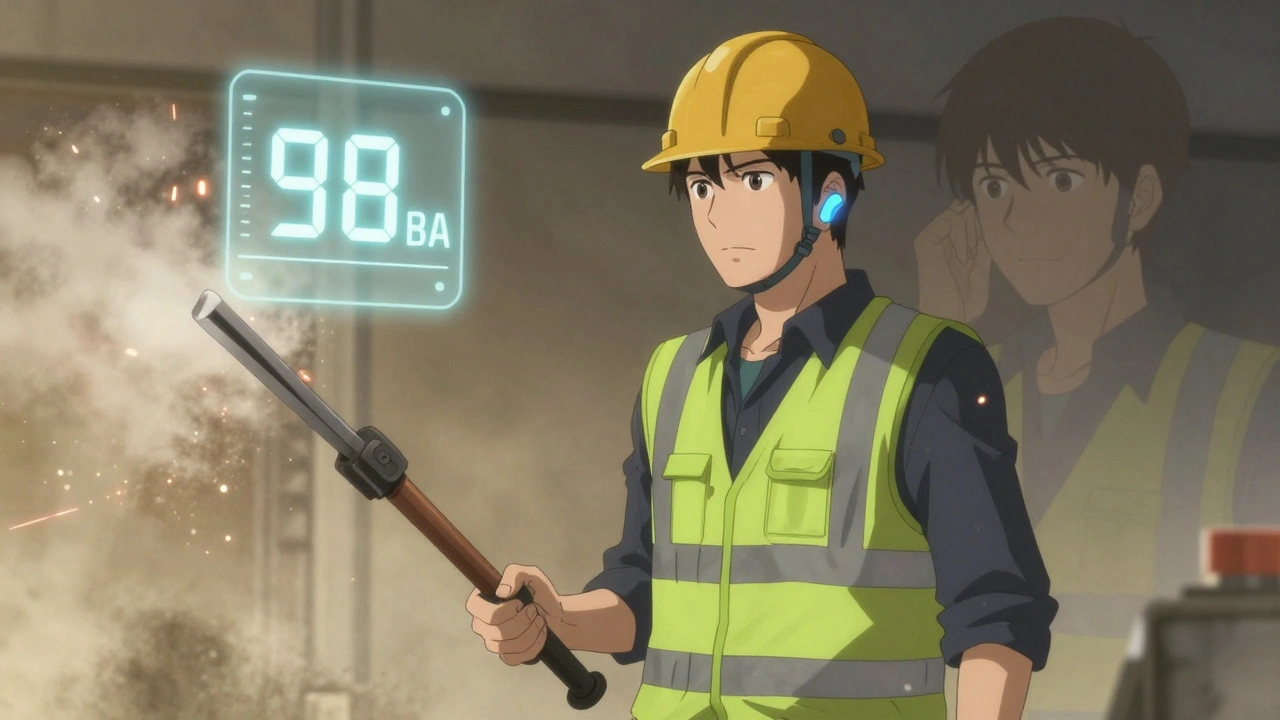
Every year, millions of people lose their hearing-not from aging, not from illness, but from noise they didn’t realize was dangerous. At work, in concerts, even while listening to music on headphones, the sound around us is quietly damaging our ears. And the worst part? It’s completely preventable.
What Counts as Dangerous Noise?
Noise isn’t just about how loud something sounds. It’s about how long you’re exposed to it and how much energy it carries. The science is clear: exposure to sounds at or above 85 decibels (dBA) over an 8-hour period can cause permanent hearing loss. That’s the level of a busy city street, a lawnmower, or a blender running at full speed. But here’s the catch: decibels work on a logarithmic scale. Every 3-decibel increase doubles the noise energy. So at 88 dBA, your safe exposure drops to just 4 hours. At 91 dBA, it’s 2 hours. At 100 dBA-common at rock concerts or near power tools-you’re only safe for 15 minutes.Workplace Rules: Why Two Standards Exist
In the U.S., there are two sets of rules for noise at work, and they’re not the same. The Occupational Safety and Health Administration (OSHA) sets the legal minimum: 90 dBA as an 8-hour average. If noise hits that level, employers must provide hearing protection and start a hearing conservation program. But here’s the problem: OSHA’s standard allows for a 5-decibel exchange rate. That means if noise goes up 5 dB, exposure time is cut in half. So at 95 dBA, you’re allowed 4 hours. At 100 dBA? Still 2 hours. That’s not what scientists recommend. The National Institute for Occupational Safety and Health (NIOSH) says the real danger starts at 85 dBA-with a 3-decibel exchange rate. That means at 88 dBA, exposure time is cut to 4 hours. At 91 dBA, it’s 2 hours. At 100 dBA, just 15 minutes. NIOSH’s standard is based on decades of research showing that workers exposed to 85 dBA over 20 years show measurable hearing loss. OSHA’s rule lets you take more risk. NIOSH’s rule protects you. Australia follows NIOSH’s lead. Safe Work Australia sets the exposure standard at 85 dBA over 8 hours, with a peak limit of 140 dB(C). The European Union is even stricter: their upper exposure limit is 87 dBA, even after accounting for hearing protection. The difference isn’t just paperwork-it’s about how many people lose their hearing over a lifetime. NIOSH estimates that under its own standard, less than 8% of workers would develop significant hearing loss. Under OSHA’s, it’s closer to 25%.How Hearing Protection Actually Works
Hearing protection isn’t just about plugging your ears. It’s about fitting them right. Foam earplugs, if inserted properly, can reduce noise by 20-30 dB. But most people don’t insert them correctly. NIOSH studies show that without hands-on training, only 40% of workers use them properly. With training, that jumps to 85%. Custom-molded earplugs or electronic hearing protectors-used by musicians and construction crews-can reduce dangerous noise while letting you hear speech and alarms clearly. Employers are required to offer hearing protection when noise hits 85 dBA. But they must also try to reduce noise at the source first. That’s called the hierarchy of controls. Eliminate the noise if you can. Replace noisy machinery with quieter models. Install sound barriers. Use vibration dampeners. Only after those steps should you rely on earplugs or earmuffs. Too often, companies treat hearing protection as the only solution. It’s not. It’s the last line of defense.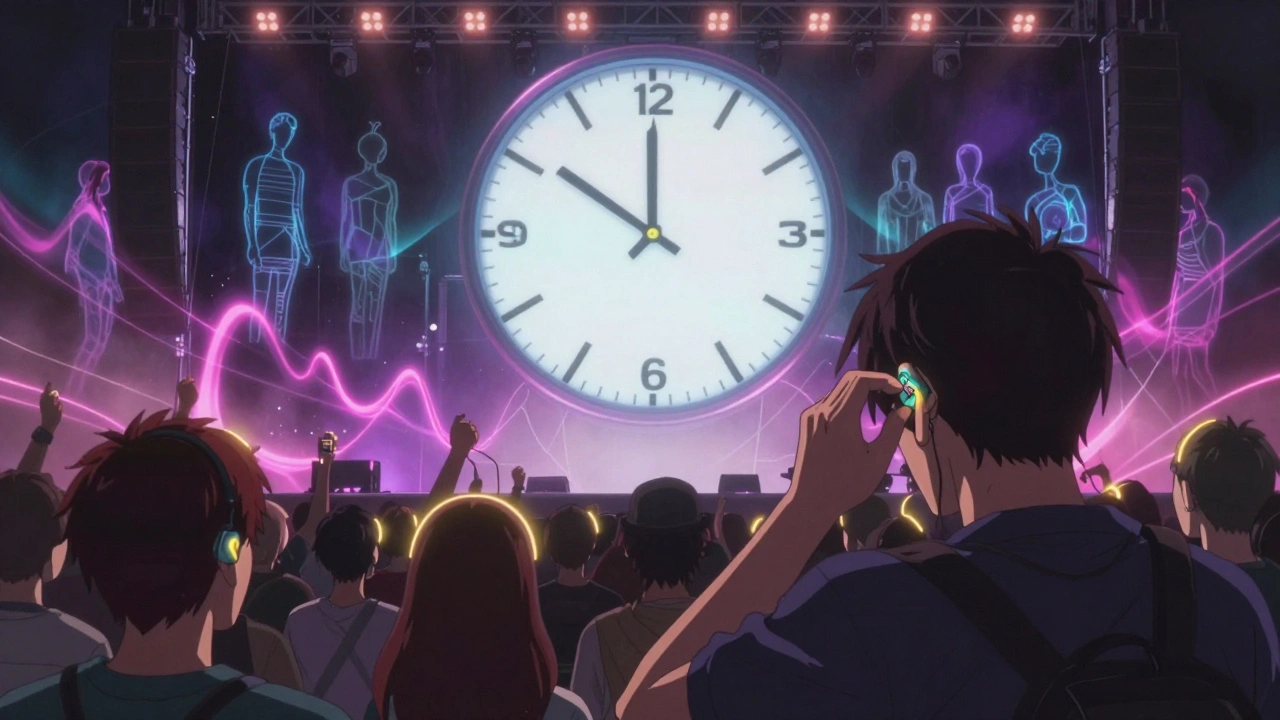
Concerts Aren’t Safe Just Because They’re Fun
You’re not at work, so you think noise rules don’t apply. But a typical rock concert hits 100-115 dBA. At 110 dBA, your ears can only take 1.5 minutes before risking permanent damage. Most people stay for two hours. That’s 80 times the safe limit. The World Health Organization recommends limiting personal audio device use to 40 hours per week at 80 dBA. That’s the equivalent of listening to music at 60% volume for an hour a day. But when you add concerts, festivals, or even loud gyms, you’re stacking up damage. Research shows that half of concertgoers experience temporary hearing loss after a show-a warning sign that permanent damage may be coming. Some venues are starting to act. The Lifehouse Festival gives out free, high-fidelity earplugs-and 75% of attendees take them. Others install real-time sound level displays so people can see how loud it is. Quiet zones, where noise stays under 75 dBA, let people take breaks. Spotify and Apple Music now warn users when their headphone volume exceeds safe levels. These aren’t gimmicks. They’re life-saving tools.Who’s Most at Risk?
Manufacturing, construction, and mining workers face the highest exposure. In 2022, the U.S. recorded 15,500 cases of occupational hearing loss. Over half came from just three industries. Musicians are next. Orchestral players face 89-94 dBA during performances. Drummers and rock guitarists? Often over 100 dBA. A 2022 survey found 63% of professional musicians already have some degree of hearing loss. But it’s not just professionals. DIYers using power tools on weekends. Factory workers on night shifts. Construction crews in urban areas. Even people who go to the gym and listen to music through headphones while on the treadmill. All of them are building up damage slowly, silently. And once it’s gone, it doesn’t come back.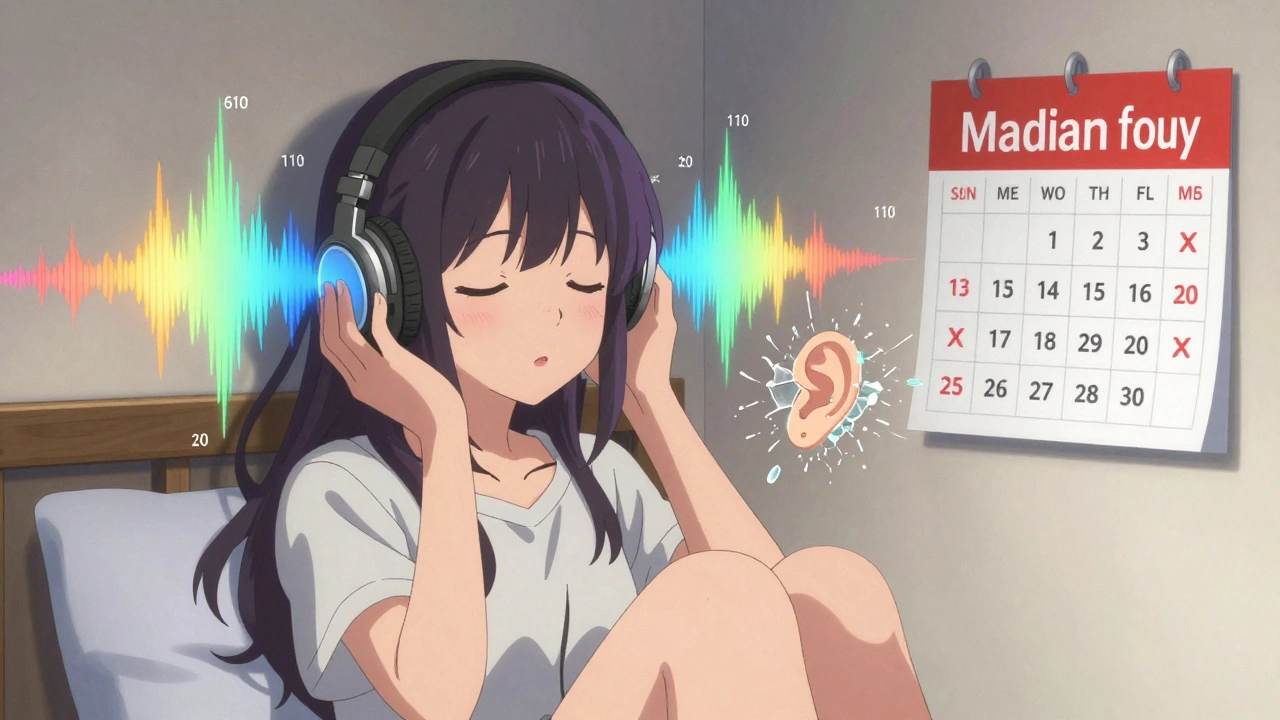
What You Can Do Right Now
You don’t need to wait for your employer or your favorite band to act. Start protecting your hearing today.- If you’re at work and noise makes it hard to talk to someone 1 meter away, it’s too loud. Ask for a noise assessment.
- Use earplugs at concerts. You don’t need expensive ones-basic foam ones work if inserted right. Roll them thin, pull your ear up, and let them expand.
- Set your music player to 60% volume or less. Use apps that monitor exposure. Many now show real-time decibel levels.
- Take breaks from noise. Even 5 minutes every hour helps your ears recover.
- Get your hearing tested annually if you’re regularly exposed to loud environments. Baseline tests catch early damage.
The Future of Hearing Protection
Change is coming. California already uses NIOSH’s 85 dBA standard with the 3-dB exchange rate. The European Commission is pushing to extend workplace noise rules to concert venues where staff are exposed over 80 dBA. New smartphone apps can now measure noise with 92% accuracy compared to professional meters. That means you can check your environment anytime. The National Institute on Deafness and Other Communication Disorders projects that if all sectors adopted the 85 dBA standard, we could prevent 240,000 cases of hearing loss each year in the U.S. alone by 2040. That’s not a distant dream. It’s a reachable goal-if we act now.Hearing loss doesn’t happen overnight. It creeps in. You don’t wake up deaf. You slowly stop hearing the birds, the doorbell, your grandchild’s laugh. By then, it’s too late. But today, you can choose differently. Protect your ears like you protect your eyes, your teeth, your heart. Because once your hearing is gone, no technology can fully replace it.
What noise level is considered dangerous for hearing?
Noise at or above 85 decibels (dBA) over an 8-hour period is considered dangerous and can cause permanent hearing loss. For every 3-decibel increase, safe exposure time is cut in half. At 100 dBA, safe exposure is only 15 minutes. Concerts, power tools, and heavy machinery often exceed this limit.
Is OSHA’s noise limit enough to protect hearing?
No. OSHA’s legal limit is 90 dBA over 8 hours, but scientists say it’s not protective enough. The National Institute for Occupational Safety and Health (NIOSH) recommends 85 dBA with a 3-decibel exchange rate, which reduces risk significantly. OSHA’s standard allows up to 25% of workers to develop hearing loss over a career; NIOSH’s cuts that to under 8%.
Do earplugs really work at concerts?
Yes-especially if they’re inserted correctly. Basic foam earplugs can reduce sound by 20-30 dB without distorting music. High-fidelity earplugs are designed for musicians and concertgoers; they lower volume evenly across frequencies so you still hear the music clearly. Many festivals now give them out for free, and 75% of attendees use them when available.
Can I check my own noise exposure at home?
Yes. Smartphone apps like NIOSH’s Sound Level Meter or Decibel X can measure environmental noise with 90%+ accuracy compared to professional tools. You can use them to check your workplace, gym, or home environment. If readings regularly hit 85 dBA or higher, take steps to reduce exposure.
Why is hearing loss from noise permanent?
Loud noise damages the tiny hair cells in your inner ear. These cells convert sound waves into signals your brain understands. Once they’re destroyed, they don’t regenerate. Unlike skin or bone, your inner ear has no repair mechanism. That’s why noise-induced hearing loss is permanent-and preventable.
What’s the best way to protect my hearing at work?
Start with engineering controls: quieter machines, sound barriers, or isolating noisy equipment. Then use administrative controls like rotating tasks to limit exposure time. Hearing protection (earplugs or earmuffs) should be the last step, not the first. Always get training on proper fit-poorly worn protection offers little to no benefit.
Are musicians at higher risk of hearing loss?
Yes. Professional musicians are exposed to 89-94 dBA during performances, with drummers and rock musicians often exceeding 100 dBA. A 2022 survey found 63% of professional musicians report some degree of hearing loss. Many now use custom-fitted earplugs and monitor sound levels during rehearsals to reduce risk.
Can hearing loss from concerts be reversed?
No. Temporary hearing loss after a concert-like muffled hearing or ringing-is a warning sign. It means your ears have been overloaded. If this happens often, the damage becomes permanent. There’s no cure for noise-induced hearing loss. Prevention is the only effective strategy.





85 dB is the line. Anything past that is just gambling with your future.
Stop waiting for the system to save you.