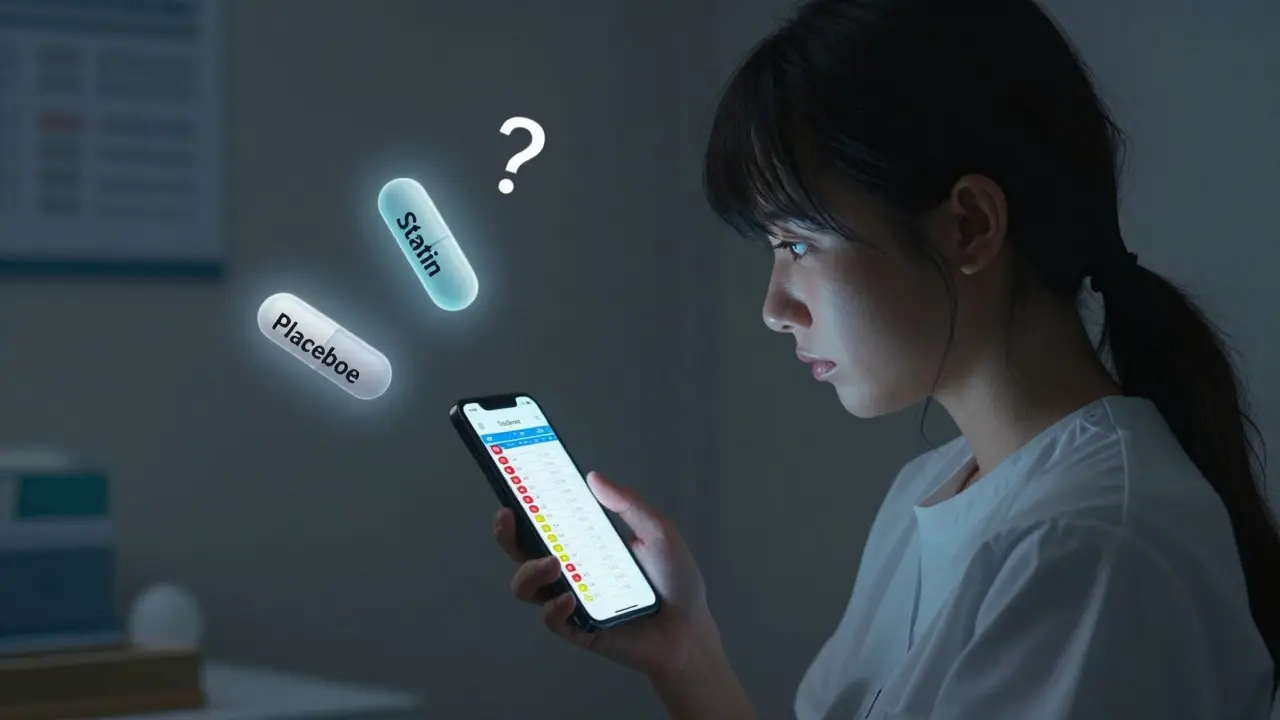
Statin Side Effects Assessment Tool
Track Your Symptoms
Your Symptom Analysis
Nocebo Effect Analysis
How to Use This Tool
Step 1: Track your symptoms for 2-4 weeks during different medication periods.
Step 2: Add entries for each period (statin, placebo, no pill).
Step 3: Let the tool analyze if your symptoms match the nocebo pattern.
According to the SAMSON study: If symptoms are similar across all periods, you're likely experiencing the nocebo effect.
More than half the people who stop taking statins do so because they think the drug is making them feel awful. Muscle aches. Fatigue. Brain fog. But here’s the twist: statins might not be the culprit at all. In fact, research shows that up to 90% of the symptoms people blame on statins are just as likely to show up when they’re taking a sugar pill. This isn’t magic. It’s the nocebo effect - and it’s changing how doctors treat heart disease.
What the Nocebo Effect Really Means
The nocebo effect is the dark twin of the placebo effect. Placebo is when you feel better because you believe a treatment will help. Nocebo is when you feel worse because you believe a treatment will hurt. It’s not in your head like a fantasy. It’s real pain, real fatigue, real discomfort - but triggered by expectation, not chemistry. Think about it this way: if you read online that statins cause muscle pain, your brain starts scanning your body for any twinge, any ache, any hint of discomfort. You notice it. You link it. You assume it’s the pill. And suddenly, you’re having symptoms - even if the pill is just starch and cellulose. This isn’t theoretical. In a landmark 12-month study called SAMSON, 60 people who had quit statins because of side effects were given three types of pills over 12 months: actual statins, dummy pills, and no pills at all. They tracked their symptoms every day using a smartphone app. The results? Symptom levels during statin months were almost identical to placebo months. And both were significantly higher than when they took nothing. The difference between statin and placebo? Statistically meaningless. The nocebo ratio? 0.90. That means 90% of what people blamed on statins was actually coming from their own expectations.Why Statins Are Unique
Statin side effects are the poster child for the nocebo effect - and for good reason. When you look at randomized, double-blind trials (where neither patients nor doctors know who’s getting the real drug), there’s no difference in muscle pain between statin and placebo groups. But in real-world, open-label studies - where patients know they’re taking statins - up to 20% report muscle symptoms. That’s a massive gap. And it’s not because statins are uniquely toxic. It’s because they’re widely prescribed, heavily discussed, and often demonized in media and online forums. Compare that to other medications. If you tell someone their blood pressure pill might cause dizziness, they might feel a little lightheaded. But with statins, the fear is amplified. Why? Because people know statins are taken for life. Because they’ve heard horror stories. Because they’ve been warned about muscle damage so often that their brains are primed to expect it. And when they feel a minor ache after starting the pill - something they might’ve ignored before - it clicks. It’s the statin.What the Science Actually Shows
Let’s cut through the noise. The real risk of serious muscle damage from statins? About 4 to 5 cases per 10,000 people per year. Rhabdomyolysis - the rare, dangerous form - happens in fewer than 1 in a million people per year. That’s less likely than being struck by lightning. Meanwhile, the most common complaint - muscle aches - shows up in about 5% of people taking statins, and also in about 5% of people taking placebo. That’s not a drug reaction. That’s background noise. The body aches sometimes. You get tired. You’re older. You’re stressed. You’ve been sitting too long. These things happen. But when you start a new pill, your brain grabs the first possible explanation: it’s the statin. The SAMSON trial didn’t just prove the nocebo effect - it showed how predictable the pattern is. Symptoms started within days of starting any pill - statin or placebo. They faded just as fast when the pill stopped. That’s not how real drug toxicity works. Real side effects don’t vanish overnight when you stop the medicine. They linger. They build. They don’t magically disappear after a few days.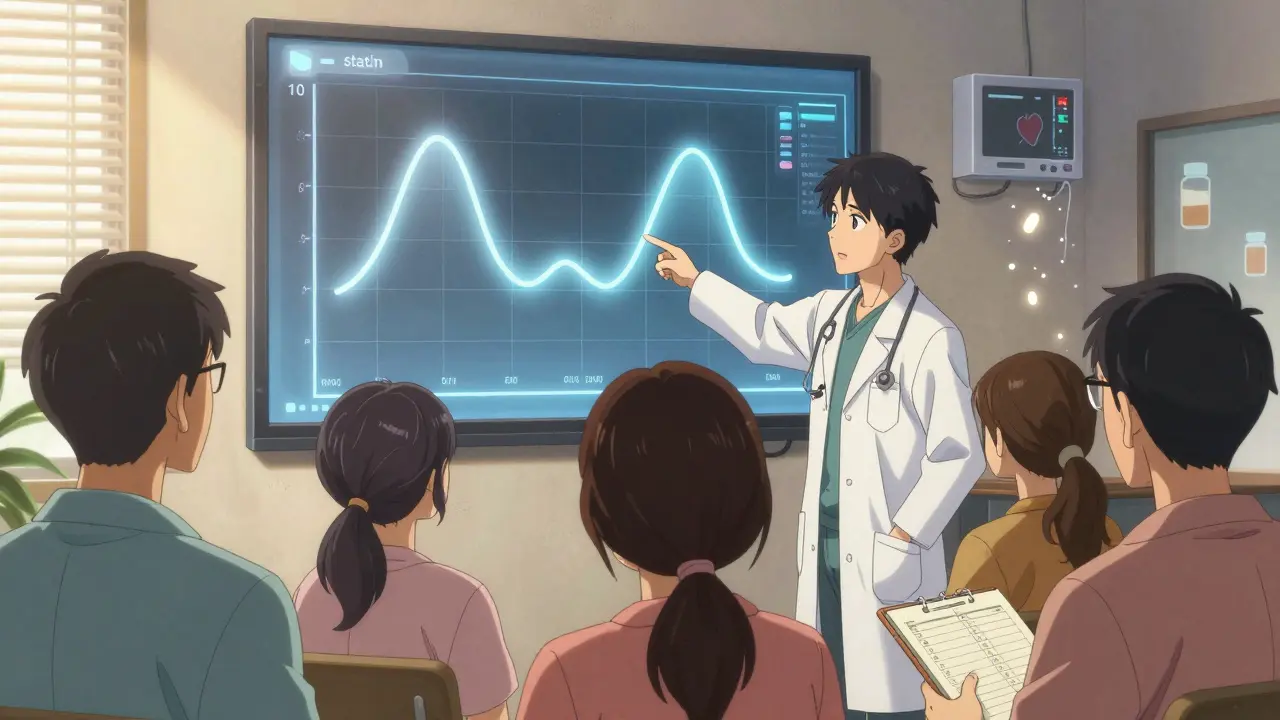
What Happens When Patients Learn the Truth
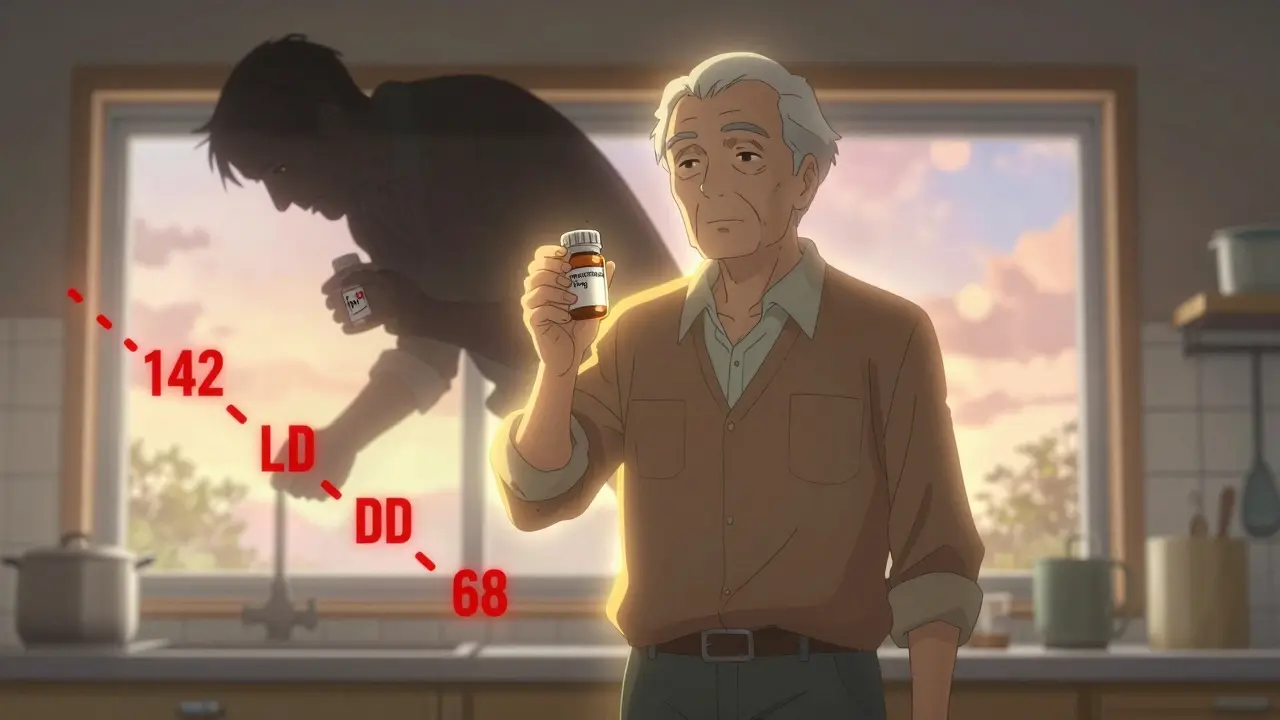
Here’s the most powerful part: once people see their own data, many change their minds. In the SAMSON trial, half of the participants who had quit statins because of side effects restarted them after seeing their symptom logs. They saw that their aches were just as bad on sugar pills as on real ones. They realized their body wasn’t rejecting the drug - their mind was. One 72-year-old man in the UK had been off statins for three years. After reviewing his symptom chart, he restarted rosuvastatin at 5mg. His LDL cholesterol dropped from 142 to 68. He’s been symptom-free for over a year. Reddit threads are full of similar stories. Users write: “I thought I couldn’t take statins. Then I saw my numbers were the same on placebo. I restarted. No pain.” Another: “I was convinced it was the statin. Turns out, I felt worse when I took nothing.” It’s not about dismissing their pain. It’s about redirecting it. The pain is real. The fear is real. But the cause? Often not the pill.How Doctors Are Changing Their Approach
Clinicians used to say: “Try a different statin.” “Lower the dose.” “Take it every other day.” All reasonable steps - but they never addressed the root problem: the belief that the drug is harmful. Now, leading heart organizations - the American College of Cardiology, the American Heart Association, the European Atherosclerosis Society - are pushing a new model. It’s called nocebo education. It’s simple:- Explain the nocebo effect clearly: “Your symptoms are real, but they’re not likely caused by the statin.”
- Show them the data: “In studies, people on sugar pills report the same aches.”
- Offer a structured trial: “Let’s try a 3-month reset - statin, placebo, no pill - and track your symptoms.”
- Start low, go slow: Use the lowest effective dose. Give time.
What to Do If You’re Stopped on Statins
If you’ve quit statins because of side effects, here’s what you can do:- Don’t assume the pain is from the drug. Ask: “Could this be my brain?”
- Track your symptoms for 2 weeks without any statin. Use a notebook or phone app. Note the day, time, intensity (0-10), and what else was going on (sleep, stress, activity).
- Ask your doctor about a nocebo trial. Can you do a 3-month blind test with placebo, statin, and no-pill periods? Some clinics now offer this.
- If you restart, start with a low dose - 5mg rosuvastatin or 10mg atorvastatin. Give it 4-6 weeks before deciding.
- Watch for true red flags: dark urine, severe weakness, fever. These are rare but real. If you have them, get blood work (CPK levels). Otherwise, assume it’s not the statin.
The Bigger Picture
This isn’t just about statins. It’s about how we think about medicine. We’ve built a culture where every side effect is assumed to be chemical. But the mind is a powerful drug. It can make you feel better with a sugar pill. It can make you feel worse with a real one. And when we ignore that, we miss the biggest opportunity in modern cardiology. Statin non-adherence costs the U.S. healthcare system over $11 billion a year in preventable heart events. That’s not because the drugs don’t work. It’s because we didn’t talk about the mind. The solution isn’t more drugs. It’s better conversations. It’s showing people their own data. It’s helping them understand that feeling bad after starting a pill doesn’t mean the pill is bad. Sometimes, it just means your brain is listening too closely.When the Nocebo Effect Isn’t the Answer
Let’s be clear: the nocebo effect doesn’t mean every symptom is fake. A small number of people - less than 1% - have true statin intolerance. Their muscles are inflamed. Their CPK levels are sky-high. They get real, dangerous damage. For them, statins are not safe. That’s not nocebo. That’s pharmacology. The key is distinguishing between the two. If your symptoms disappear when you stop the statin and return when you restart - and you’ve ruled out other causes like thyroid issues, vitamin D deficiency, or overexertion - then it might be real. But if your symptoms are the same on placebo? Then it’s likely the nocebo effect. Doctors now use a simple rule: if CPK levels are normal and symptoms match the nocebo pattern (on/off quickly, same on placebo), assume it’s not a true drug reaction. Try again. With education. With support. With data.What’s Next
Researchers are now testing digital tools to fight the nocebo effect. One trial is using cognitive behavioral therapy (CBT) delivered via app to retrain how people think about statins. Apple and Google are partnering with universities to build symptom trackers that integrate with health apps. The goal? Make it easy for anyone to see their own patterns - and break the cycle of fear. The message is simple: you’re not broken. Your body isn’t rejecting statins. Your brain might be. And that’s something you can change.Are statin side effects real or just in my head?
The symptoms you feel - like muscle aches or fatigue - are real. But research shows that 90% of those symptoms occur just as often when you take a placebo pill. That means your brain, not the drug, is likely triggering them. It’s not imaginary pain. It’s pain caused by expectation. This is called the nocebo effect.
If I felt better after stopping statins, doesn’t that mean the drug caused the problem?
Not necessarily. Many people feel better after stopping any pill, even if it’s a sugar pill. In the SAMSON trial, people felt better during no-pill months - not because the statin was toxic, but because they weren’t expecting side effects. The timing of symptom relief doesn’t prove causation. What matters is whether the same symptoms happened on placebo.
Can I try statins again if I stopped because of side effects?
Yes - and many people who do, succeed. About half of those who quit statins due to side effects are able to restart them after learning about the nocebo effect. Start with a low dose, track your symptoms daily, and give it 4-6 weeks. If symptoms are similar on placebo, you’re likely safe to continue.
How do I know if my symptoms are from the statin or something else?
True statin side effects are rare and usually come with high CPK blood levels, dark urine, or extreme weakness. If your CPK is normal and your symptoms match the pattern of the nocebo effect - starting quickly after starting any pill and fading just as fast - then it’s likely not the drug. Talk to your doctor about a symptom tracker or a nocebo trial.
Is the nocebo effect just a way for doctors to dismiss my concerns?
No. The nocebo effect doesn’t mean your pain isn’t real. It means the cause might not be the drug. Good doctors use this knowledge to help you, not dismiss you. They show you your own data, offer support, and give you a path back to treatment - not because they think you’re making it up, but because they know you can feel better without giving up on your heart health.



I used to swear statins wrecked my legs - until I did that SAMSON-style log thing. Turned out, I felt just as crappy on the sugar pills. My brain was just screaming 'STATIN!' every time I climbed stairs. Crazy how powerful expectation is. I restarted at 5mg and haven't looked back. No aches, no fuss. Just my heart staying chill.
Turns out, my 'side effects' were just me overthinking like a nervous cat.