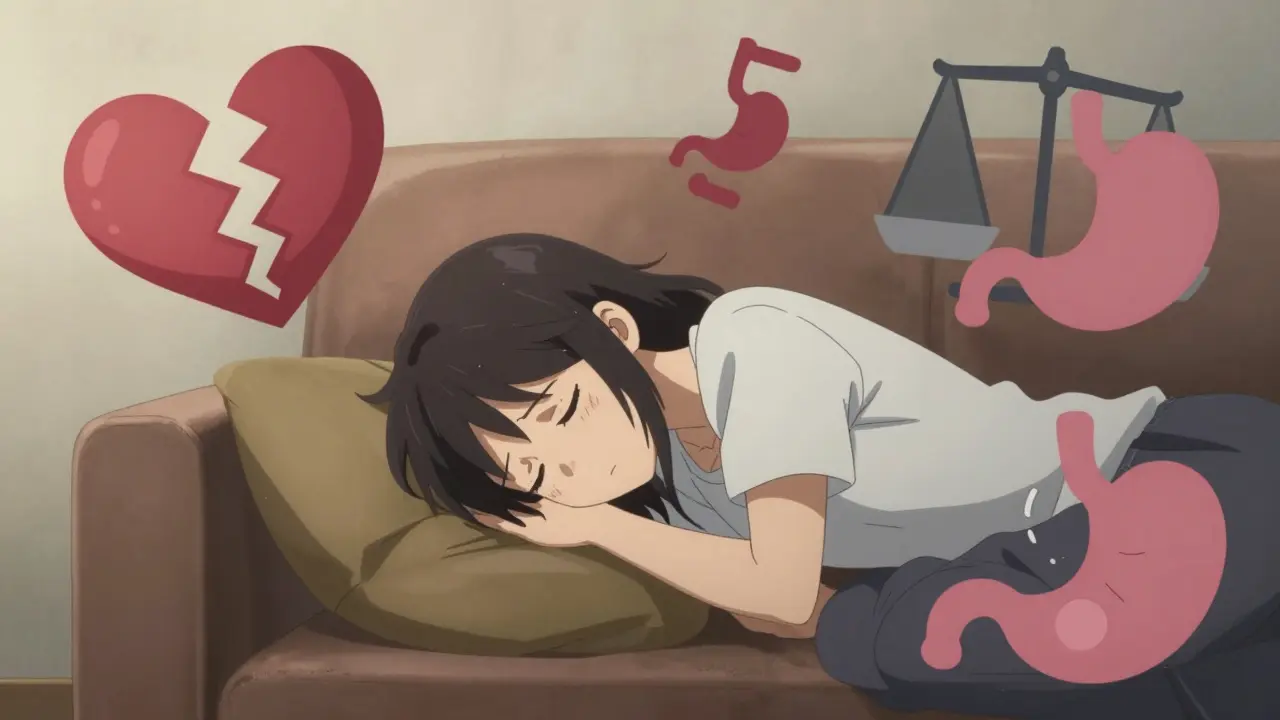
Traditional antidepressants like SSRIs often come with side effects that make life harder-sexual dysfunction for up to 70% of users, weight gain, and stomach issues. But new antidepressants are changing that. Today, we're looking at the latest antidepressants with better side effect profiles and what they mean for people living with depression.
How New Antidepressants Work Differently
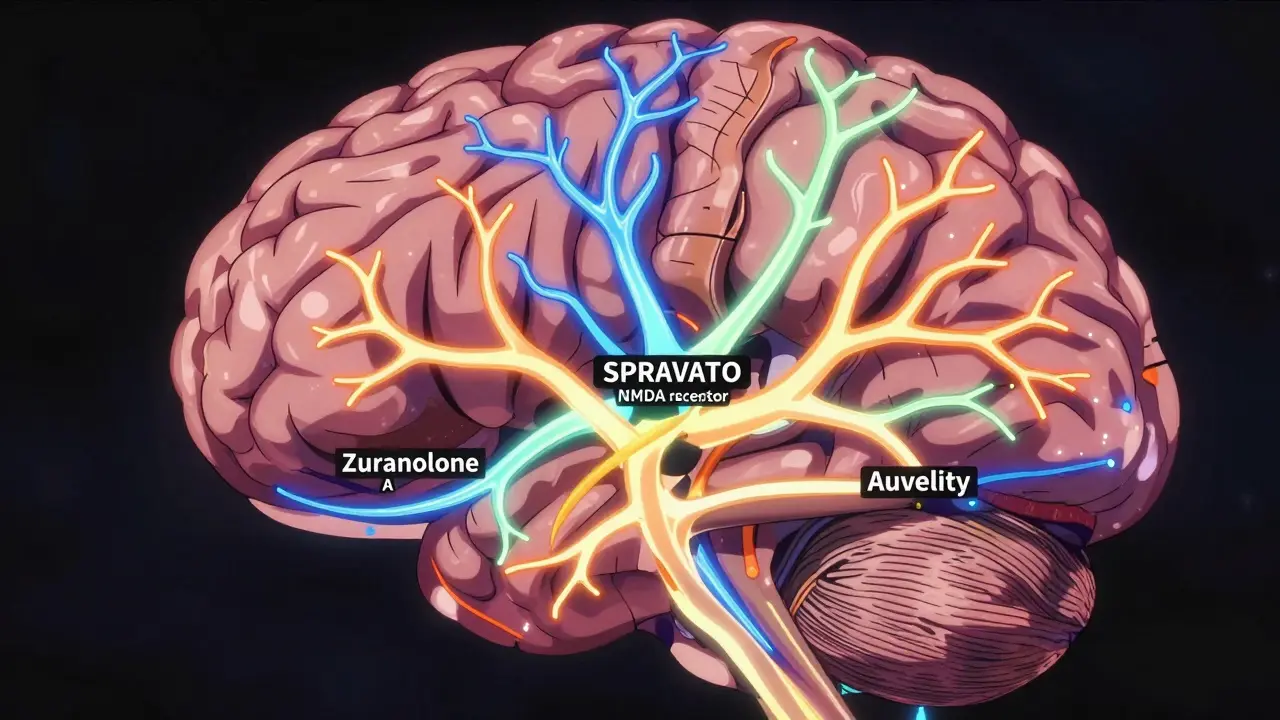
Unlike older drugs that mainly tweak serotonin levels, newer antidepressants target different brain pathways. For example, SPRAVATO (esketamine) works on NMDA receptors, which are involved in brain plasticity. This approach leads to faster results-symptoms can improve in just one to two days. Meanwhile, Zuranolone (Zurzuvae) is a neurosteroid that modulates GABA-A receptors. It's taken as a short course and helps with postpartum depression. Another option, Auvelity, combines dextromethorphan and bupropion to block NMDA receptors while controlling metabolism. These mechanisms avoid the serotonin-focused approach that causes many side effects.
SPRAVATO is a nasal spray that targets glutamate activity in the brain. Glutamate is a key neurotransmitter for learning and memory. By blocking NMDA receptors, SPRAVATO helps the brain form new connections quickly. This is why symptom relief can happen within hours. However, this mechanism also causes side effects like dissociation-feeling detached from reality-which is why it's only given in certified clinics under supervision.
Zuranolone, approved for postpartum depression in 2023, is a neuroactive steroid. It enhances GABA-A receptor activity, which calms the brain. Unlike daily medications, it's taken as a 14-day course. But it must be taken with food to increase absorption by 50-60%. Common side effects include dizziness and sleepiness. Auvelity combines dextromethorphan (which blocks NMDA receptors) and bupropion (which slows dextromethorphan's metabolism). This combo allows dextromethorphan to work longer and more effectively. It's taken once daily and reaches steady state in 4-5 days. Side effects are milder-headaches and insomnia in about 10-15% of users.
Side Effect Comparison: What's Better?
Let's look at how these new options stack up. Traditional SSRIs like sertraline cause sexual dysfunction in 30-70% of users. But newer drugs show much lower rates. For example, Exxua (gepirone) has only 2-3% sexual dysfunction cases. Weight gain is another big issue-SSRIs can lead to 10-15% weight increase over six months, but Auvelity shows 15-20% less weight gain than duloxetine. Here's a quick comparison:
| Medication | Common Side Effects | Onset of Action | Cost (per course) |
|---|---|---|---|
| SPRAVATO (esketamine) | Transient dissociation (45-55%), dizziness | 24-48 hours | $880 per dose |
| Zuranolone (Zurzuvae) | Dizziness (25%), somnolence (20%) | 24-72 hours | $9,450 for 14-day course |
| Auvelity (dextromethorphan/bupropion) | Headache (15%), insomnia (10%) | 4-5 days | $1,500 for 30-day supply |
| Traditional SSRIs (e.g., sertraline) | Sexual dysfunction (30-70%), weight gain (10-15%) | 4-8 weeks | $4-$50 for 30 tablets |
For comparison, traditional tricyclic antidepressants like amitriptyline cause weight gain in 48% of users, while agomelatine is associated with weight loss in 53% of users. SSRIs vary significantly: Celexa (citalopram) shows better overall tolerability with 22% lower insomnia than sertraline but carries higher QT prolongation risk (0.1% incidence at doses >40mg/day per FDA label).
Real-World Evidence from Clinical Studies
A major Lancet review in October 2025 analyzed 151 randomized controlled trials and 17 FDA reports. It found these newer agents demonstrate 25-40% lower rates of treatment-emergent sexual dysfunction compared to SSRIs. SPRAVATO's effectiveness was confirmed in JAMA Psychiatry (2023) with 56-64% bioavailability and symptom relief in under two days. Zuranolone's Phase 3 trials showed a 70% response rate for postpartum depression. However, experts caution that most studies are short-term. Dr. Prasad Nishtala from STAT News warns, "All findings are based on studies averaging eight weeks. Long-term data is still lacking." Dr. Azeem Majeed adds, "Randomized controlled trials typically recruit younger adults without other illnesses, so this study likely does not reflect real-world risks where antidepressants are prescribed to people with multiple comorbidities."
Practical Challenges: Cost and Access
Getting these new treatments isn't always easy. SPRAVATO costs about $880 per dose and requires a 2-hour clinic visit for monitoring-there are only 1,243 certified clinics nationwide. Insurance often requires prior authorization. Zuranolone's 14-day course averages $9,450, and Medicare coverage varies. Meanwhile, generic SSRIs cost as little as $4 for 30 pills. As Dr. Alison Cave notes, "Side effect differences are clinically crucial, especially for patients with obesity or heart problems. But access barriers remain a major hurdle." According to 2025 MMIT data, SPRAVATO requires prior authorization in 92% of commercial plans. Only 38% of primary care physicians feel confident prescribing Zuranolone according to a 2025 AAFP survey, highlighting the need for more provider education.

What Patients Are Saying
Reddit users share mixed experiences. On r/mentalhealth, user u/AnxietyWarrior2023 reported: "After 15 years on SSRIs with terrible sexual side effects, switching to Exxua in January 2025 was life-changing-no ED issues and noticeable improvement in mood within 10 days." Conversely, u/DepressedEngineer wrote: "SPRAVATO gave me terrifying dissociation episodes despite working well for depression-I had to discontinue after 3 treatments." Healthgrades data shows Zuranolone averages 3.8/5 stars from 1,247 reviews, with 68% citing effectiveness but 42% mentioning dizziness. GoodRx user reviews indicate Celexa maintains 4.2/5 stars from 8,321 ratings, praised for 'less weight gain than other SSRIs' but criticized for 'heart palpitations at higher doses.' RealSelf.com features 327 user reports on botulinum toxin for depression, with 78% reporting 'significant improvement' lasting 18-24 weeks but 22% citing 'high cost not covered by insurance.' Common praise points include rapid action (mentioned in 65% of positive Zuranolone reviews) and absence of sexual side effects (highlighted in 82% of positive Exxua reviews), while frequent complaints include cost (cited in 73% of negative SPRAVATO reviews) and transient dissociation (reported by 58% of SPRAVATO users).
What's Next for Depression Treatment
Researchers are working on even better options. Aticaprant, a kappa opioid receptor antagonist, is in Phase 3 trials with a 60% response rate in treatment-resistant depression and minimal weight gain (0.3 kg average in 8 weeks). The NIH recently funded $2.4 million for developing a genetic test predicting side effect profiles with 85% accuracy. The FDA's September 2025 guidance requires cardiovascular monitoring for all new antidepressants, and the European Medicines Agency's 2024 requirement for cognitive function assessments in clinical trials. Industry analysts predict 12% annual growth for novel mechanism antidepressants through 2030, but reimbursement challenges could limit uptake. As Dr. Dervla Kelly summarizes: "The future isn't about finding the single best antidepressant-it's matching the right medication to the right patient based on their individual risks."






Finally some real progres in mental health care! 🌟