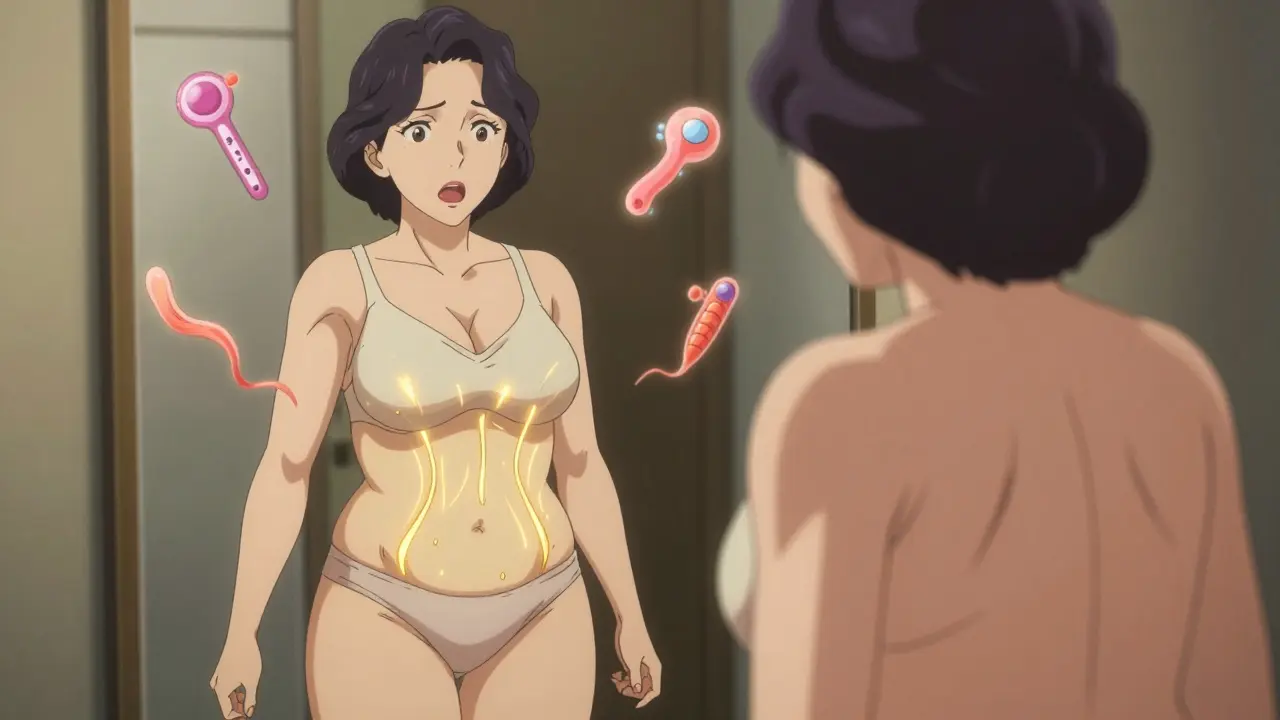
Women in their 40s and 50s often wake up one day and realize their clothes don’t fit anymore-even though they haven’t changed what they eat or how much they move. It’s not laziness. It’s not weakness. It’s biology. Menopause weight gain isn’t just about eating too much or sitting too long. It’s a complex shift in hormones, muscle, and metabolism that rewires how your body stores fat. And if you’re still using the same weight loss tactics that worked in your 20s, you’re fighting a losing battle.
Why Your Body Changes During Menopause
Before menopause, your body naturally stores fat in your hips, thighs, and buttocks. That’s estrogen at work. It tells fat cells to settle in those areas, keeping energy reserves handy for reproduction. But as estrogen levels drop-by 60 to 70% during the menopausal transition-your body doesn’t know what to do with fat anymore. It starts storing it differently. Around your belly. This isn’t just cosmetic. Visceral fat-the kind that wraps around your organs-is dangerous. It releases inflammatory chemicals that raise insulin resistance, increase blood pressure, and spike your risk of heart disease. Postmenopausal women are nearly five times more likely to develop abdominal obesity than women who haven’t hit menopause yet. And here’s the kicker: you can gain weight even if you eat the same amount you always have. Why? Because your resting metabolism slows down. Between age 30 and menopause, you naturally lose 3 to 8% of your muscle mass per decade. Menopause adds another 1 to 2% loss per year. Muscle burns calories-even when you’re sleeping. Less muscle means fewer calories burned. That’s why your body starts holding onto fat, even if you’re not overeating.The Hormone Rollercoaster: Estrogen, Testosterone, and Appetite
Estrogen doesn’t just control fat storage. It also helps regulate appetite and sleep. When estrogen drops, so does leptin-the hormone that tells your brain, “I’m full.” At the same time, ghrelin-the hunger hormone-spikes by 15 to 25% because of disrupted sleep from night sweats and hot flashes. So you’re hungrier, you’re more tired, and you crave carbs and sugar to get through the day. Meanwhile, testosterone becomes relatively higher in your system. That might sound good, but it’s not. Higher relative testosterone pushes fat storage toward your midsection. It’s like your body is rewiring itself to store energy where it thinks it’ll be needed most-around your core. And here’s what most people miss: it’s not just the drop in estrogen. It’s the imbalance. Your body is trying to adapt to a new hormonal landscape, and it’s not doing it gracefully. That’s why diets that worked before suddenly stop working. Your metabolism isn’t broken-it’s just operating under new rules.Why Old Weight Loss Strategies Fail
If you’ve tried cutting calories, doing endless cardio, or jumping on the latest keto or intermittent fasting trend, you’re not alone. But here’s what the science says: these approaches often backfire during menopause. Cardio alone won’t cut it. Running for an hour burns calories, but it doesn’t rebuild muscle. And without muscle, your metabolism stays sluggish. Cutting calories too low can make things worse. Your body thinks it’s starving, slows down even more, and starts holding onto fat like a lifeline. A 2023 survey from Mayo Clinic Connect found that 78% of women reported gaining weight despite keeping their diet and exercise routine the same. On Reddit’s r/menopause community, women share stories like: “I’ve run 5Ks for 20 years. Now I can’t zip my jeans. I’m not eating more-I’m just… different.” The truth? You’re not failing. Your body is. And you need a new strategy.
The Three Pillars of Menopause Weight Management
There’s no magic pill. But there are three proven pillars that work-when done together. 1. Strength Training: Your Secret Weapon Lifting weights isn’t just for bodybuilders. It’s essential for menopausal women. Resistance training-using dumbbells, resistance bands, or bodyweight exercises-builds muscle, boosts metabolism, and reduces belly fat. A 2022 clinical trial published in Menopause: The Journal of The North American Menopause Society found that women who lifted weights 2 to 3 times a week for six months gained 1.8 to 2.3 kg of muscle and lost 8 to 12% of abdominal fat. That’s not a coincidence. Muscle is your metabolic engine. The more you have, the more you burn-even at rest. Start simple: squats, lunges, push-ups (modified if needed), rows with bands, and deadlifts with light weights. Three sessions a week is enough. You don’t need a gym. You just need consistency. 2. Protein: The Fuel Your Muscles Crave After 40, your body becomes resistant to the signals that tell it to build muscle. This is called anabolic resistance. The fix? More protein, spread evenly through the day. Aim for 25 to 30 grams of protein per meal. That’s about 3 eggs, a palm-sized piece of chicken, a cup of lentils, or a scoop of whey protein. Don’t save all your protein for dinner. Eat it at breakfast and lunch too. The British Menopause Society recommends 1.2 to 1.6 grams of protein per kilogram of body weight daily. For a 70 kg woman, that’s 84 to 112 grams of protein a day. Most women get half that. Fixing this one thing can make a huge difference. 3. Sleep: The Hidden Hormone Regulator Hot flashes and night sweats aren’t just annoying-they’re sabotaging your weight loss. Poor sleep increases ghrelin (hunger) and lowers leptin (satiety). It also raises cortisol, the stress hormone that promotes belly fat. Getting 7 to 8 hours of quality sleep can reduce ghrelin by 15 to 25% and improve leptin sensitivity by 20 to 30%. That’s like adding a free metabolic boost. Try these: keep your bedroom cool, avoid caffeine after 2 p.m., limit screen time before bed, and consider magnesium or low-dose melatonin if sleep is a struggle. Talk to your doctor if hot flashes are keeping you up. There are safe, non-hormonal options.What Doesn’t Work (And Why)
Some trends promise quick fixes. They don’t deliver. Detox teas and juice cleanses? They’re just water loss. The weight comes back. And they can worsen nutrient deficiencies. Extreme low-carb diets? They may work short-term but often lead to muscle loss and fatigue. You need carbs for energy, especially if you’re exercising. Just walking more? Great for heart health. But not enough to rebuild muscle or reverse metabolic slowdown. Combine it with strength training. And please-don’t blame yourself. This isn’t about willpower. It’s about physiology. Your body is changing. You need to change with it.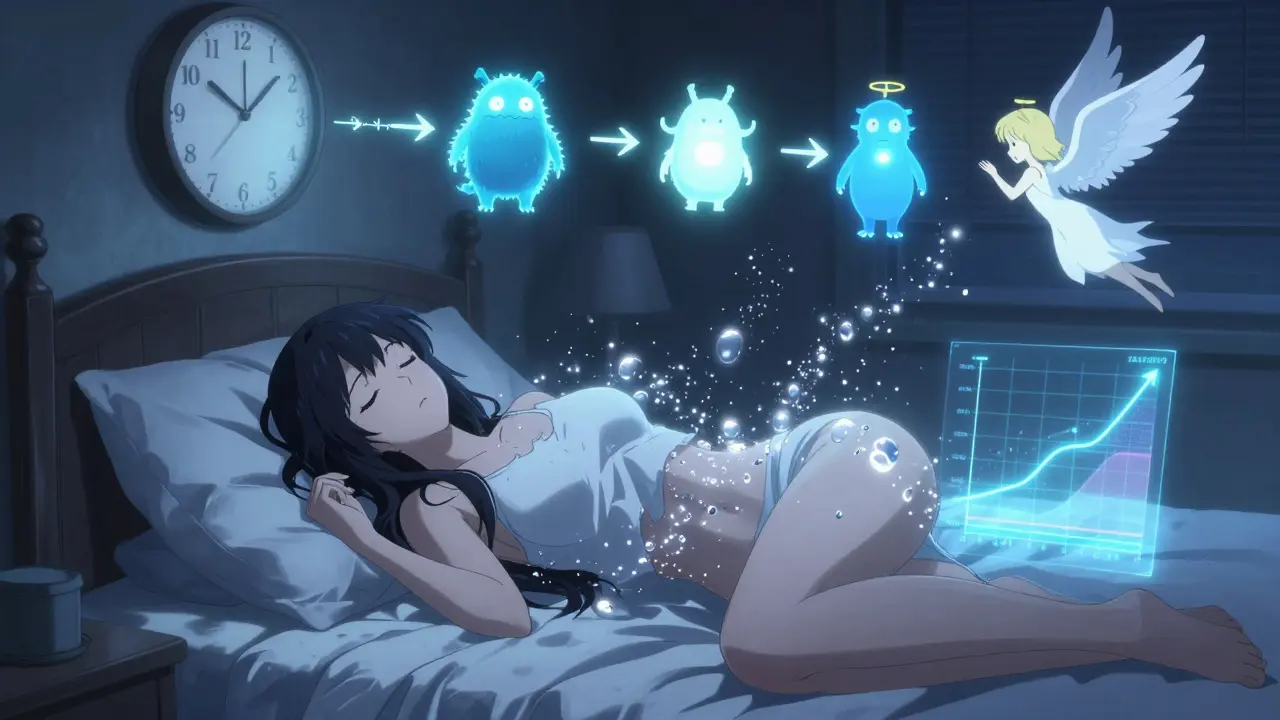
What’s New in 2026: The Future of Menopause Weight Management
Science is catching up. In September 2023, the FDA approved bimagrumab for Phase 3 trials-a drug that increases muscle mass by 5 to 7% and reduces fat by 8 to 10% in just 24 weeks. It’s not available yet, but it shows where the field is headed. The NIH is funding a major 5-year study called EMPOWER, testing whether early hormone therapy can prevent the shift to abdominal fat storage. Meanwhile, Mayo Clinic launched a personalized metabolic testing protocol in early 2023 that checks 17 hormonal and metabolic markers to build custom plans. But here’s the reality: these advances won’t help if you don’t have the basics in place. Strength training, protein, and sleep are still the foundation. The future is personalized-but the present is practical.Getting Started: Your 30-Day Plan
You don’t need to overhaul everything at once. Start small.- Week 1-2: Add 2 strength sessions per week (bodyweight or light weights). Focus on form, not weight.
- Week 3: Add one high-intensity interval training (HIIT) session (15-20 minutes-think 30 seconds fast, 60 seconds slow, repeat).
- Week 4: Track your protein intake. Aim for 25g at each meal. Use an app if needed.
- Every night: Cool your room, turn off screens 1 hour before bed, and drink a cup of chamomile tea.
When to See a Doctor
If you’ve tried the basics for 6 months and still aren’t seeing results, it’s time to talk to a specialist. Not every doctor knows how to handle menopause weight gain. Look for someone trained in menopause medicine. Ask for:- Abdominal circumference measurement (over 88 cm / 35 inches = increased risk)
- Metabolic panel (blood sugar, insulin, cholesterol)
- Hormone profile (estradiol, testosterone, thyroid)
Why am I gaining weight even though I eat the same as before?
Your metabolism slows down because you’re losing muscle mass and estrogen levels drop. Even if your calorie intake hasn’t changed, your body burns fewer calories at rest. Hormonal shifts also increase hunger and reduce satiety, making it easier to overeat without realizing it.
Is belly fat after menopause dangerous?
Yes. Visceral fat around your organs releases inflammatory chemicals that increase insulin resistance, raise blood pressure, and raise your risk of heart disease, stroke, and type 2 diabetes. Postmenopausal women have a 3.2 times higher risk of metabolic syndrome than premenopausal women-even at the same BMI.
Should I take hormone therapy to lose weight?
Hormone therapy isn’t approved for weight loss. But for some women, it can help reduce fat redistribution and improve sleep, which indirectly supports weight management. It’s not a magic solution-it’s one tool among many. Talk to a menopause specialist to see if it’s right for your health profile.
How much protein do I need daily after menopause?
Aim for 1.2 to 1.6 grams of protein per kilogram of body weight. For a 70 kg (154 lb) woman, that’s 84 to 112 grams per day. Spread it across 3 meals: 25-30 grams per meal. This helps fight muscle loss and supports metabolism.
Can I still lose weight after menopause?
Absolutely-but it’s slower. You’ll lose weight at 20-30% slower rates than before menopause. Focus on body composition, not the scale. Muscle gain and fat loss will show in how your clothes fit, your energy levels, and your waist measurement long before the number on the scale drops.
What’s the best exercise for menopause weight gain?
Strength training 2-3 times a week is the most effective. Combine it with 1-2 sessions of HIIT and daily walking. Cardio alone won’t rebuild muscle. Resistance training is the key to reversing metabolic slowdown and reducing belly fat.
If you’ve been told this is just “part of aging,” don’t accept that. It’s part of a biological shift-and you have more power to change it than you think. Start with strength. Eat enough protein. Sleep like your health depends on it. Because it does.


OMG YES. I thought I was just lazy after 45… turns out my body just betrayed me. 😭 I’ve been doing bodyweight squats and protein shakes at breakfast now-my jeans actually fit again. Not by much, but I can breathe. Thank you for writing this like someone who actually gets it.