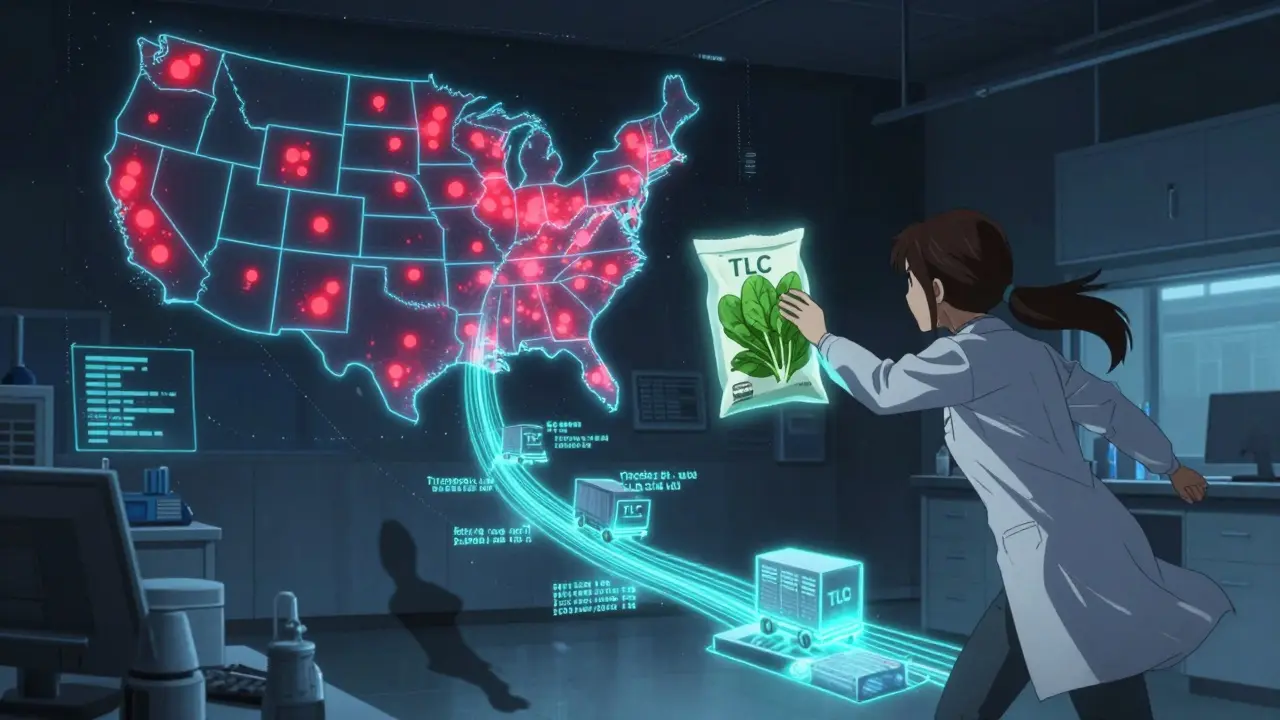
When a foodborne illness outbreak hits, every hour counts. The FDA doesn’t have time to call dozens of suppliers, dig through paper logs, or guess which batch of spinach caused the illness. That’s where lot number tracking comes in - a system designed to find the source of contamination in hours, not weeks.
What Is a Traceability Lot Code (TLC)?
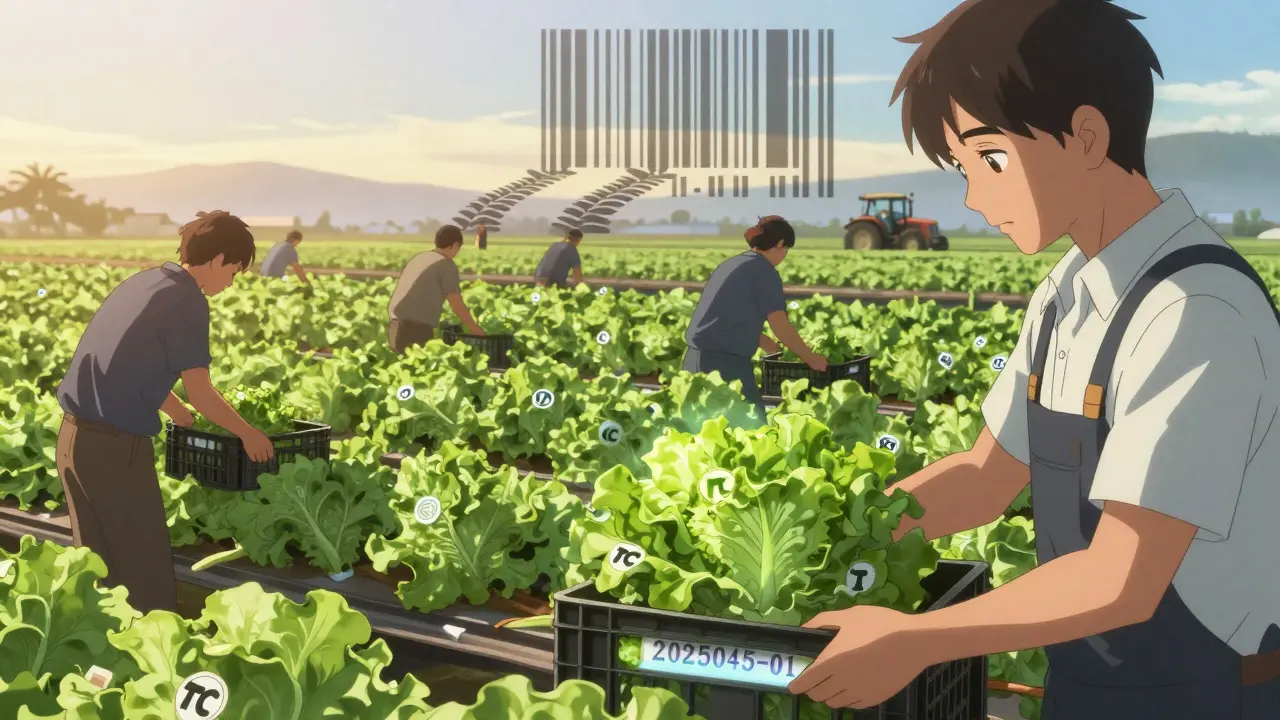
A Traceability Lot Code (TLC) is a unique identifier assigned to a specific batch of food on the FDA’s Food Traceability List (FTL). It’s not just any lot number you might see on a package - it’s a legally required, standardized code that follows the product from farm to fork. The TLC must be assigned at three exact points: when raw agricultural commodities like lettuce or onions are first packed; when seafood is received on land from fishing vessels; and when food is transformed - like when tomatoes are turned into salsa or eggs are made into liquid egg products.The code itself can be alphanumeric - think "L2025045-01" or "X77-2025-003" - but it must be unique across the entire supply chain, not just within one company’s system. This means if a bag of spinach from California gets mixed with spinach from Arizona, each batch gets its own TLC. No guessing. No overlap. Just clear, traceable data.
Why the FDA Needed a New System
Before the Food Traceability Rule, tracing contaminated food was like following breadcrumbs in the dark. Investigators had to track invoices, shipping manifests, and internal records from multiple companies. In a 2018 outbreak linked to romaine lettuce, it took over six weeks to pinpoint the source. By then, thousands were sick, and millions of pounds of lettuce were destroyed unnecessarily.The FDA’s 2022 Food Traceability Rule changed that. It wasn’t just about better record-keeping - it was about forcing the entire supply chain to speak the same language. The TLC became the central thread connecting every step: where the product came from, how much was shipped, when it moved, and who handled it next. The goal? Cut outbreak response time from weeks to days - or even hours.
The Seven Key Data Elements (KDEs)
A TLC doesn’t work alone. It’s tied to seven other pieces of information called Key Data Elements (KDEs). These are the facts that turn a code into a story:- Traceability Lot Code (TLC)
- Product description (e.g., "organic baby spinach")
- Quantity and unit of measure (e.g., "500 lbs")
- Location where the TLC was assigned (e.g., "Farm A, Salinas, CA")
- Transaction information (who received it, when, and where)
- Time and date of each transfer
- Previous TLC (if the product was transformed)
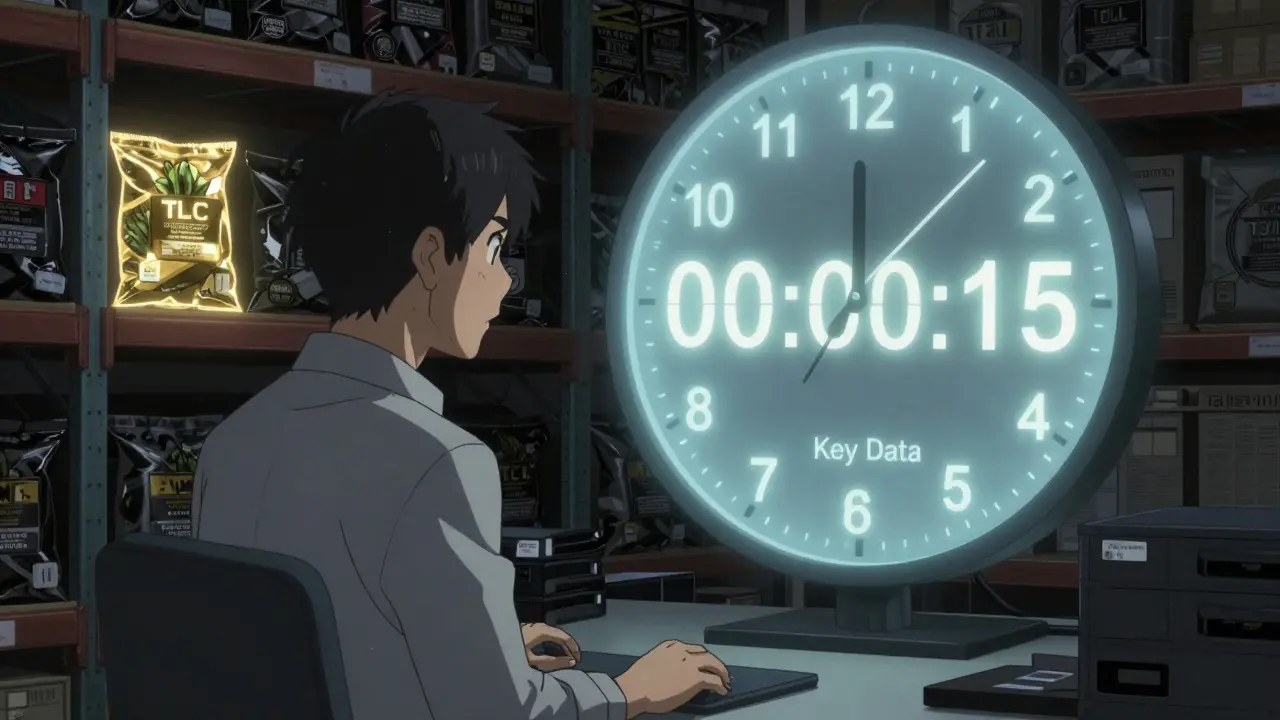
When the FDA requests this data during an investigation, companies have 24 hours to deliver it. Electronic records are strongly encouraged - and if they’re kept digitally, they must be exportable in CSV or similar formats. Paper records are still allowed, but they’re a nightmare to search through during a crisis.
Which Foods Are Covered?
The FDA didn’t apply this rule to everything. The Food Traceability List (FTL) includes only high-risk foods - the ones most often linked to illness. That includes:- Leafy greens (lettuce, spinach, kale)
- Tomatoes
- Onions
- Fresh-cut fruits and vegetables
- Soft cheeses (like brie or feta)
- Eggs (liquid, shell, and powdered)
- Nut butters
- Specific seafood like shrimp and crab
These foods make up about 15% of the U.S. food supply by volume - but they’re responsible for nearly half of all foodborne illnesses. The FDA deliberately focused here. Covering everything would’ve been impossible. Covering nothing would’ve been irresponsible.
How It’s Different From Old Lot Codes
Many companies already used lot codes - but those were for internal quality control. A plant might assign a different code for each shift, each pallet, or each day’s production. Those codes didn’t travel with the product. If a bag of shredded cheese was recalled, the retailer might not even know which original batch it came from.The TLC fixes that. It’s assigned only at key handoff points and must stay with the product unless it’s transformed. If a tomato is turned into sauce, the sauce gets a new TLC - but the old one must be recorded. This creates a chain of custody you can actually follow.
It’s also mandatory. Unlike the Produce Traceability Initiative (PTI), which was voluntary and mostly used by big retailers, the TLC system has teeth. Non-compliance can lead to regulatory action - including detention of shipments or facility inspections.
Industry Pushback and Real-World Challenges
Not everyone was thrilled. Small farms and processors worried about costs. One survey found the average company spent $42,500 to update systems. Many feared they’d have to run two systems - their old internal lot codes and the new TLC. The FDA responded clearly: if your current lot code meets the rules, you can use it as your TLC. No need for duplicate systems.Still, challenges remain. About 65% of companies reported trouble integrating TLCs into old software. Over 70% struggled to get suppliers to consistently use the code. Training staff was another hurdle. The FDA created 12 free training modules and offers help through its Traceability Assistance Program - but adoption isn’t uniform.
Even bigger concerns? The FTL leaves out foods like melons and ready-to-eat salads - both linked to outbreaks. Consumer groups argue this creates dangerous blind spots. The FDA says those foods are under review, and additions are likely.
What Happens When an Outbreak Occurs?
Let’s say people in five states get sick from E. coli after eating bagged salad. The CDC spots the pattern and alerts the FDA. Here’s what happens next:- The FDA asks retailers for the TLC on the contaminated product.
- The retailer pulls the code from their digital records - usually within minutes.
- The FDA traces the TLC back to the distributor, then to the packer, then to the farm.
- Within 24 hours, they know exactly which field the spinach came from, when it was harvested, and which trucks carried it.
- Only that specific batch is recalled. No need to pull every bag of lettuce in the country.
That’s the power of the system. In pilot programs, traceability time dropped from 7-10 days to under 24 hours. The FDA estimates this could prevent 20-30% of foodborne illnesses.
Technology and the Future
Big retailers like Walmart and Kroger have already gone further - using blockchain to track produce down to the individual pallet. The FDA isn’t requiring that yet. But they’re funding pilot projects with IoT sensors and digital labels. The goal? Real-time tracking, not just record-keeping.International alignment is another frontier. The EU’s Digital Product Passport uses different standards. The FDA held its first joint workshop with European regulators in March 2023 to start harmonizing. Without global alignment, imported foods could become weak links in the chain.
Compliance isn’t due until July 20, 2028 - a 30-month extension granted after industry pushed back. But companies that waited until the last minute are already scrambling. Those who started early are seeing benefits: fewer recalls, faster investigations, and stronger trust from customers.
Why This Matters to You
You might never see a TLC on your grocery bag. But when you buy spinach, eggs, or cheese, you’re relying on this system. It’s what stops a bad batch from becoming a national crisis. It’s what lets the FDA act fast instead of guessing. And it’s what keeps you safer without you even knowing it.The system isn’t perfect. It’s still new. Some gaps remain. But it’s the most significant upgrade to U.S. food safety since the Bioterrorism Act of 2002. And for the first time, tracking contaminated food doesn’t require a detective - just a code and a computer.
What is a Traceability Lot Code (TLC)?
A Traceability Lot Code (TLC) is a unique alphanumeric identifier assigned to a specific batch of food on the FDA’s Food Traceability List. It must be assigned at key points in the supply chain - like initial packing or transformation - and must remain unchanged unless the product is altered. The TLC links to seven key data elements, allowing the FDA to trace contaminated food back to its source quickly.
Which foods require lot number tracking under FDA rules?
The FDA’s Food Traceability List (FTL) includes high-risk foods linked to outbreaks: leafy greens, tomatoes, onions, fresh-cut fruits and vegetables, soft cheeses, eggs, nut butters, and certain seafood like shrimp and crab. These represent about 15% of the U.S. food supply by volume. Foods like melons and ready-to-eat salads are not yet included but are under review.
When does the FDA’s lot tracking rule take effect?
The final rule was published on November 15, 2022, but compliance is not required until July 20, 2028. This 30-month extension was granted after industry requested more time to implement systems. The rule applies to entities that manufacture, process, pack, or hold foods on the Food Traceability List.
Do companies need to create new lot codes, or can they use existing ones?
Companies do not need to create new lot codes. The FDA explicitly states that any existing lot code can serve as the Traceability Lot Code (TLC), as long as it meets the rule’s requirements: it must be unique across the supply chain, assigned at the correct points, and passed along with the product. Many firms are simply updating their current systems rather than building new ones.
What happens if a company doesn’t comply with the FDA’s lot tracking rules?
Non-compliance can lead to enforcement actions by the FDA, including detention of shipments, refusal of entry for imported goods, facility inspections, or even civil penalties. While the FDA has emphasized education and assistance - especially for small businesses - failure to provide requested traceability records within 24 hours during an investigation is a direct violation of the rule.
How does lot number tracking help during a foodborne illness outbreak?
During an outbreak, the FDA uses the Traceability Lot Code to quickly trace contaminated food back to its origin. Instead of spending weeks calling suppliers and reviewing paper records, investigators can access digital records of the TLC and its linked data - including where it was packed, who shipped it, and when. This allows them to isolate the affected batch within hours, reducing the scope of recalls and preventing more people from getting sick.
Is electronic record-keeping required for lot tracking?
Electronic record-keeping is not mandatory, but it is strongly encouraged. Paper records are allowed, but if records are kept electronically, they must be sortable and exportable in common formats like CSV. During an investigation, the FDA requires all Key Data Elements to be provided within 24 hours - something nearly impossible to do manually at scale. Most companies are moving to digital systems for efficiency and compliance.



This is actually kind of brilliant. I work in supply chain in India, and we’ve been using something similar for spices - but it’s all paper-based. Seeing the FDA push for digital traceability makes me wonder why more countries aren’t doing this. It’s not just about safety - it’s about trust.