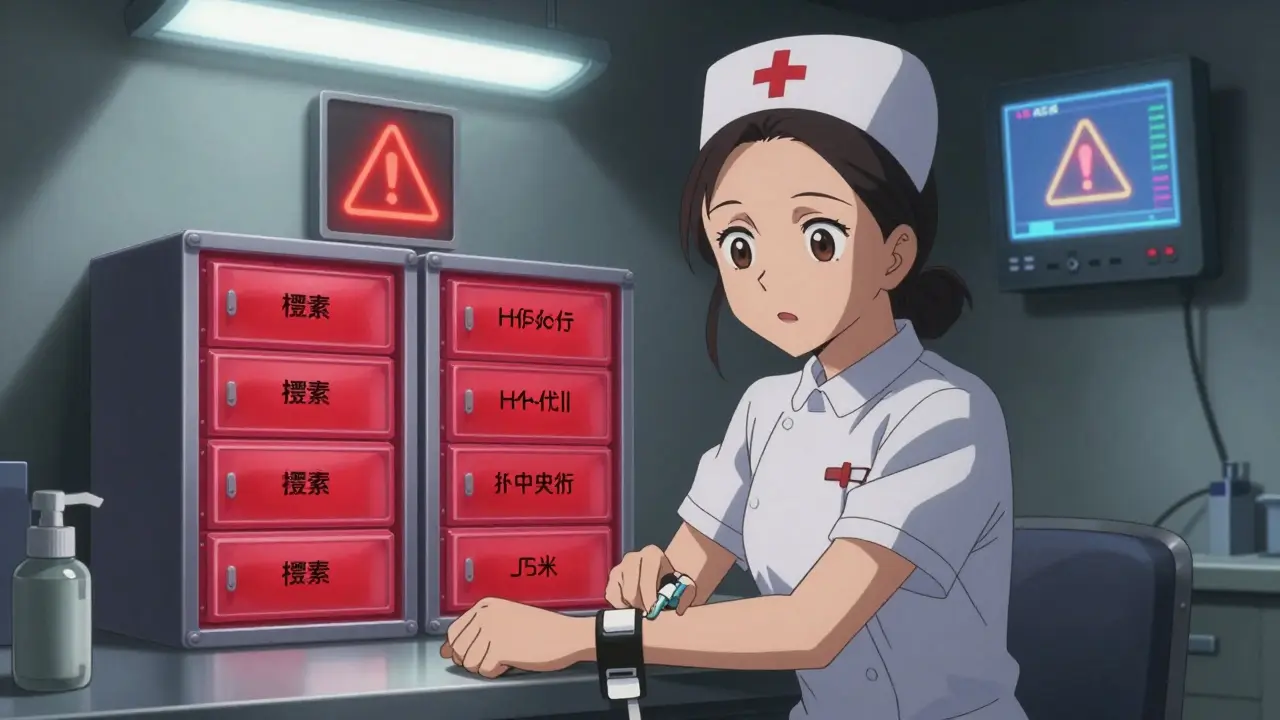
Automated Dispensing Cabinets (ADCs) are meant to make medication delivery faster and safer in clinics and hospitals. But if they’re not set up and used correctly, they can actually increase the chance of deadly mistakes. A patient once got 10 times the right dose of insulin because the cabinet was programmed wrong. That’s not a rare event-it’s a warning.
Why ADCs Can Be Dangerous
ADCs like BD Pyxis, Omnicell XT, and Capsa NexsysADC store pills, injections, and controlled substances behind locked drawers. They scan barcodes, log who took what, and tie into your electronic health records. Sounds perfect, right? But research shows that in six out of seven nursing units studied, error rates went up after ADCs were installed. Why? Because people started relying on the machine instead of thinking.The biggest risk? Override buttons. When a nurse needs a drug fast, they can bypass the system with a code. That’s useful in emergencies. But in one hospital, 58% of staff admitted to using overrides too often-without checking the patient’s allergies, current meds, or weight. One nurse on Reddit shared: "I scanned fentanyl instead of naloxone because they’re right next to each other. I caught it just in time." That’s not luck. That’s bad design.
The Nine Rules for Safe ADC Use
The Institute for Safe Medication Practices (ISMP) laid out nine Core Safety Processes in 2019. These aren’t suggestions-they’re the bare minimum. If your clinic skips even one, you’re playing Russian roulette with patient lives.- Control access-Only licensed staff should be able to log in. No shared passwords. Use biometrics if possible.
- Lock down look-alike/sound-alike drugs-Keep insulin and heparin, or morphine and hydromorphone, in separate drawers. Don’t put them side by side.
- Require barcode scanning-Every time you add a drug to the cabinet, scan the bottle. Every time you take one out, scan the patient’s wristband. No exceptions.
- Configure drug limits-Don’t let someone pull 50 tablets of oxycodone in one go. Set max quantities per transaction.
- Use patient profiling-The cabinet must check the patient’s allergies, kidney function, and current meds before dispensing. If it doesn’t, turn off the override.
- Control overrides-Only allow overrides for true emergencies. Require a second clinician to witness and document every override.
- Label everything-All meds in the cabinet must have clear labels with patient name, drug name, dose, and beyond-use date. Refrigerated drugs? They need temperature logs too.
- Place cabinets wisely-Don’t put them near sinks, windows, or heat sources. Don’t stack them on top of monitors. Moisture and heat ruin electronics and meds.
- Train and test-New staff need 4-6 weeks of hands-on training. Then they must pass a competency test before using the cabinet alone.
What Happens When You Skip the Rules
In 2017, a hospital in Ohio had a fatal error because the ADC allowed insulin to be dispensed without checking the patient’s blood sugar. The system didn’t flag the high risk. The nurse didn’t double-check. The patient died. The hospital paid millions in settlement.Another case: a long-term care clinic stored fentanyl patches next to clonidine patches. Both are small, square, and white. A nurse grabbed the wrong one. The patient went into respiratory arrest. The cabinet didn’t stop it because the barcode scanner wasn’t turned on for that drawer.
These aren’t glitches. They’re preventable. The problem isn’t the machine. It’s the people who think the machine will do their thinking for them.
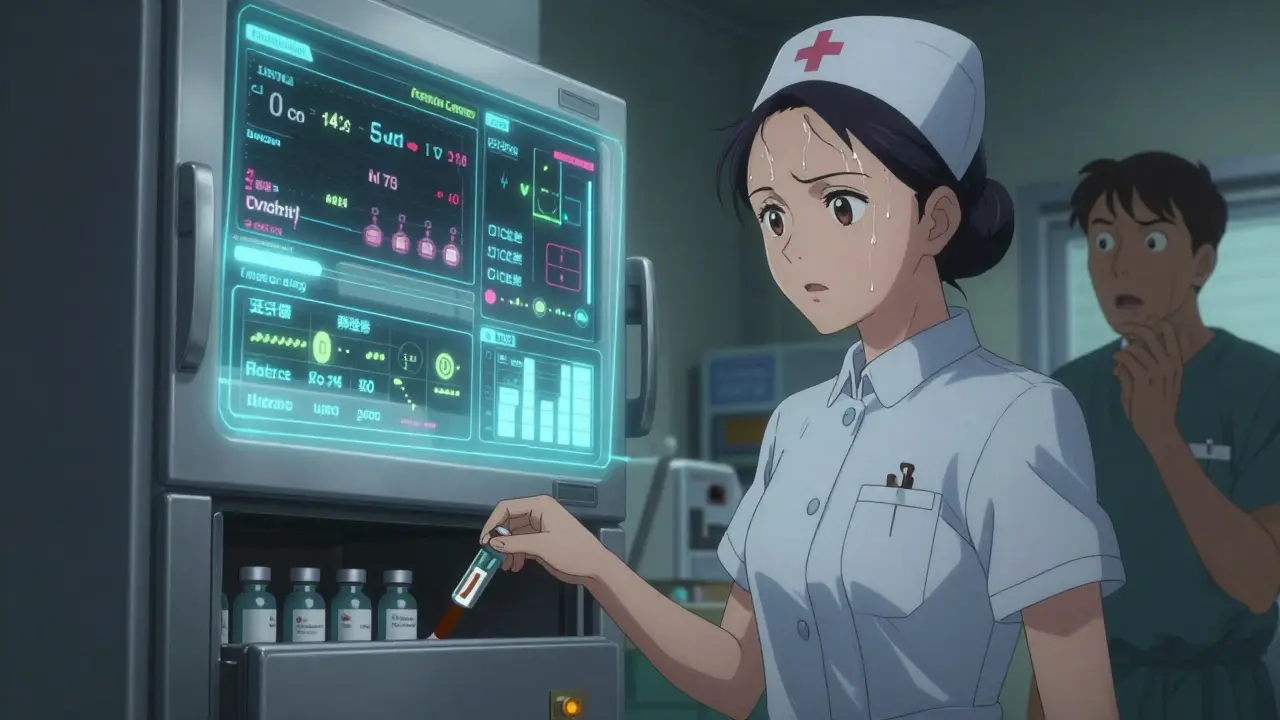
How to Pick the Right ADC for Your Clinic
Not all cabinets are made the same. If you’re a small clinic, you don’t need a $45,000 Omnicell XT. You need something that fits your space, your workflow, and your safety needs.Here’s how to compare:
| Feature | BD Pyxis MedStation | Omnicell XT | Capsa NexsysADC (4T Model) |
|---|---|---|---|
| Price (per unit) | $25,000-$45,000 | $25,000-$45,000 | $15,000-$35,000 |
| Footprint | Large (floor model) | Large (floor model) | Small (countertop) |
| Barcode scanning | Yes | Yes | Yes |
| Temperature control | Yes | Yes | Yes |
| Override controls | Customizable | Customizable | Basic |
| EHR integration | HL7, FHIR | HL7, FHIR | HL7 |
| Best for | Large hospitals | Large hospitals | Small clinics, outpatient |
If you’re a small clinic, the Capsa 4T is often the smart choice. It’s compact, affordable, and has all the safety features you need. But if you’re in a busy ER or ICU, you’ll want the full Pyxis or Omnicell system with advanced override logging and AI-driven alerts.
Training Staff Is Non-Negotiable
You can have the best cabinet in the world, but if your nurses don’t know how to use it, it’s just a fancy box.Start with a team: pharmacist, nurse manager, IT, and a few frontline staff. Run simulations. Make them scan the wrong barcode. Watch what happens. Let them experience the error before it happens to a real patient.
Teach them to ask three questions before each dose:
- Is this the right patient?
- Is this the right drug?
- Is this the right dose-for this patient?
And never, ever skip the scan. Not even once. Not even if you’ve done it a thousand times.
Keep the System Clean and Updated
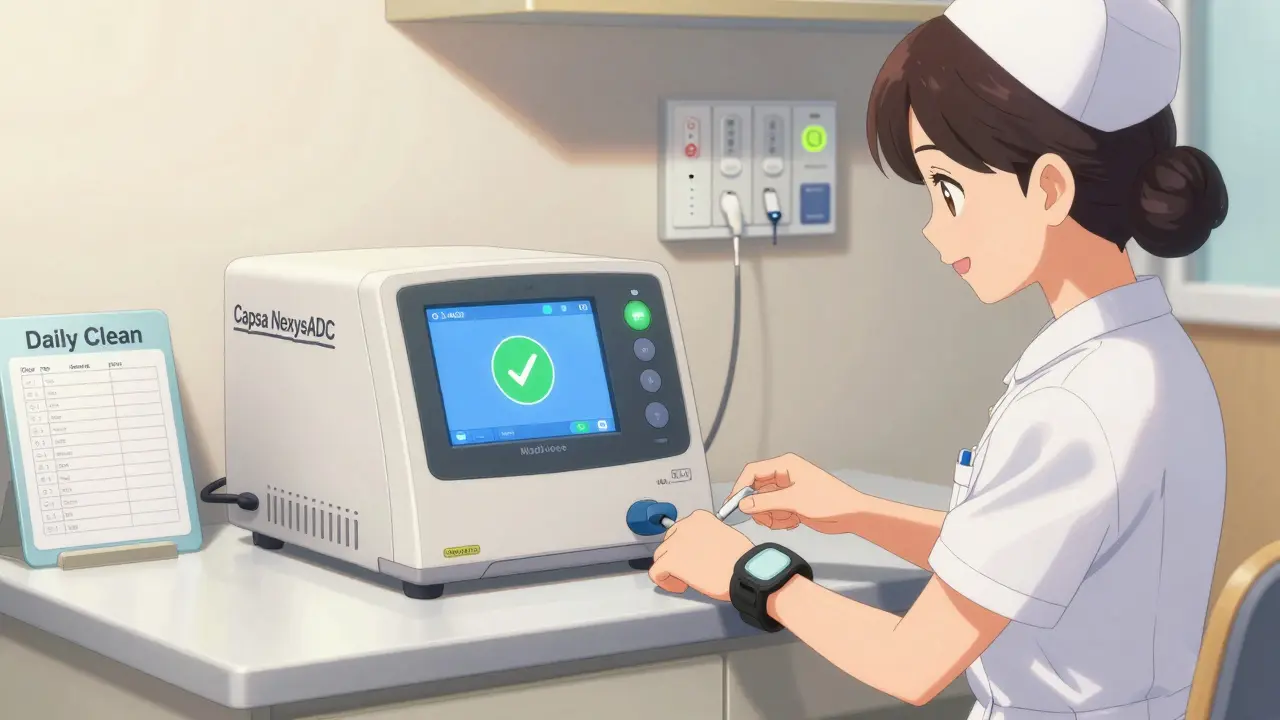
During the pandemic, many clinics forgot one simple thing: clean the cabinet. Medication drawers can harbor germs. One study found that 31% of ADCs had visible dust and grime inside. That’s a contamination risk.Set a daily cleaning routine:
- Wipe down the touchscreen and handle after every use.
- Disinfect drawers weekly with hospital-grade cleaner.
- Check for expired meds every shift.
- Make sure the temperature monitor is working.
Update software regularly. Omnicell released a patch in May 2023 that cut false diversion alerts by 37%. BD Pyxis added a new feature in September 2022 that checks returned meds for tampering. If you’re not updating, you’re using outdated safety tech.
What to Do When Something Goes Wrong
Mistakes happen. The goal isn’t to avoid all errors-it’s to catch them before they hurt someone.If a near-miss occurs:
- Report it immediately-no blame, no shame. Use your facility’s safety reporting system.
- Review the ADC logs. Who accessed it? What was scanned? Was there an override?
- Check the configuration. Was the drug in the wrong drawer? Was the alert turned off?
- Re-train the team. Don’t wait for another error.
At Mayo Clinic, they created unit-specific override lists. Only certain drugs could be overridden on the cardiac unit. Only certain ones on the ICU. That cut override-related errors by 63%.
The Bottom Line
Automated Dispensing Cabinets are powerful tools. But they’re not magic. They don’t fix bad habits. They don’t replace judgment. They only work if you treat them like the safety device they’re meant to be-not a time-saver.Every clinic using ADCs should have a written safety plan. It must be reviewed quarterly. It must include training logs, override reports, and configuration audits. If you don’t have one, you’re not safe.
Medication errors kill. ADCs can help stop them. But only if you use them right.
Can automated dispensing cabinets reduce medication errors?
Yes-but only if they’re properly configured and used. Studies show well-run ADC systems can reduce dispensing errors by 15-20%. But in poorly managed setups, errors can increase by 30% or more. The machine doesn’t make you safer. Your processes do.
What’s the biggest danger with ADCs?
The override function. When staff bypass safety checks too often, especially without documenting why, errors spike. Facilities with uncontrolled overrides have 2.3 times more errors than those with strict rules.
Do I need a pharmacist to approve every medication in an ADC?
Ideally, yes. The Joint Commission and ASHP recommend pharmacist review before any drug is loaded into an ADC. In emergencies, overrides are allowed-but they must be followed by a post-event review. Never skip this step.
How often should ADCs be cleaned and maintained?
Clean the touchscreen and handles after every use. Disinfect drawers and interior surfaces weekly. Check temperature logs daily. Update software as soon as patches are released. Don’t wait for something to break-prevent it.
Are ADCs worth the cost for small clinics?
If you’re dispensing controlled substances or high-risk meds, yes. A countertop system like Capsa NexsysADC costs $15,000-$35,000 and can prevent a single fatal error. That’s cheaper than a lawsuit. If you only give out a few common pills, a locked cabinet with a logbook may be enough.
What’s the difference between Pyxis and Omnicell?
Both are top-tier systems with similar features. Pyxis is often preferred in large hospitals for its deep EHR integration and biometric security. Omnicell leads in AI-driven alerts and future tech like voice control. For small clinics, the Capsa 4T offers 90% of the safety at half the price.
Can ADCs be hacked or tampered with?
Yes, if network security is weak. All ADCs connect to hospital systems. Make sure they’re on a secure, isolated network. Change default passwords. Disable unused ports. Audit access logs monthly. A 2023 report found 12% of ADCs had unpatched vulnerabilities.







I've seen nurses bypass the scanner just to save 10 seconds... then wonder why the patient got the wrong med. It's not the machine's fault. It's us. We got lazy. 😔