Every time you pick up a prescription, there’s a hidden safety check built into the label you might be ignoring. It’s not just your name and the pharmacy’s logo - the real lifesaving details are in the medication strength and quantity. These two numbers tell you exactly how much drug you’re taking and how much you’ve been given. Get them wrong, and you could be taking ten times too much - or not enough. And it’s not rare. Nearly one in five medication errors in the U.S. comes from misreading these exact details.
Where to Find Strength and Quantity on the Label
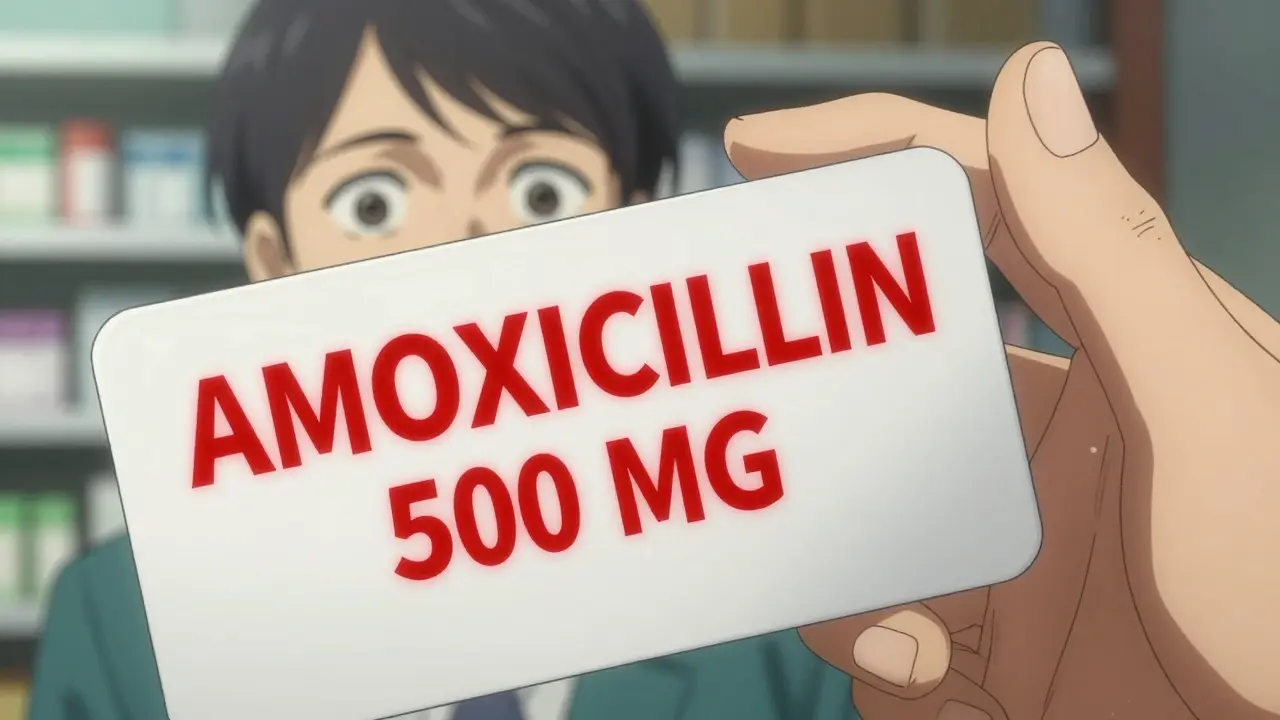
Look right after the drug name. That’s where the strength lives. For pills or capsules, it’s usually a number followed by mg (milligrams) or mcg (micrograms). For example: AMOXICILLIN 500 MG means each pill has 500 milligrams of amoxicillin. Liquid medications are trickier. They show a ratio like 250 MG/5 ML. That means every 5 milliliters of liquid contains 250 milligrams of medicine. Creams and ointments? They use percentages - HYDROCORTISONE 1% CREAM means 1 gram of medicine per 100 grams of cream.
Quantity is simpler: it tells you how much the pharmacy gave you. It’s usually right under or next to the strength. For pills: 30 TABLETS. For liquids: 120 ML. For creams: 30 GRAMS. Always check both. A label might say you got 30 pills, but if each pill is 10 mg instead of the 5 mg your doctor ordered, you’re getting twice the dose.
Why This Matters More Than You Think
In 2022, the American Society of Health-System Pharmacists reported that over 1.3 million medication errors happened in the U.S. - and nearly a quarter of them involved strength or quantity confusion. The most dangerous? Mistaking 0.5 mg for 5 mg. That’s a tenfold overdose. That kind of error killed nearly 2,000 people in 2021, mostly children and elderly patients.
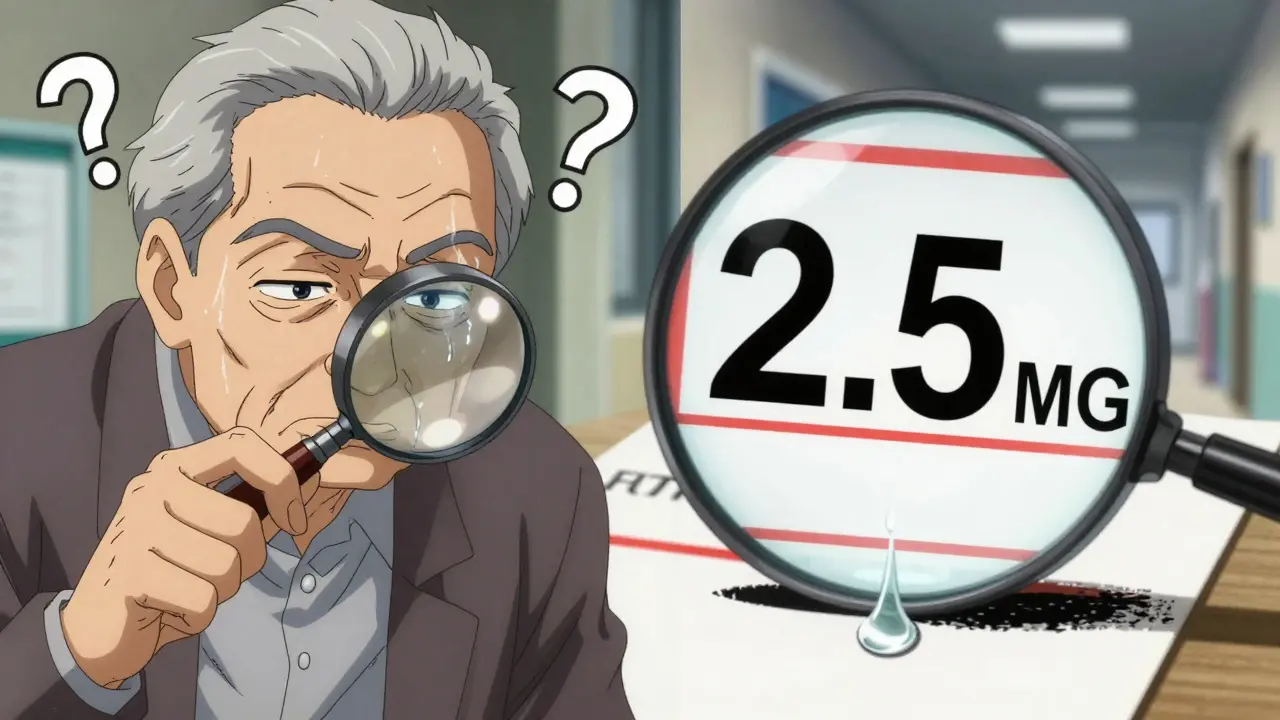
Why do these mistakes happen? Tiny font. Similar-looking numbers. Confusing units. A 2023 survey found that 63% of patients couldn’t read the strength on their labels without a magnifying glass. Another 42% mixed up the total quantity with the daily dose. One man in Arizona took 10 mg of his blood pressure pill every day because the label said 10 mg - but his doctor had written 2.5 mg. The pill looked the same. He only realized the mistake after his blood pressure crashed.
How to Verify Strength Like a Pro
Follow this four-step system every time you get a new prescription:
- Locate the strength. Find the number right after the drug name. Ignore the brand name - focus on the generic one. If it says AMOXICILLIN 500 MG, that’s your strength.
- Check the units. Is it mg, mcg, or IU? A single mistake here can be deadly. 500 mcg is not the same as 500 mg - it’s 1,000 times smaller. If you’re unsure, ask the pharmacist.
- For liquids, check the ratio. If it says 5 MG/5 ML, that means 5 mg per 5 mL. If you’re supposed to take 2 mL, you’re getting 2 mg. Always calculate the dose based on the ratio, not the total volume.
- Compare to your prescription. Did your doctor write 2.5 mg? Does the label match? If not, don’t take it. Call the pharmacy. Keep your prescription paper or digital copy handy.
Common Mistakes and How to Avoid Them
Here are the top three errors - and how to stop them:
- Misreading decimals. 0.25 mg looks like 25 mg if the dot is blurry. Always ask for a high-contrast label. Most pharmacies offer this for free. Some even print in 14-point font if you’re over 65.
- Confusing total quantity with daily dose. Your label might say 30 TABLETS, but your doctor said take one a day. That means it lasts 30 days. Don’t assume the number on the label is your daily dose.
- Assuming brand and generic are the same. Sometimes generics look different. A generic metoprolol might be a white pill instead of blue. But the strength should still match. If the pill shape or imprint changed, double-check the mg.
Tools That Help - and What’s Coming
Most major pharmacies now offer free tools to help. CVS, Walgreens, and Kaiser Permanente all have QR codes on labels that link to dosage calculators. Scanning them with your phone gives you a step-by-step guide on how much to take. In 2023, 67% of pharmacies started using mobile apps that scan your prescription barcode and instantly verify the strength against your doctor’s order.
By 2025, the FDA will require all high-risk medications - like insulin, blood thinners, and seizure drugs - to have red borders around their strength on the label. By 2026, color-coding will be standard. Some pharmacies are already testing NFC chips on labels. Tap your phone to the bottle, and it plays a voice message telling you the strength, dose, and timing.
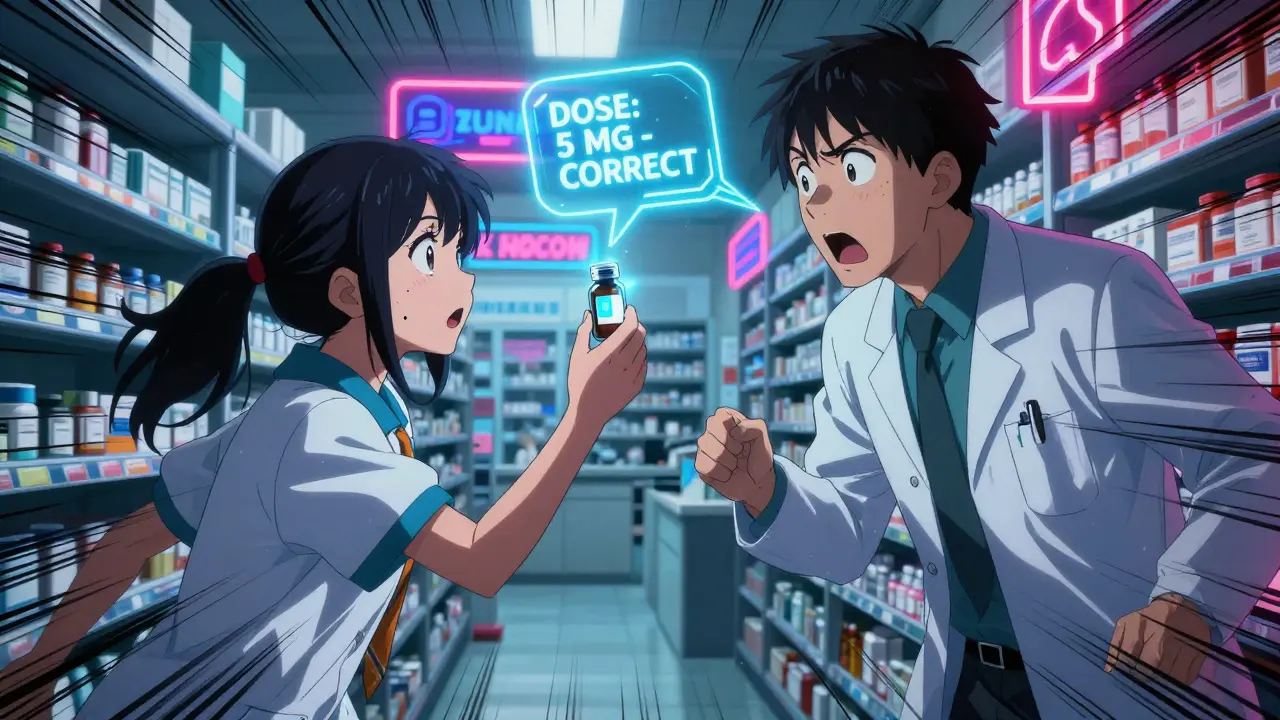
What to Do If Something Looks Wrong
If the strength doesn’t match your doctor’s note, if the pill looks different, or if the quantity seems off - stop. Don’t take it. Don’t guess. Call the pharmacy immediately. Ask them to confirm the prescription with your doctor. Most pharmacies will recheck and re-fill at no cost.
Keep a small notebook. Write down the name, strength, and quantity of every medication you take. Update it every time you refill. This simple habit cuts your risk of error in half.
Final Thought: You’re the Last Line of Defense
Pharmacists check your prescription. Doctors write it. But you’re the one who swallows it. That’s why your eyes - not their systems - are the final safety net. Studies show patients who check their label before taking medicine prevent 28% of dosing errors. That’s not luck. That’s skill. And it’s a skill anyone can learn.
Next time you get a prescription, pause. Read the numbers. Ask one question. You might just save your life - or someone else’s.
How do I know if the strength on my label is correct?
Compare the strength on the label to what your doctor wrote on your prescription. If you don’t have the paper copy, call your doctor’s office and ask them to confirm the exact dose. Most pharmacies also let you check your prescription online through their app. Look for the generic drug name and the number followed by mg, mcg, or IU. If it doesn’t match, ask the pharmacist to recheck.
What if the pill looks different from my last refill?
It’s normal for generic pills to look different - they’re made by different companies. But the strength should be the same. Check the label for the exact milligram amount. If the number matches your previous prescription, it’s safe. If the strength changed or the pill is a different shape, call the pharmacy. Never assume the color or shape means the dose is right.
Can I trust the pharmacy if they say the label is right?
Pharmacists are trained, but mistakes happen. In 2022, independent pharmacies had 8.7% higher labeling error rates than big chains. Always verify yourself. If you’re unsure, ask to speak with the pharmacist on duty. They’re required to explain your medication. Don’t be shy - it’s your right. A good pharmacist will welcome your questions.
Why do some labels say ‘mg/mL’ and others just ‘mg’?
It depends on the form. Solid pills (tablets, capsules) show strength per pill - like ‘500 mg’. Liquids show concentration - like ‘250 mg/5 mL’ - because you might not take the whole bottle. That ratio tells you how much medicine is in each milliliter. Always calculate your dose using the ratio, not just the total volume. For example, if you need 100 mg and the label says 250 mg/5 mL, you need 2 mL - not 100 mL.
Are there apps that help me check my prescription label?
Yes. Most major pharmacy chains - like CVS, Walgreens, and Rite Aid - have apps that let you scan your prescription barcode. The app compares the label info to your doctor’s original order and flags mismatches. Some apps even show images of what the pill should look like. The FDA also offers free Medication Guides for over 247 high-risk drugs. You can download them at fda.gov/medicationguides. Many pharmacies now include QR codes on labels that link directly to these guides.