Key Takeaways for Older Adults
- Metabolism drops with age: Drug processing can decline by 30% in those over 75, making standard doses potentially toxic.
- The polypharmacy trap: Risk of adverse reactions jumps from 13% with two drugs to 82% with seven or more.
- Watch NTI drugs: Medications with a Narrow Therapeutic Index (like warfarin) require stricter monitoring when switching brands.
- Focus on the 'What', not the 'Who': The specific class of drug (e.g., benzodiazepines) is often riskier than whether it's a generic or brand name.
Why Your Age Changes How Drugs Work
As we get older, our bodies undergo physiological shifts that turn a "normal" dose into a potential overdose. It usually comes down to three main factors: renal clearance, liver function, and body composition. First, kidneys often slow down. When renal clearance drops, drugs linger in your system longer than intended. Second, hepatic metabolism-how your liver breaks down chemicals-decreases. Research shows that for adults over 75, medication metabolism can slide by up to 30%. Finally, our bodies change; we typically hold more fat and less water. This means fat-soluble drugs can accumulate, leading to a slow-burn toxicity. This is why Central Nervous System (CNS) medications are so tricky. Seniors are far more sensitive to these. A generic muscle relaxant like cyclobenzaprine might be fine for a middle-aged adult, but for an 88-year-old, it can drastically increase the risk of a fall and subsequent hip fracture.The Danger of Polypharmacy
Most seniors aren't just taking one pill; they're managing a handful. This is called polypharmacy, and it's where the real safety risks hide. The more medications you add, the higher the chance they'll clash. Consider these statistics on Adverse Drug Reactions (ADRs):- Taking 2 medications: 13% ADR risk
- Taking 5 medications: 58% ADR risk
- Taking 7+ medications: 82% ADR risk

Generic vs. Brand: When Does it Actually Matter?
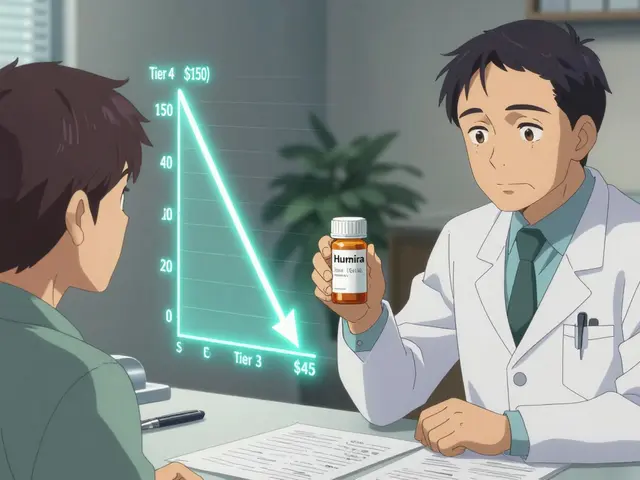
For 90% of medications, the switch to a generic is seamless. However, some drugs have a Narrow Therapeutic Index (NTI). This means the window between a dose that works and a dose that is toxic is tiny. Warfarin is the classic example. Because it controls blood clotting, a tiny variation in concentration can lead to either a clot or a dangerous bleed. Some seniors report instability in their levels when switching to generic levothyroxine (Synthroid), requiring multiple dosage adjustments. While the FDA maintains that these are bioequivalent, the individual's biological response can vary.| Drug Class/Entity | Common Risk in Seniors | Estimated Incidence/Impact |
|---|---|---|
| Beta Blockers | Bradycardia & Heart Failure | 15-30% incidence |
| Digoxin | Arrhythmias | 10-15% incidence |
| Insulin/Sulfonylureas | Hypoglycemia (Falls/Confusion) | 20-25% incidence |
| SNRIs | Increased Fall Risk | 37% increase in risk |
The Beers Criteria: Your Safety Roadmap
If you're worried about medication safety, look into the Beers Criteria. Updated in 2023 by the American Geriatrics Society, this list identifies "potentially inappropriate medications" (PIMs) for older adults. The Beers Criteria doesn't care if a drug is generic or brand-name; it focuses on the active ingredient. For example, it warns that rivaroxaban (a direct oral anticoagulant) carries a 28% higher risk of gastrointestinal bleeding in adults over 75 compared to warfarin. Similarly, it flags aspirin for primary prevention in those over 70, noting a 2.3x increase in bleeding risk without a clear cardiovascular benefit.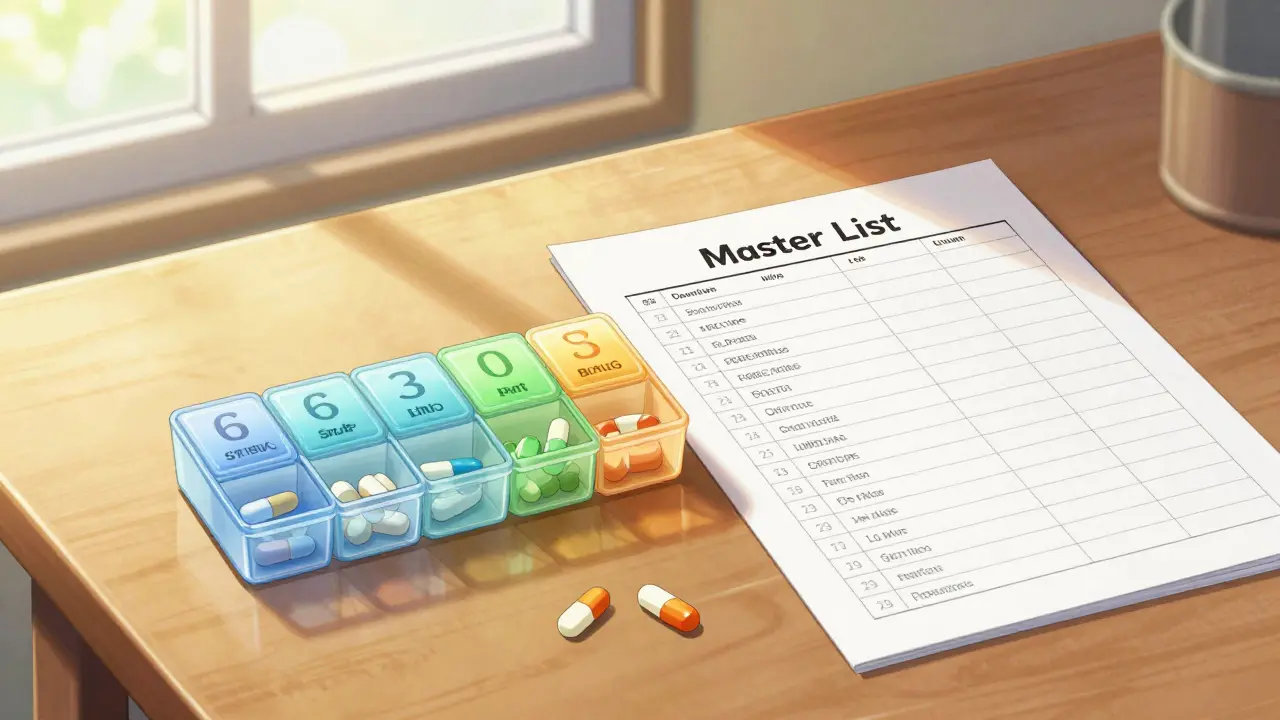
Practical Steps to Stay Safe
Safety isn't just about the chemistry; it's about the logistics. A 2023 analysis found that 28% of medication errors in seniors involved confusion between similar-looking generic pills. Since generics often look different from the brands you're used to, visibility and organization are key.- Request Large Print: If you struggle with vision, ask your pharmacist for larger type on the labels.
- Use Pill Organizers: Color-coded containers or automated dispensers can cut medication errors by about 34%.
- The Quarterly Review: If you take five or more meds, schedule a comprehensive review with a pharmacist every three months. This can reduce adverse events by 27%.
- Maintain a 'Master List': Bring a physical list of every drug (including dose and whether it's generic) to every single doctor's appointment to stop duplicate therapies.
Frequently Asked Questions
Are generic drugs really as effective as brand-name drugs for seniors?
Yes, for the vast majority of medications. The FDA requires generics to have the same active ingredient, strength, and dosage form. However, for Narrow Therapeutic Index (NTI) drugs like warfarin or certain thyroid medications, some individuals may experience slight variations in response, which is why close monitoring is recommended during a switch.
Why do I feel different side effects when I switch to a generic?
While the active ingredient is the same, the "inactive ingredients" (fillers, binders, and dyes) can differ between brands. Older adults may be more sensitive to these additives, or the change in pill appearance may cause psychological stress or confusion, affecting how the medication is perceived and taken.
What is the Beers Criteria and how does it help me?
The Beers Criteria is a gold-standard list maintained by the American Geriatrics Society. It identifies medications that are likely to cause more harm than good in older adults due to age-related changes in the body. You can use it as a talking point with your doctor to see if any of your current prescriptions should be tapered off or replaced.
How does polypharmacy increase my risk of a bad reaction?
Polypharmacy occurs when you take multiple medications simultaneously. This increases the chance of drug-drug interactions, where one medication changes how another works. For seniors, this is dangerous because reduced liver and kidney function mean these drugs stay in the body longer, increasing the likelihood of a toxic interaction.
Should I avoid generics entirely if I am over 80?
Absolutely not. Generics save billions in healthcare costs and are safe for most. The goal should be "appropriate medication selection" rather than "brand vs. generic." Focus on whether the drug is appropriate for your current health status and ensure your doctor is adjusting the dose for your age.