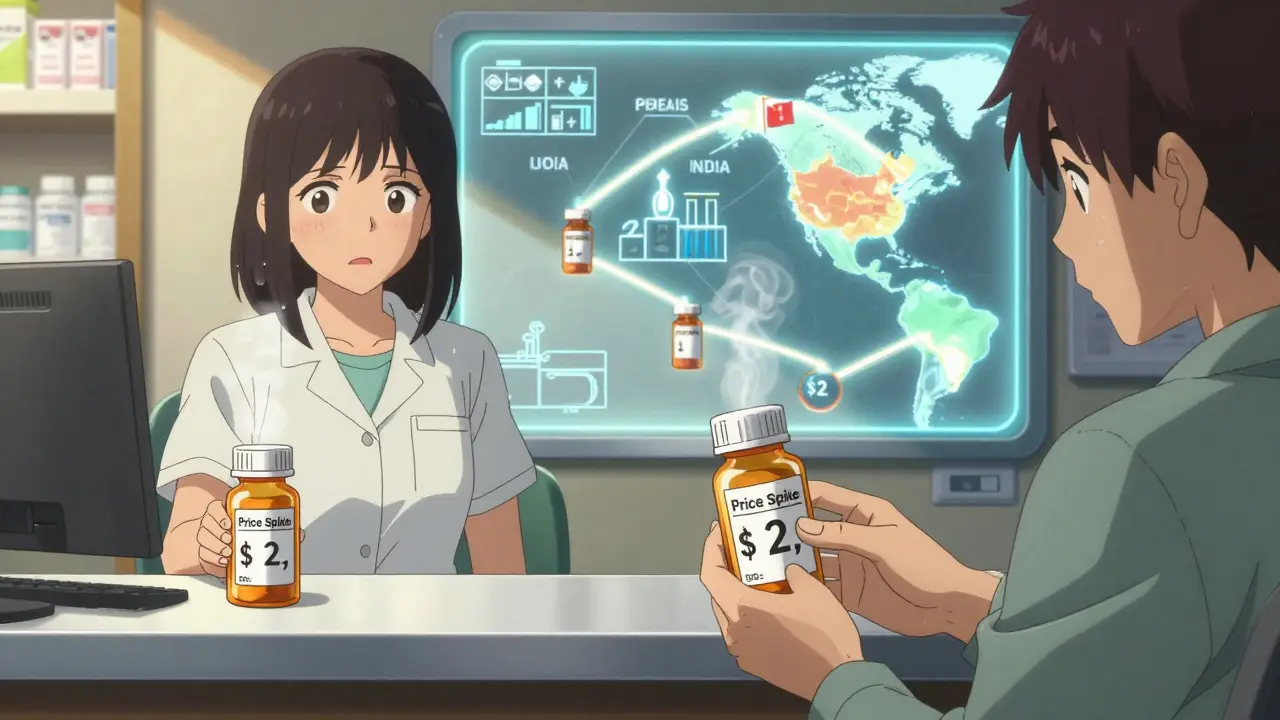
Have you ever noticed that the same generic pill you take in the U.S. costs half as much in Canada or a tenth in India? It’s not magic. It’s not fraud. It’s the messy, complex reality of how generic drugs are made, regulated, and sold across the world. While we all assume generics are just cheaper versions of brand-name drugs, the truth is that generic availability varies wildly from country to country-and it directly affects who gets access, how much they pay, and even whether the medicine works the same way.
How Much Do Generics Actually Cost Around the World?
The numbers don’t lie. In 2023, the global generic drug market hit $450 billion, but that figure hides a huge gap between volume and value. Countries like the U.S. fill over 90% of prescriptions with generics, yet still pay the highest prices on earth. In fact, U.S. drug prices-brand and generic combined-are 2.78 times higher than in other wealthy nations. Meanwhile, in the United Kingdom, 83% of prescriptions are filled with generics, and the same pill costs less than a dollar. In Switzerland? Only 17% of prescriptions are generic, and when they are, they cost more than six times what they do in the U.K.
Why? It’s not about quality. It’s about policy. Some countries force pharmacies to substitute generics automatically. Others pay doctors more to prescribe brand-name drugs. Some let drugmakers set prices freely. Others cap them tightly. In India, where 40% of U.S. generics are made, a common blood pressure pill might cost 63% less than in Belgium. But in France, the same drug can cost nearly double what it does in Germany-even though both are in the EU.
Who Makes Your Generic Pills-and Where?
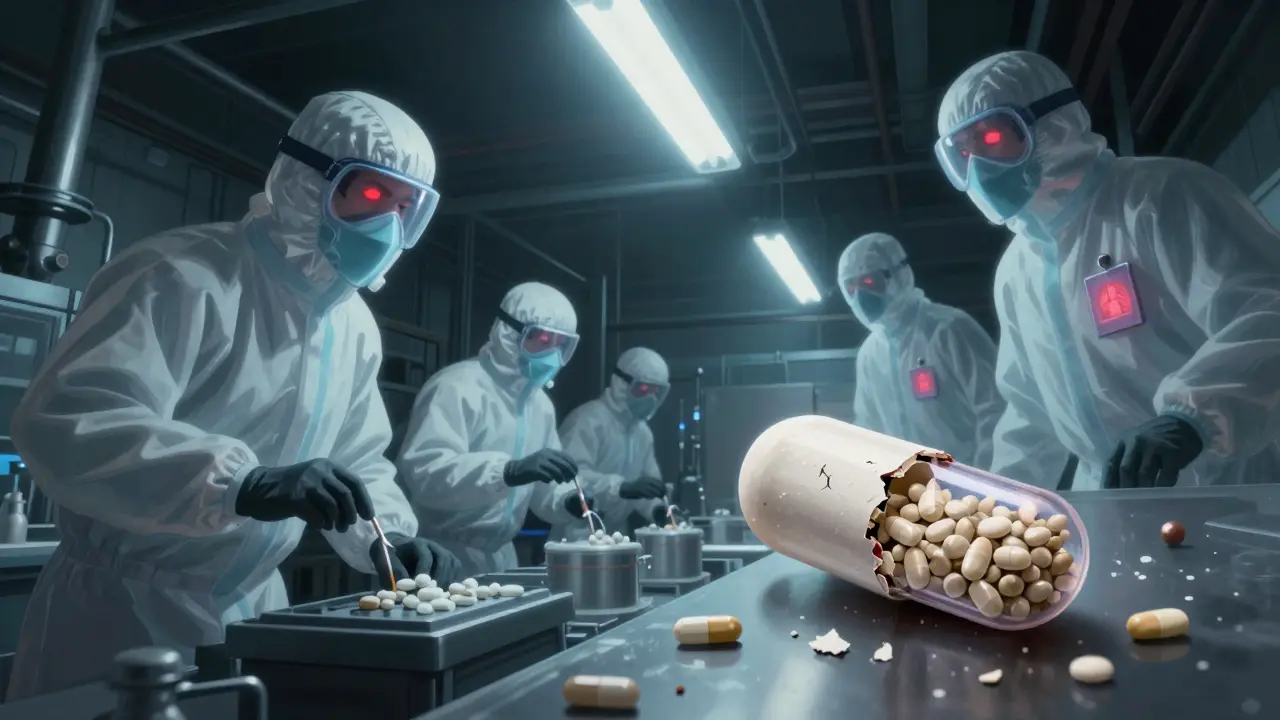
Most generic drugs you take weren’t made in your home country. India produces about 20% of the world’s generic volume and supplies 40% of what the U.S. uses. China’s share is growing fast, with its FDA-approved factories jumping from 12 in 2010 to 187 by 2023. But production location doesn’t guarantee safety or consistency.
A 2023 study from Ohio State University found that generics made in India had 54% higher rates of severe side effects-like hospitalization or death-compared to identical pills made in the U.S. That doesn’t mean Indian drugs are unsafe. It means that when cost pressure is extreme, corners get cut. Some manufacturers reduce testing, use cheaper fillers, or skip quality checks. The FDA inspects foreign plants, but often gives advance notice, letting factories clean up before inspectors arrive. In the U.S., inspections are unannounced. That’s a big difference.
And it’s not just about where they’re made. Different countries accept different versions of the same drug. A generic metformin made in India might have a slightly different inactive ingredient than the one made in Germany. For most people, it doesn’t matter. But for others-especially those with allergies or sensitive conditions-it can trigger reactions. Patients traveling between countries often report unexpected side effects when their pharmacy fills their script with a different generic version.
Why Do Some Countries Use Generics More Than Others?
It’s not just about price. Culture, regulation, and history all play a role.
In the U.K. and the Netherlands, pharmacists are legally required to substitute a brand-name drug with a generic unless the doctor says no. This policy has pushed generic use to over 80%. In Germany, doctors face pressure to prescribe generics, and patients get lower co-pays when they choose them. The result? 80% of prescriptions are generic.
But in Switzerland, Italy, and Greece? Generics are rare. Why? In Switzerland, patients often pay the same out-of-pocket cost whether they choose brand or generic. So they stick with what they know. In Italy, doctors are skeptical. Many believe generics are less effective, even though studies show they’re just as safe. In Greece, the healthcare system is underfunded, so generics aren’t always stocked-even when they’re available.
The U.S. is the outlier. It uses generics more than almost any country, but doesn’t push them hard. There’s no national substitution law. Pharmacists can substitute, but only if allowed by state law-and not all states require it. Patients often don’t even know they’re getting a generic. And even though there are multiple manufacturers for most drugs, prices don’t always drop. Sometimes, after a few years, the last few makers quietly raise prices. No one notices until a shortage hits.
The Hidden Problem: Shortages and Price Spikes
Generics are supposed to save money. But sometimes, they cause crises.
During the pandemic, India temporarily banned exports of 26 key active ingredients. Overnight, hospitals in the U.S., Canada, and across Europe ran out of antibiotics, antifungals, and blood pressure meds. Why? Because so many countries rely on just one or two suppliers. When one factory shuts down-due to FDA violations, natural disasters, or export bans-there’s no backup.
In 2023, the U.S. FDA recorded 147 generic drug shortages. Nearly 70% were caused by quality issues at single manufacturing sites, mostly in India and China. One plant failure can ripple across continents.
And then there’s the pricing chaos. A 2022 study found that some generic drugs in the U.S. had price spikes of over 1,000% in a single year-even when dozens of companies made them. How? A few manufacturers quietly collude. Or one company buys out its competitors. Or a small batch fails inspection, and suddenly supply dries up. The market doesn’t behave like textbook economics. It behaves like a game of monopoly with life-or-death stakes.
What’s Changing-and What’s Not
There are signs of progress. The U.S. Inflation Reduction Act now speeds up FDA reviews for generics by 30%. The WHO introduced a new global benchmark tool to help countries measure generic quality. The European Union is pushing for a unified substitution policy, aiming for 80% generic use by 2030.
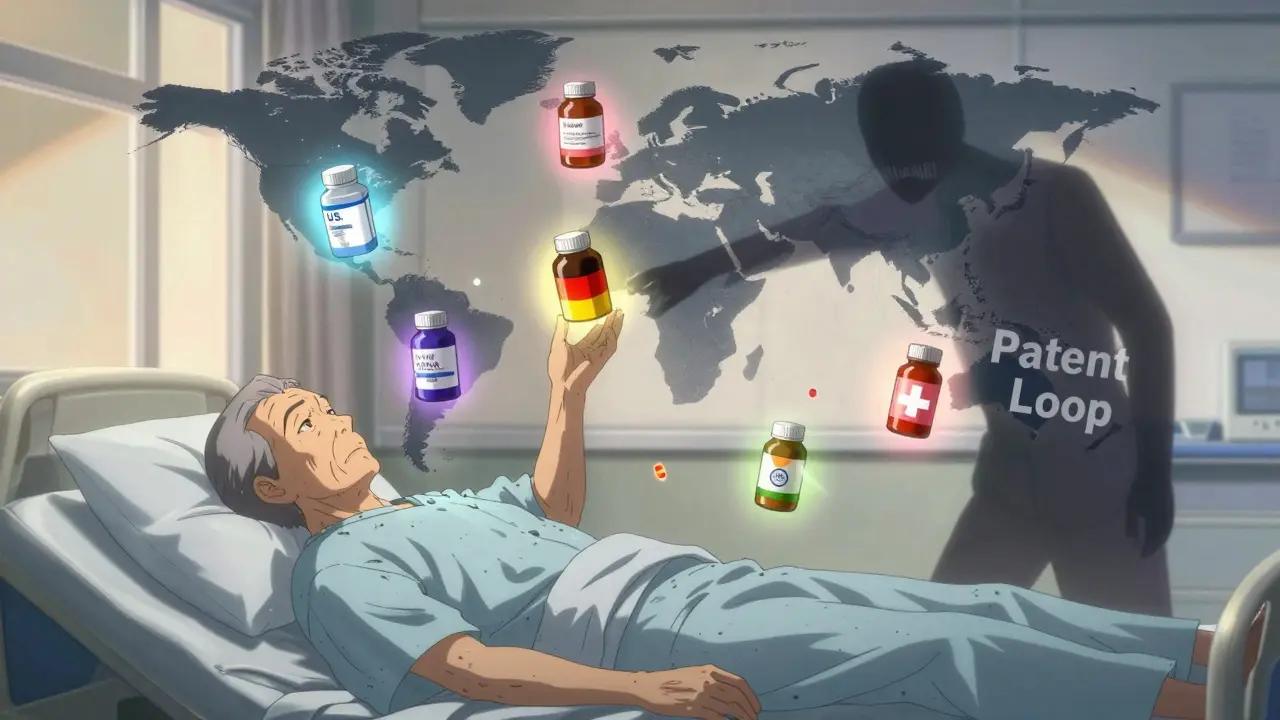
But big barriers remain. The EU still requires separate approvals in each country-even though the European Medicines Agency approves the drug centrally. That adds 18 to 24 months to market entry. The U.S. FDA still doesn’t inspect foreign factories the same way it inspects domestic ones. And patents? They’re still being stretched. Drugmakers file dozens of minor patent tweaks-new coatings, new dosages, new delivery systems-to delay generics for years.
AI might change that. By 2030, machine learning could cut generic development time from five years to two. But if regulators don’t adapt, that speed won’t help patients. It’ll just help corporations.
What This Means for You
If you take a generic drug, here’s what you should know:
- Your pill might have been made in India, China, or the U.S.-and you probably won’t know which.
- It might cost $2 in Canada and $20 in the U.S., even if it’s the exact same chemical.
- If you switch pharmacies or countries, the filler ingredients might change. That can cause side effects you didn’t have before.
- Shortages happen. If your usual generic disappears, ask your pharmacist what alternatives exist.
- Just because it’s cheap doesn’t mean it’s better. Quality matters more than price.
There’s no global standard. No universal rule. No perfect system. What works in Germany fails in the U.S. What’s safe in India raises red flags in Australia. The only thing consistent? The price gap. And the fact that the people who need these drugs the most-low-income patients, seniors, those without insurance-are the ones who suffer most from the chaos.
Why are generic drugs cheaper in some countries than others?
Generic drugs cost less in countries that have strict price controls, force pharmacies to substitute generics, and encourage competition among manufacturers. In the U.S., even though 90% of prescriptions are for generics, prices stay high because there’s little pressure to lower them. In contrast, the U.K. and Germany use policies that drive prices down-like mandatory substitution and bulk purchasing. Some countries also negotiate prices directly with manufacturers, while others let the market decide, leading to wild price differences-even for identical pills.
Can I safely buy generic drugs from other countries online?
Some people save 60-80% by buying generics from Canadian or Indian online pharmacies. But there’s risk. The FDA doesn’t regulate foreign sellers, so you can’t be sure the drug is genuine, stored properly, or even the same formula. Some users report different side effects when switching from a U.S.-made generic to one from abroad. If you do this, use verified pharmacies (like those on PharmacyChecker.com), check the manufacturer, and tell your doctor. Never switch without medical advice.
Do all countries test generic drugs the same way?
Most countries require generics to be bioequivalent-meaning they work the same in the body as the brand-name drug. The U.S. and EU both use an 80-125% absorption range, but how they test it differs. The U.S. FDA often inspects manufacturing sites without warning. The EU relies on country-by-country checks. India and China have thousands of approved factories, but inspection frequency varies. A drug approved in one country may not meet another’s standards. That’s why a generic made in India might be sold in the U.S. but not in Australia.
Why do some doctors refuse to prescribe generics?
Some doctors believe generics are less reliable, especially if they’ve seen patients react differently after switching. In countries like Switzerland and Italy, brand-name drugs are still preferred due to tradition, patient demand, or higher reimbursement rates. Others don’t trust manufacturers from certain countries due to past quality issues. While studies show generics are equally effective, trust takes time to build-and in medicine, hesitation can mean sticking with the more expensive option.
Are biosimilars the next big thing in generic drugs?
Yes-but they’re not the same as traditional generics. Biosimilars are copies of complex biologic drugs (like insulin or cancer treatments), not simple chemical pills. They’re harder to make, harder to test, and cost 30-50% less than the original. Adoption is slow because insurers and doctors are cautious. But by 2028, biosimilars could be a $60 billion market. They’ll bring real savings, but only if regulations keep up and patients trust them.
What should I do if my generic drug suddenly changes or disappears?
If your pharmacy switches your generic without warning, ask why. Check the manufacturer name and pill markings. If you notice new side effects, contact your doctor immediately. If the drug disappears entirely, your pharmacist should offer alternatives. Don’t skip doses. Ask if a brand-name version is available temporarily. Keep a list of your medications, including manufacturer names, so you can track changes. And if shortages are common for your drug, talk to your doctor about backup options.




Okay but let’s be real - the U.S. is the only country where you can get a $200 generic pill and still be told to "just tough it out" while the same pill costs $4 in India. 🤯 And don’t even get me started on how the FDA inspects factories with a 48-hour heads-up. It’s like they’re playing hide-and-seek with patient safety. I’ve had two different generics for the same blood pressure med - one made me dizzy, the other made me feel like a zombie. Same chemical. Different fillers. Same FDA stamp. Different nightmares.