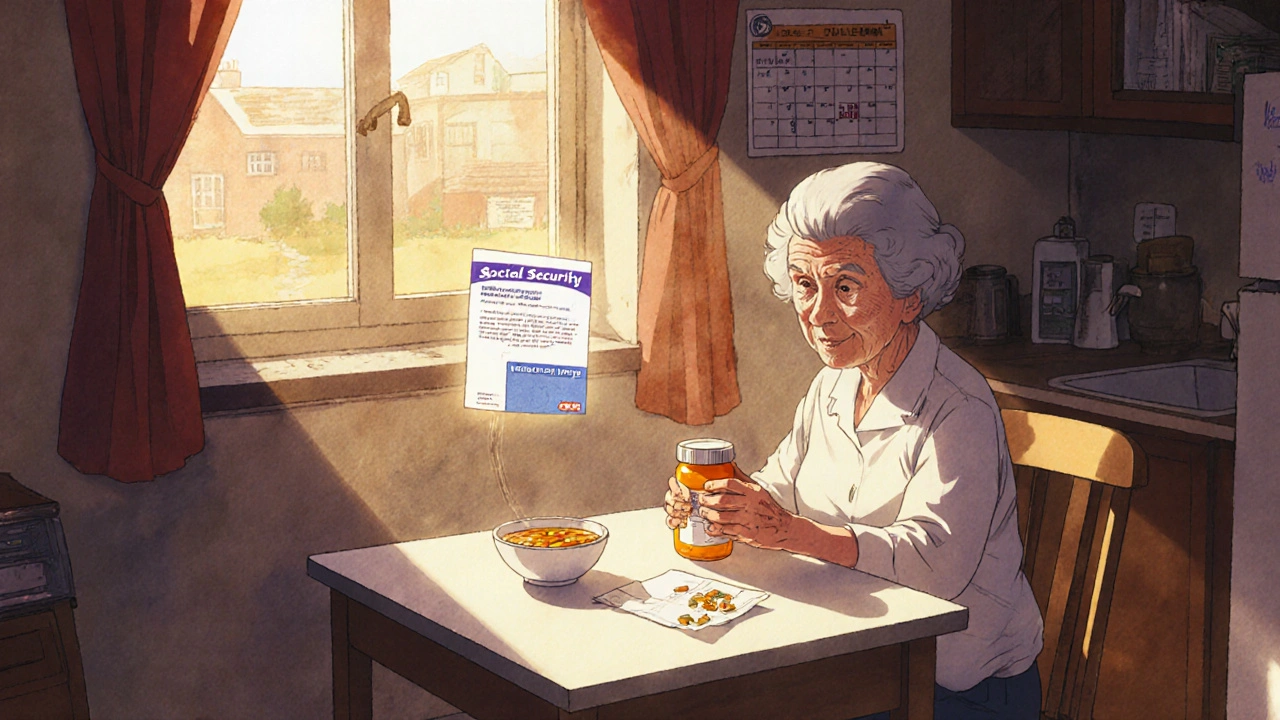
For many seniors on fixed incomes, paying for prescriptions can feel like a monthly battle. Insulin, heart meds, diabetes drugs - these aren’t optional. But with prices climbing, even a $50 co-pay can mean skipping meals or cutting back on heat. That’s where the Extra Help Program comes in. Officially called the Part D Low-Income Subsidy (LIS), it’s a federal program that slashes out-of-pocket drug costs for Medicare beneficiaries with limited income and resources. Since January 2024, the rules changed dramatically: there’s no more partial help. If you qualify, you get full benefits - and that means $0 premiums, no deductible, and tiny copays on all your meds.
Who Exactly Qualifies for Extra Help?
You don’t need to be broke to qualify. The income limits for 2025 are $23,475 a year for a single person and $31,725 for a married couple living together. That’s not much, but it’s higher than most people think. And here’s the catch: not all income counts. The first $20 of monthly income is ignored. If you work part-time, the first $65 of earned income is exempt, plus half of what’s left after that. Income from a child in military service? Doesn’t count. Tax-exempt interest? Only the amount above the limit matters. Resources matter too. You can have up to $17,600 in assets as a single person, or $35,130 as a couple. But this doesn’t mean your house, your car, or your jewelry counts. Your primary home? Excluded. One vehicle? Excluded. Personal belongings, furniture, even up to $1,500 set aside for burial expenses? All excluded. What counts? Cash in checking or savings accounts, stocks, bonds, mutual funds, and any real estate besides your home.How Do You Get Into the Program?
There are three ways to get Extra Help - and the easiest one is if you don’t have to apply at all. If you already get Supplemental Security Income (SSI), Medicaid, or are enrolled in a Medicare Savings Program (MSP), you’re automatically signed up. About 12.5 million people are already in this group. No paperwork. No waiting. You just get the benefits. If you’re not automatically enrolled, you need to apply. You can do it online at SSA.gov/extrahelp, by calling Social Security at 1-800-772-1213, or by filling out Form SSA-1020 at your local Social Security office. You’ll need your Medicare card, proof of income (like your last tax return or pay stubs), and documentation of your assets (bank statements, investment accounts). The process takes about 3 to 6 weeks. But here’s good news: 87% of applications are processed in 21 days or less.What Happens When You Qualify?
Once approved, your prescription drug costs drop dramatically. You pay nothing for your Part D plan’s monthly premium - if your plan has a $0 premium option, which most do. The annual deductible? Gone. That $595 you’d normally pay before your coverage kicks in? Eliminated. Your copays are tiny. If your income is at or below 100% of the Federal Poverty Level, you pay $1.60 for generic drugs and $4.80 for brand-name ones. If you’re between 100% and 150%, you pay up to $4.90 for generics and $12.15 for brand-name drugs. Compare that to the average $30-$60 co-pay most seniors pay without Extra Help. And if you’ve been late signing up for Part D before? No penalty. The program wipes out that late enrollment fee - which can add up to hundreds a year. Plus, starting in 2025, all Extra Help recipients pay no more than $35 a month for insulin and $0 for recommended vaccines like shingles and flu shots.
Why So Many People Miss Out
Even with these generous benefits, nearly 4.3 million eligible seniors aren’t enrolled. That’s over $26 billion in free help going unused every year. Why? Many think they make too much. Others don’t know the program exists. Some are scared of the paperwork. A few even think it’s only for people on Medicaid. Common mistakes on applications? Miscalculating income by including things that don’t count - like your home equity or SSI payments. Or underreporting assets, like forgetting about a small mutual fund. About 22% of applications are rejected just because documents are incomplete. Don’t let that be you.What If You’re Just Above the Limit?
If your income is a little over $23,475, don’t give up. The program has built-in allowances. If you have high medical expenses, you might still qualify under a special hardship exception. Some states also offer their own assistance programs that can help bridge the gap. Talk to your local State Health Insurance Assistance Program (SHIP) office. They’re free, local, and trained to help seniors navigate these programs.How to Apply - Step by Step
1. Check if you’re automatically enrolled. Do you get SSI, Medicaid, or a Medicare Savings Program? If yes, you’re already covered. No action needed. 2. Gather your documents. Collect your Medicare card, Social Security number, recent tax return (or proof of income like pay stubs), and bank/asset statements. Don’t forget to list all your savings, investments, and property besides your home. 3. Apply online or by phone. Go to SSA.gov/extrahelp. Fill out the form. It takes about 15 minutes. Or call 1-800-772-1213. Have your documents ready when you call. 4. Wait for confirmation. You’ll get a letter from Social Security within 3-6 weeks. If approved, your Part D plan will be adjusted automatically. If you’re not enrolled in a Part D plan yet, one will be chosen for you - usually a $0 premium plan. 5. Confirm your coverage. Check your new plan’s formulary. Make sure your meds are covered. If not, you can switch during the Annual Enrollment Period (October 15-December 7).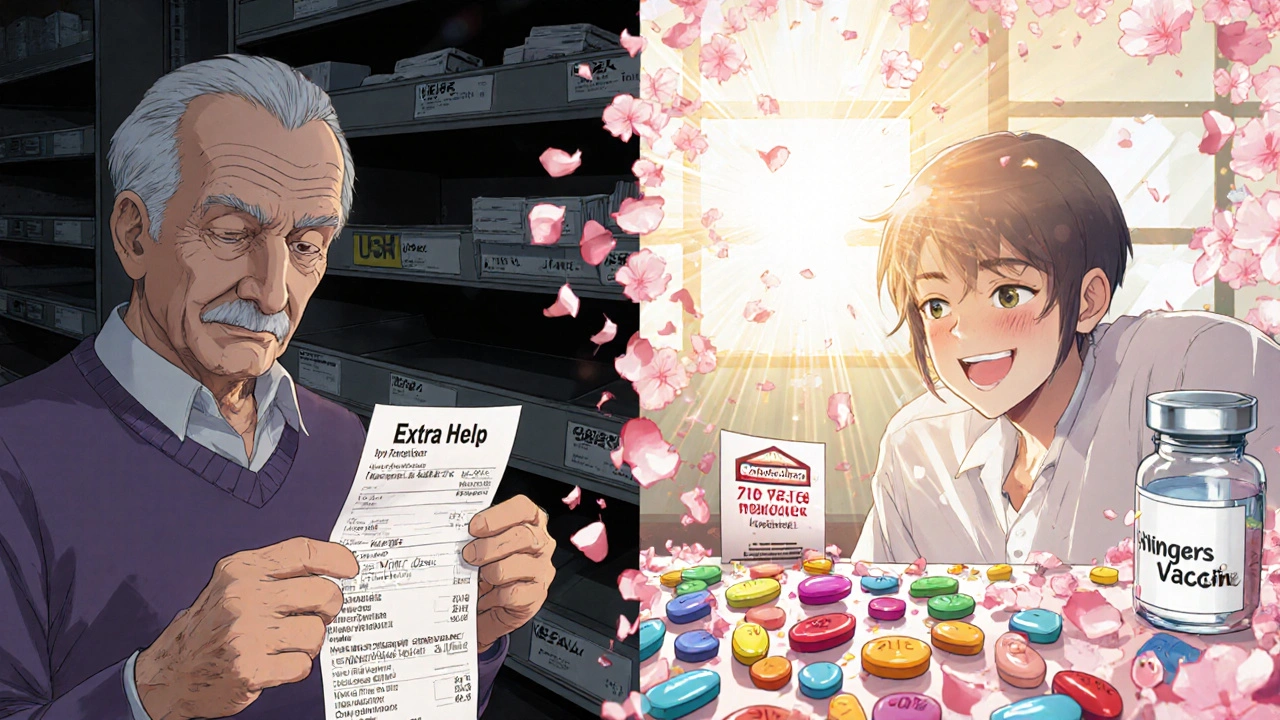
What to Do If Your Application Is Denied
If you’re turned down, don’t accept it as final. You have 60 days to appeal. Look at the denial letter - it should say why. Common reasons: income or assets were listed wrong, or documents were missing. Fix the error, add the missing info, and reapply. Many people get approved on their second try. You can also get free help from a SHIP counselor. They’ll review your application, help you understand what counts as income, and even call Social Security on your behalf. Find yours at shiptacenter.org.Is Extra Help Worth It?
Absolutely. The average enrollee saves about $6,200 a year on prescription drugs. For someone taking five or six medications, that’s the difference between eating well and choosing between food and pills. Studies show Extra Help cuts out-of-pocket drug costs by 83% compared to those without it. For seniors with diabetes, heart disease, or arthritis, this isn’t just savings - it’s health security. And the program keeps getting better. In 2025, the Social Security Administration rolled out a new online tool that automatically checks your eligibility using your tax and benefit data. If you’re likely eligible, you’ll get a letter inviting you to apply. It’s designed to find the 4.3 million people still missing out.Next Steps
If you or someone you know is a Medicare beneficiary with limited income, don’t wait. Even if you think you don’t qualify, apply. The rules are more flexible than they seem. Call Social Security today. Go online. Talk to a SHIP counselor. The savings are real. The help is there. All you have to do is ask.Do I have to reapply for Extra Help every year?
No. Once you’re approved, your Extra Help status continues automatically unless your income or resources change significantly. Social Security reviews your eligibility annually using your tax data. If your situation stays the same, you keep your benefits without doing anything. But if your income goes up - like from a large inheritance or selling property - you must report it. They’ll reassess your eligibility.
Can I still get Extra Help if I have a Medicare Advantage Plan?
Yes. Extra Help works with any Medicare Part D plan, including those bundled into Medicare Advantage (Part C) plans. If you’re enrolled in a Medicare Advantage plan that includes drug coverage, Extra Help will still reduce your premiums, deductibles, and copays. You don’t need to switch plans. Just make sure your plan includes Part D coverage and that you’ve been approved for Extra Help.
What if I don’t have a bank account or tax return?
You don’t need a bank account to qualify. If you get cash assistance, Social Security, or pension payments, you can use a letter from the payer as proof of income. If you didn’t file a tax return because your income was too low, you can submit a signed statement saying so, along with other income documents like Social Security award letters or pension statements. Social Security accepts alternative documentation - just ask for help when you apply.
Does Extra Help cover all my medications?
Extra Help doesn’t cover medications directly - it reduces the cost of your Part D plan’s drugs. Your plan must include your prescriptions on its formulary (list of covered drugs). Most plans cover the most common medications for seniors. If your drug isn’t covered, you can request an exception, switch plans during open enrollment, or ask your doctor for a generic alternative. Extra Help doesn’t guarantee coverage of every drug, but it makes the ones that are covered much more affordable.
Can my spouse and I both get Extra Help if we live together?
Yes. If you’re married and live together, your combined income and resources are counted. The 2025 limits are $31,725 in income and $35,130 in resources for couples. Both of you can receive Extra Help if you meet those thresholds. Even if one spouse has higher income, as long as the total stays under the limit, both can qualify. Each person gets their own Part D benefit - so both can have $0 premiums and low copays.




Oh wow, another government handout for people who can’t budget. I’m sure the 4.3 million ‘missing’ seniors are just too lazy to open a spreadsheet. Let’s just give free drugs to everyone who can’t stop buying name-brand insulin like it’s a luxury good. Next they’ll be paying for their Netflix subscriptions too.