
When a new drug hits the market, everyone assumes it’s been thoroughly tested. Clinical trials, after all, involve thousands of patients over years. But here’s the truth: drug safety signals often don’t appear until after approval-when millions of people are using the drug in the real world. That’s not a failure of science. It’s how biology works. The risks that emerge aren’t random. They’re hidden in plain sight, waiting for the right combination of people, doses, and time to show up.
What Exactly Is a Drug Safety Signal?
A drug safety signal isn’t a panic button. It’s a pattern. Something odd. A cluster of unexpected side effects that keeps popping up in reports. The Council for International Organizations of Medical Sciences (CIOMS) defines it as information suggesting a new link between a medicine and an adverse event-something that wasn’t clear during trials. It’s not proof. It’s a red flag that says: look closer.
Think of it like smoke in a building. One person reports a smell. Then another. Then ten. That’s not a fire yet-but you don’t wait for flames to call the firefighters. That’s signal detection. Regulatory agencies like the FDA and EMA scan millions of reports every year. The FDA’s FAERS database holds over 30 million adverse event reports since 1968. The EMA’s EudraVigilance processes more than 2.5 million annually. These aren’t just forms. They’re clues.
Why Clinical Trials Miss the Big Risks
Clinical trials are tightly controlled. Participants are carefully selected. They’re generally healthy, younger, and not taking a dozen other medications. They’re monitored closely. And even then, trials rarely include more than 5,000 people. That’s enough to catch common side effects-nausea, dizziness, headaches. But what about a rare heart rhythm problem that only shows up in people over 70 with kidney disease who also take blood pressure meds? That’s not in the trial. It’s too rare. Too complex. Too late.
That’s why 80% of serious adverse events are discovered after approval. The 2004 signal linking rosiglitazone to heart attacks didn’t show up in trials. It emerged from post-market reports. Same with the 2018 signal connecting dupilumab to eye surface disease. It was first noticed by ophthalmologists treating patients-not in a trial protocol.
How Signals Are Found: The Two Paths
There are two main ways signals are detected: clinical and statistical.
Clinical signals come from detailed case reports. A doctor writes: “Patient, 72, on drug X, developed sudden vision loss after 8 weeks. Symptoms resolved after stopping the drug.” That’s a classic dechallenge-rechallenge pattern. It’s messy, but powerful. It tells a story.
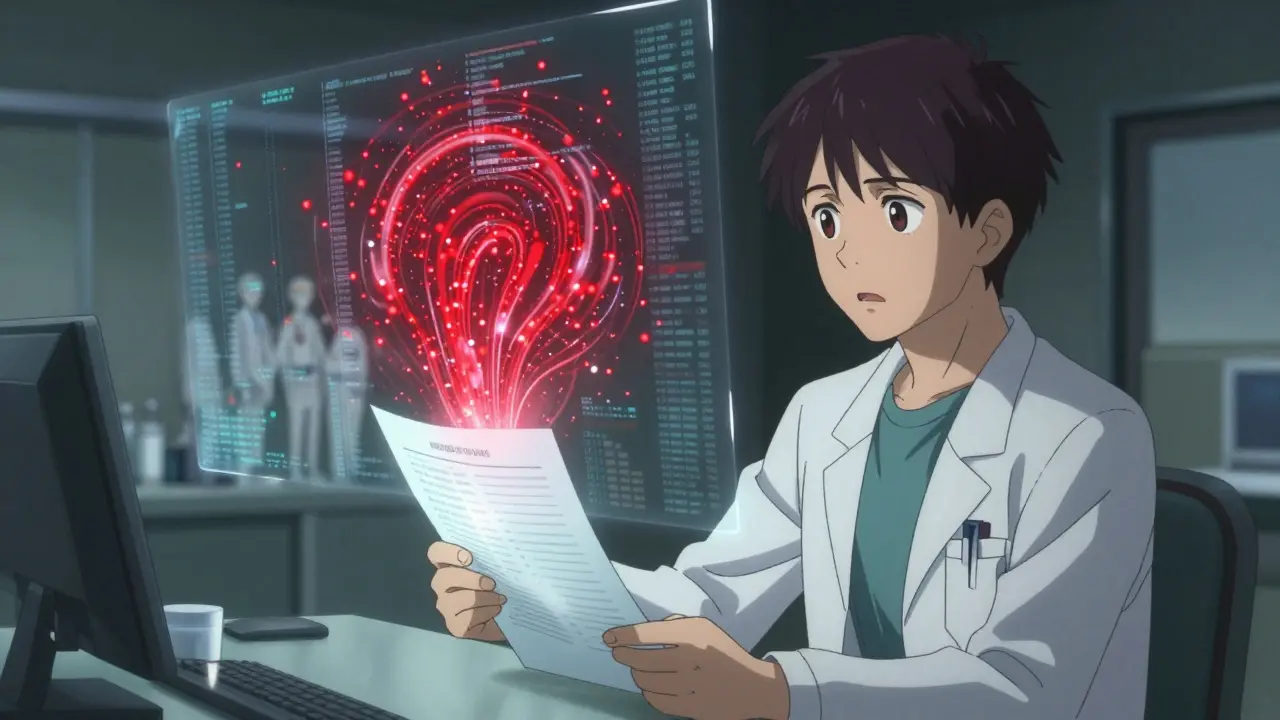
Statistical signals come from numbers. Algorithms scan databases looking for unusual spikes. If 100 people taking Drug A report liver injury, but only 2 people on the placebo do, that’s a red flag. Tools like reporting odds ratios (ROR) and Bayesian methods crunch the numbers. A ROR above 2.0 with at least 3 cases triggers a closer look.
But here’s the catch: 60-80% of these statistical signals are false alarms. Canagliflozin once looked like it caused leg amputations because of a spike in reports. The ROR was 3.5. But the CREDENCE trial later showed the real risk was only 0.5%. The signal was noise. That’s why experts say: never trust a single source. Triangulate. Look at three different data sets-spontaneous reports, electronic health records, and published studies. If they all point the same way, it’s worth acting on.
What Makes a Signal Actionable?
Not every signal becomes a label change. Only the strongest ones do. A 2018 analysis of 117 signals found four things that predict if a drug’s prescribing info will be updated:
- Replication across sources-If three different databases show the same pattern, the chance of update jumps 4.3 times.
- Plausibility-Does the drug’s chemistry or mechanism make sense? A liver injury from a drug metabolized by the liver? That’s plausible. A brain tumor from a skin cream? Not so much.
- Severity-87% of serious events led to updates. Only 32% of mild ones did.
- Drug age-New drugs (under 5 years) are 2.3 times more likely to get updated labels than older ones. Why? Because we’re still learning.
Dr. Robert Temple, former FDA deputy director, says spontaneous reports often contain details no trial could capture-like timing, symptom progression, or what happened when the drug was stopped. That’s gold.
The Hidden Flaws in the System
Even the best systems have cracks. First, reporting bias. Serious events are reported 3.2 times more often than mild ones. So if a drug causes mild rashes in 10,000 people but only 100 report liver failure, the system sees the liver issue as the big problem-even if the rash is more common.
Second, data quality. A 2022 survey of 142 safety officers found 68% said poor report quality was their biggest headache. Many reports lack basic info: age, dosage, other meds, or whether the drug was stopped. Without that, you can’t tell if the drug caused it-or if it was just bad luck.
Third, time. It takes 3 to 6 months on average to fully assess a signal. By then, thousands may have been exposed. And some risks take years. Bisphosphonates for osteoporosis took seven years before the link to jaw bone death was confirmed. That’s not negligence. That’s biology. The body doesn’t always react fast.
How Technology Is Changing the Game
Artificial intelligence is no longer science fiction in pharmacovigilance. In 2022, the EMA rolled out AI tools in EudraVigilance. Signal detection time dropped from two weeks to 48 hours. The FDA’s Sentinel Initiative 2.0, launched in January 2023, now pulls data from 300 million patients across 150 U.S. health systems. That’s real-time monitoring. Not just reports from doctors-but actual prescriptions, lab results, hospital visits.
And it’s working. The number of priority signals detected through integrated data (electronic records + patient reports) jumped from 28% in 2022 to an expected 65% by 2027, according to Evaluate Pharma. AI doesn’t replace humans. It filters the noise. It finds the needles in the haystack so humans can focus on the real threats.

What Happens When a Signal Is Confirmed?
If a signal becomes a verified risk, regulators act. The drug label gets updated. Warnings are added. Contraindications are listed. Sometimes, a Risk Management Plan is required. For example, after the rosiglitazone signal, the FDA restricted its use to patients who couldn’t control diabetes with other drugs. In extreme cases, drugs are pulled-like cerivastatin, linked to fatal muscle damage.
But action isn’t always swift. Pharmaceutical companies must submit safety updates. Regulators review. Committees debate. It’s a slow, cautious process. That’s by design. You don’t want to scare people away from a life-saving drug over a false alarm. But you also can’t wait until people die.
The Future: More Data, More Complexity
The number of complex biologics-like monoclonal antibodies-has doubled since 2015. These drugs trigger immune responses in ways we don’t fully understand. They cause rare autoimmune reactions, neurological issues, or delayed infections. Traditional signal detection wasn’t built for this.
And then there’s polypharmacy. Since 2000, prescription drug use in people over 65 has increased 400%. An elderly patient might be on five, six, even ten drugs. Which one caused the liver injury? The signal gets buried in the noise.
That’s why the WHO’s Global Pharmacovigilance Program, now connecting 155 countries, is so vital. More data. More diversity. More chances to spot patterns across populations. But it’s not enough. We need better tools. Better training. And better communication between doctors, patients, and regulators.
What Patients and Doctors Can Do
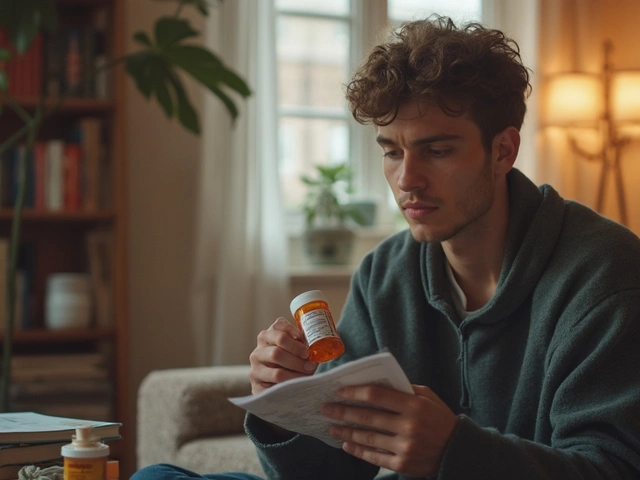
You don’t need to be a scientist to help. If you’re on a new medication and notice something unusual-fatigue, rash, mood changes, unexplained pain-report it. To your doctor. To the national reporting system. Even a simple note matters.
Doctors: When you see a strange reaction, don’t assume it’s just coincidence. Write it down. Note the timing. Did symptoms improve when the drug was stopped? That’s the kind of detail that turns a random case into a life-saving signal.
Drug safety isn’t just about regulators and databases. It’s about people. Patients. Doctors. Pharmacists. Every report is a piece of the puzzle. And the more pieces we collect, the clearer the picture becomes.




Okay, but have you ever tried reporting a side effect? It’s like screaming into a hurricane made of paperwork. I took that new migraine med and got this weird tingling in my toes-three weeks later, my doctor finally filed it. By then, I’d switched drugs twice. We need a one-click app. Like Uber, but for bad reactions. 🙏