Steroid Hyperglycemia Risk Calculator
How This Tool Works
Based on clinical data from the article, this calculator assesses your risk of developing corticosteroid-induced hyperglycemia. It uses your BMI, prediabetes status, and steroid dose to provide personalized risk levels and monitoring recommendations.
When you start taking corticosteroids like prednisone or dexamethasone for arthritis, asthma, or an autoimmune flare, you’re not just fighting inflammation-you’re also triggering a hidden metabolic storm. For many people, this means their blood sugar spikes unexpectedly, sometimes to dangerous levels. This isn’t just a side effect-it’s a real condition called corticosteroid-induced hyperglycemia, and it can turn into full-blown steroid-induced diabetes if not caught early.
Why Steroids Raise Blood Sugar
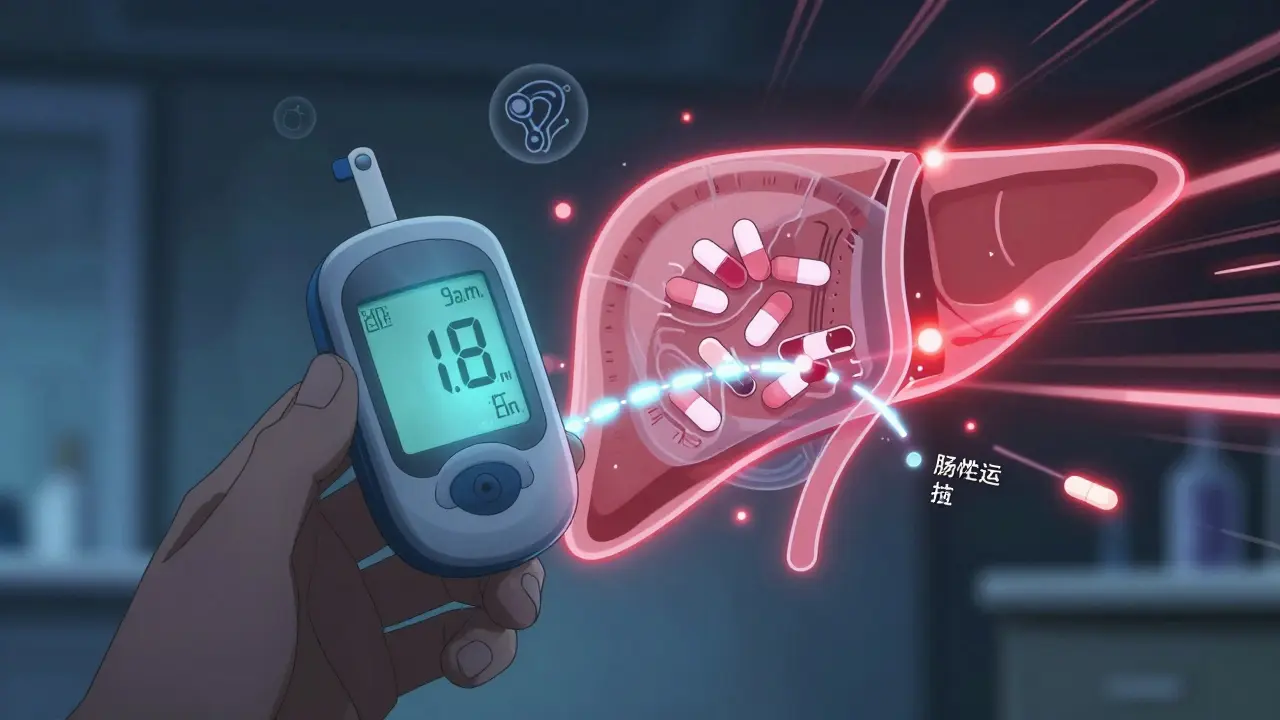
Corticosteroids don’t just calm your immune system-they mess with how your body handles sugar. They hit three key areas: your liver, your muscles, and your pancreas. In the liver, steroids force the production of more glucose, increasing it by nearly 38%. Your muscles, which normally soak up sugar after meals, become resistant to insulin and stop taking in glucose-up to 42.5% less. Meanwhile, your pancreas struggles to release enough insulin because steroids block the signals that tell beta cells to respond to rising blood sugar.This isn’t like type 2 diabetes, where insulin resistance builds slowly over years. With steroids, the damage happens fast. Within two hours of taking a high dose of prednisolone, insulin secretion drops. Insulin resistance kicks in 4 to 6 hours later and sticks around for over 16 hours. That’s why your blood sugar might be normal at night but sky-high by 9 a.m.-a pattern doctors call the biphasic glucose curve.
Who’s at Risk?
Not everyone on steroids gets high blood sugar, but some people are far more likely to. If you have a BMI over 30, your risk is more than three times higher than someone with a normal weight. If you already have prediabetes or impaired glucose tolerance, your risk jumps nearly fivefold. Even if you’ve never had a blood sugar issue before, a single course of high-dose steroids can push you into hyperglycemia.Studies show that about 19% to 32% of people without diabetes develop elevated blood sugar when taking high-dose steroids. In hospitals, that number climbs to over 50% for patients on doses above 20 mg of prednisone daily. People in rheumatology, oncology, and pulmonology clinics are most affected because they’re the ones getting long-term or high-dose steroid treatments.
How to Monitor Correctly
The biggest mistake? Waiting for symptoms. High blood sugar from steroids often has no warning signs-no thirst, no frequent urination, no fatigue-until it’s too late. That’s why proactive monitoring is non-negotiable.Start checking your blood sugar within 24 hours of your first steroid dose. For high-risk patients, check fasting levels and two hours after each major meal-at least twice a day. If you’re on alternate-day steroids, check on both steroid and non-steroid days. Why? Because insulin resistance lasts 16 to 24 hours after each dose, even on your “off” days.
Traditional fingerstick tests miss a lot. Continuous glucose monitors (CGMs) detect hyperglycemic episodes in nearly 70% of patients who seem fine with regular testing. They also catch dangerous nighttime lows during steroid tapering-something that happens in over 20% of cases. If you’re on long-term steroids, ask your doctor about a CGM. It’s not just for people with type 1 diabetes.
How to Treat It
Sliding scale insulin-where you give a fixed dose based on a single blood sugar reading-is outdated and dangerous for steroid-induced hyperglycemia. It doesn’t match the timing of steroid peaks and leads to wild swings in blood sugar.The gold standard is a basal-bolus insulin regimen. That means one long-acting insulin (like glargine or degludec) to cover baseline glucose, plus rapid-acting insulin (like lispro or aspart) before meals. The key is timing: give the biggest dose of rapid-acting insulin in the morning, right after your steroid, because that’s when your blood sugar spikes hardest. Reduce the afternoon dose because steroid effects are fading.
If you already have type 2 diabetes, expect to increase your insulin dose by 20% to 50%. Some people need to start insulin even if they’ve been managing with oral meds for years. Don’t be surprised if your doctor says, “We’re switching you to insulin for now.” It’s not a failure-it’s smart adaptation.
What Happens When You Stop Steroids?
This is where things get tricky. As you taper off steroids, your body slowly regains insulin sensitivity. But your pancreas doesn’t bounce back instantly. That’s why many patients crash into hypoglycemia during tapering-sometimes without warning.One study found that 67% of patients on steroid tapering reported sudden low blood sugar episodes. These aren’t caused by skipping meals or over-exercising. They’re caused by your body still producing insulin at a higher rate than needed, while the steroid’s glucose-raising effect fades. That’s why you need to reduce insulin doses gradually-often by 10% to 20% every few days-and keep checking your blood sugar more often than ever.

Why Most Hospitals Get It Wrong
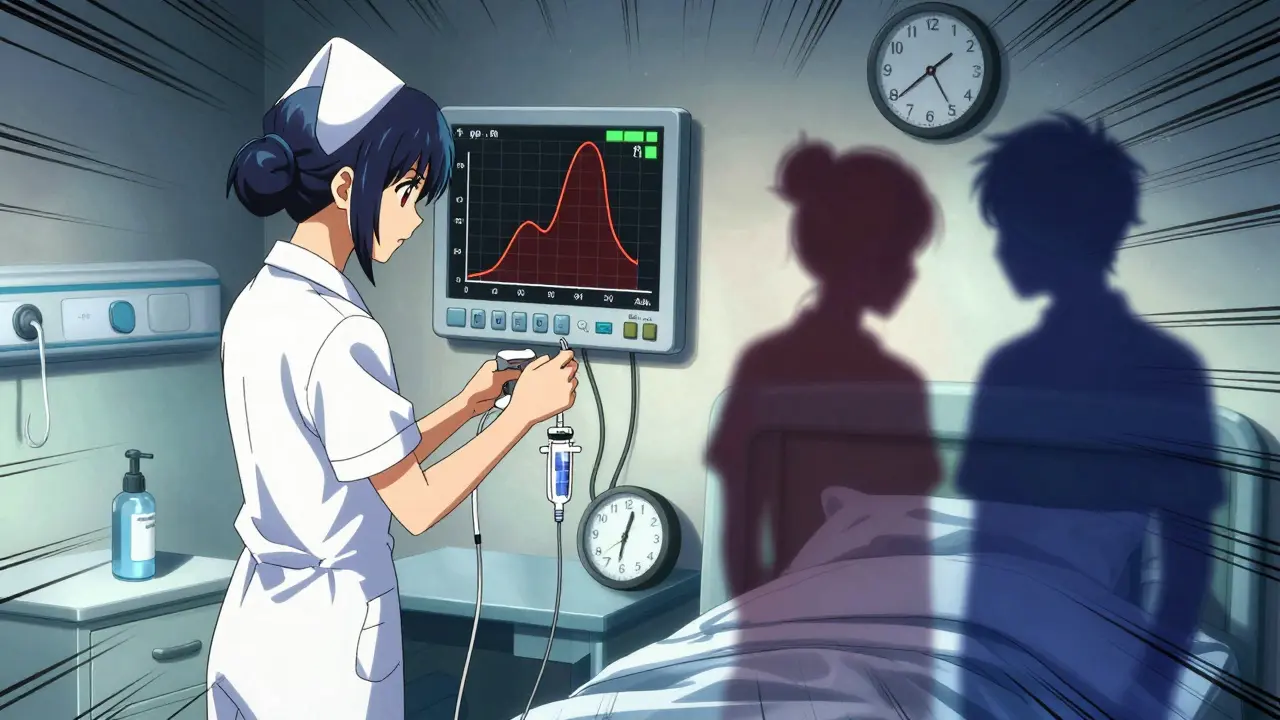
Despite clear guidelines from the American Diabetes Association and the Endocrine Society, many hospitals still don’t have formal protocols. A 2023 study found that only 58% of non-critical care units had standardized procedures for steroid-induced hyperglycemia. The result? Patients wait hours longer for treatment, and complications like hyperosmolar hyperglycemic state occur more often.One major error? Giving insulin at the wrong time. If you take your steroid at 8 a.m., your blood sugar peaks around 1 p.m. But many nurses give insulin at 8 a.m. anyway-too early. That leads to low blood sugar before lunch, then a spike by afternoon. The Mayo Clinic’s protocol fixed this by requiring glucose checks within four hours of the first steroid dose and starting insulin only when two readings hit 180 mg/dL or higher. That simple change cut complications by over half.
The Future: Better Tools and Safer Drugs
Scientists are working on two big solutions. First, predictive models. The NIH’s GLUCO-STER trial is testing a machine learning tool that uses your BMI, HbA1c, steroid dose, and even your genes (like GR-1B polymorphisms) to predict your personal risk of hyperglycemia-with 84% accuracy. In the future, you might get a risk score before your first steroid dose.Second, better drugs. New steroid alternatives called tissue-selective glucocorticoid receptor modulators are in Phase II trials. These drugs aim to keep the anti-inflammatory power of steroids without the sugar spikes. Early results show a 62% drop in hyperglycemia compared to standard dexamethasone. If they work, they could change how we treat autoimmune diseases forever.
What You Should Do Now
If you’re starting steroids:- Ask for a baseline HbA1c test before you begin.
- Request a glucose monitoring plan from your doctor-don’t wait for symptoms.
- Get a CGM if you’re on high-dose or long-term steroids.
- Know your insulin timing: higher in the morning, lower in the afternoon.
- During tapering, check your blood sugar more often-you’re at risk for lows.
- Don’t assume your blood sugar will return to normal after stopping steroids. Follow up with your doctor.
Steroids save lives. But they can also silently wreck your metabolism. The difference between a smooth recovery and a hospital stay often comes down to one thing: early, smart monitoring. Don’t wait for your blood sugar to hit 400. Act before it gets there.
Can corticosteroids cause permanent diabetes?
In most cases, no. Steroid-induced diabetes usually resolves after stopping the medication. But if you had pre-existing insulin resistance or prediabetes, the steroid may have exposed an underlying problem that now needs ongoing management. Some people end up with type 2 diabetes after a steroid course-not because the steroid caused it, but because it accelerated a condition that was already developing.
Do oral steroids affect blood sugar more than injections?
It’s not about the route-it’s about the dose and duration. Oral steroids are absorbed slowly and steadily, which can make blood sugar fluctuations easier to manage. Injections, especially long-acting ones like methylprednisolone, can cause more sudden spikes. But a high-dose IV steroid given over an hour can cause just as much hyperglycemia as a high-dose pill. The key factor is the total glucocorticoid load, not how it’s delivered.
Can metformin help with steroid-induced hyperglycemia?
Metformin helps with insulin resistance, but it doesn’t fix the core problem: your pancreas isn’t making enough insulin. For mild cases, some doctors use metformin alongside low-dose insulin. But for moderate to severe steroid-induced hyperglycemia, insulin is still the most reliable and effective treatment. Relying on metformin alone can delay needed care and increase the risk of complications.
Why do I get low blood sugar when I reduce my steroid dose?
As steroids leave your system, your insulin resistance drops-but your pancreas may still be producing more insulin than your body needs. This mismatch causes hypoglycemia, especially if you’re still taking the same insulin dose you used during the steroid peak. That’s why insulin must be tapered slowly as you reduce steroids. Always check your blood sugar more often during this phase.
Should I avoid steroids if I’m at risk for diabetes?
No-steroids are often life-saving. The goal isn’t to avoid them, but to manage the risk. If you have obesity, prediabetes, or a family history of diabetes, tell your doctor upfront. They can start monitoring your blood sugar right away and adjust your treatment plan before problems arise. With proper care, you can safely use steroids without developing serious complications.





Steroids are a godsend for my rheumatoid arthritis, but holy hell did they turn me into a walking sugar bomb. My fasting glucose went from 88 to 210 in three days. I didn’t even feel different until my wife caught me chugging soda at 2 a.m. because I was starving. CGM saved my life. Got one on Amazon for $120 and now I see spikes before they kill me. If you’re on prednisone, don’t wait for symptoms-get a monitor. Your pancreas doesn’t care if you’re ‘fine.’