Why Generics Knowledge Isn’t Optional Anymore
Every day, pharmacists dispense more than nine out of every ten prescriptions as generics. That’s not just a trend-it’s the new normal. But here’s the problem: knowing a drug is generic doesn’t mean you know if it’s safe to swap. The FDA says generics must match brand-name drugs in strength, purity, and quality. Sounds simple, right? But the reality is messier. One wrong substitution-like swapping levothyroxine brands without checking therapeutic equivalence-can send a patient into thyroid crisis. And it happens more often than you think.
In 2021, ACPE found that nearly 43% of all pharmacy malpractice claims involved errors tied to generic substitution. Not because pharmacists were careless. Because they weren’t trained on the latest updates. The FDA updates the Orange Book every month. New bioequivalence data. New biosimilars. New state laws. If you’re not keeping up, you’re flying blind.
What You’re Required to Learn (And What You Should Be Learning)
Every state requires continuing education for license renewal. Most need 15 to 30 hours every two years. But here’s what most pharmacists don’t realize: not all CE counts the same. The Accreditation Council for Pharmacy Education (ACPE) sets the rules. Only ACPE-accredited courses qualify. And within those, Category 2 covers pharmacy law-including DEA rules, substitution laws, and how to verify a prescriber’s DEA number.
But requirements vary wildly. In Illinois, you need 30 hours every two years, plus 1 hour each on sexual harassment prevention, implicit bias, and cultural competency starting in 2025. In California, you must keep records for two years. In New York, you submit certificates with your renewal. If you hold licenses in multiple states, you’re juggling different rules, deadlines, and topics. There’s no one-size-fits-all.
And generics? Most states don’t spell out exactly how many hours you need on them. But they should. The FDA approved 983 new generic drugs between January 2022 and June 2023. That’s 17% more than the year before. If your last generics CE was two years ago, you’re already behind.
The Orange Book Isn’t Just a Book-It’s Your Lifeline
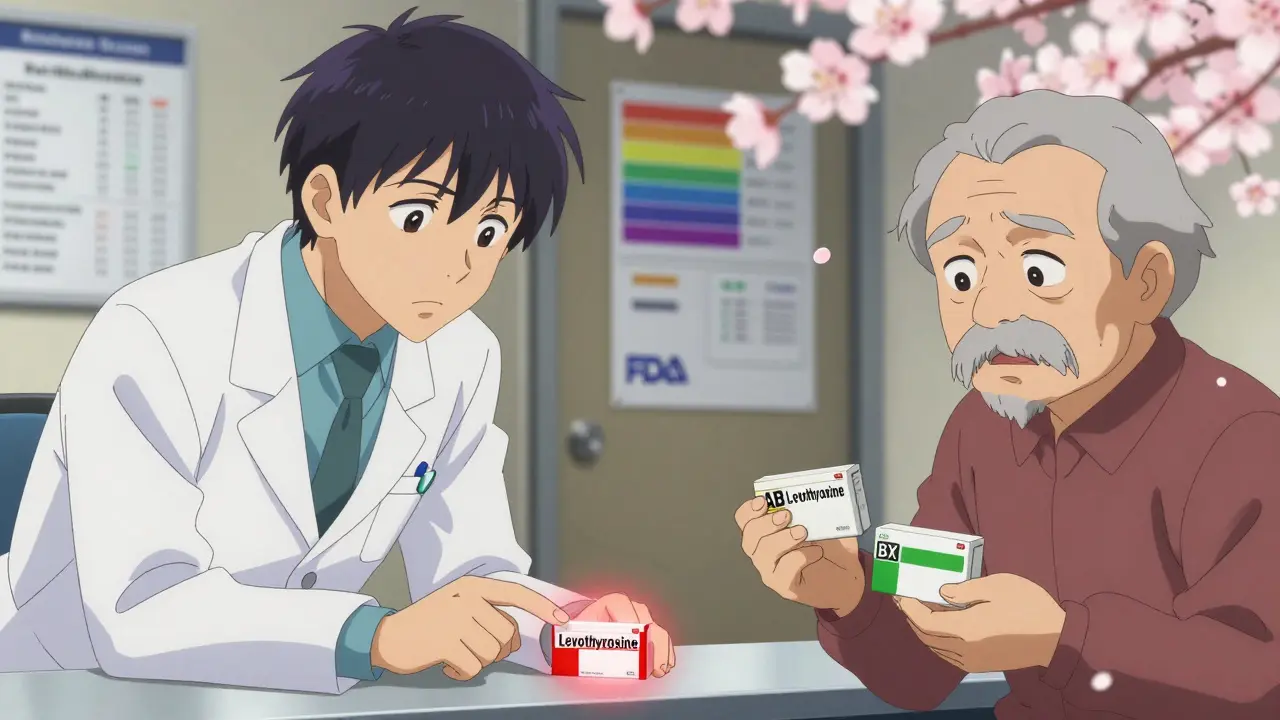
The FDA’s Orange Book lists therapeutic equivalence ratings for every approved generic. Those ratings-like AB, BX, or AT-tell you whether a generic can be substituted without clinical risk. AB means it’s interchangeable. BX means it’s not. And some drugs? They’re so sensitive, even an AB-rated swap can cause problems. Levothyroxine. Warfarin. Seizure meds. These are narrow therapeutic index (NTI) drugs. Small changes in blood levels = big consequences.
Dr. John Smith from the University of Illinois says pharmacists need to know over 1,200 ratings-and they change monthly. You can’t memorize them all. But you can learn how to check them fast. ACPE-accredited courses now teach you how to navigate the Orange Book like a pro. Not just what the codes mean, but how to explain them to patients. How to flag a substitution that looks legal but feels risky. That’s the kind of training that prevents errors before they happen.
Biosimilars Are the New Frontier
Generics aren’t just pills anymore. Biosimilars-complex biologic drugs that mimic brand-name biologics-are flooding the market. They’re not identical. They’re highly similar. And interchangeability isn’t automatic. The FDA has a separate approval path. Only one biosimilar has been declared interchangeable so far for insulin. Another for infliximab. More are coming.
ASHP’s 2023 survey found 78% of hospital pharmacists felt underprepared for biosimilars. Why? Because most CE still treats them like regular generics. But they’re not. They require different handling, storage, and documentation. And state laws on substitution vary. Some states require prescriber consent. Others allow automatic substitution. You need to know your state’s rules. And you need to know how to explain the difference to a patient who’s confused why their biologic just changed name and price.
What Kind of CE Actually Works?
Not all continuing education is created equal. Knowledge-based courses-where you watch a 60-minute lecture and take a quiz-have a 3.2-star rating on CE21. Application-based courses? 4.7 stars. Why? Because they use real cases.
One pharmacist on Reddit shared how a case study on levothyroxine substitution saved her from making a dangerous error. Another said a course on the CREATES Act helped her understand why a generic manufacturer couldn’t supply samples, delaying a patient’s refill. These aren’t hypotheticals. They’re daily realities.
Look for courses that include:
- Case studies with patient profiles and lab results
- Decision trees for substitution under state law
- Interactive Orange Book drills
- Role-playing patient conversations
Pharmacist’s Letter and PocketPrep offer free, ACPE-accredited modules built this way. They’re not flashy. But they work.
How to Make Time for Real Learning
The average pharmacist spends 27.5 hours a year on CE. Only 5.2 of those are on generics. That’s not enough. Experts say pharmacists with 10+ years of experience need 8-10 hours annually just to stay current on generics and biosimilars. Newer pharmacists? 4-6 hours. But most of us are lucky to get 2.
Here’s how to fix it:
- Block 30 minutes every other week. No meetings. No interruptions. Just learning.
- Use your pharmacy’s electronic health record. When you see a generic substitution, pause. Ask: Did I check the Orange Book? Is this an NTI drug? Is the state law clear?
- Join a CE group. Many pharmacies now offer monthly 1-hour sessions on generics updates. If yours doesn’t, start one.
- Track your learning. Use a simple spreadsheet. Note the course, date, hours, and what you learned. You’ll need it for renewal.
CVS Health ran a pilot where pharmacists got real-time alerts in their dispensing system when a high-risk substitution was flagged. The result? A 28% drop in errors. That’s not magic. That’s just better tools and better training.
The Future of Generics CE Is Personalized
AI-powered platforms are starting to change the game. PocketPrep, for example, now tracks what you get right and wrong on quizzes. Then it recommends only the modules you need. No more sitting through 2 hours on DEA forms when you already know them. Just the gaps.
By 2027, IQVIA predicts 35% of pharmacists will use AI-driven CE. That’s up from 12% today. These systems will pull data from your practice-what generics you dispense, what errors you’ve made, what laws your state changed-and tailor your learning. It’s not sci-fi. It’s coming.
But until then, don’t wait for tech to save you. Stay proactive. Check the FDA’s Orange Book once a week. Subscribe to the FDA’s generics newsletter. Read the latest ACPE announcements. Your patients depend on it.
What’s Changing in 2025
ACPE just announced new standards effective January 1, 2025. All generics-related CE must now include:
- Specific content on biosimilar interchangeability
- Training on FDA’s Risk Evaluation and Mitigation Strategies (REMS) for generics
- Updates on the CREATES Act and its impact on drug access
NABP is pushing for 80% alignment across states by 2025. That means less confusion. But right now? You’re still on your own. Know your state’s rules. Know the national standards. And don’t assume what you learned in 2022 is still enough.
Bottom Line: You’re the Last Line of Defense
Generics are cheaper. They’re widely used. And they’re complex. Patients trust you to know the difference between a safe swap and a dangerous one. That trust isn’t earned by your license. It’s earned by your knowledge.
Don’t treat CE as a box to check. Treat it as your professional responsibility. One hour a month. One case study. One update from the Orange Book. That’s all it takes to stay ahead. And if you’re not doing it? You’re not just risking your license. You’re risking your patients’ health.




Generics are the backbone of modern pharmacy but most of us are still flying blind. I saw a patient go into thyroid storm because someone swapped levothyroxine brands without checking the Orange Book. AB rating doesn't mean safe if the patient is sensitive. We need mandatory NTI drug training in every CE cycle. No more excuses.