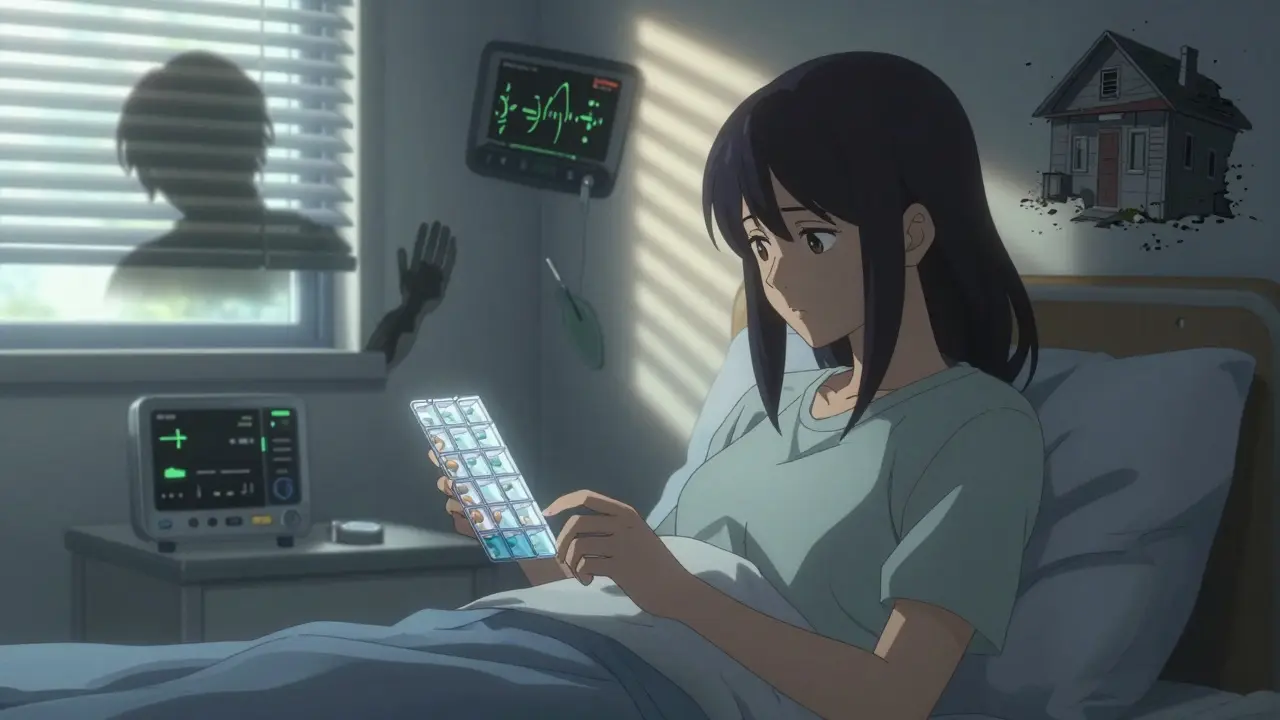
Skipping a pill here and there might seem harmless-maybe you forgot, or the cost was too high, or you felt fine and thought you didn’t need it anymore. But when it comes to prescription medications, especially for chronic conditions, those small choices add up in ways that can change your life-or end it.
What Happens When You Skip Your Medication?
Not taking your meds as prescribed doesn’t just mean your symptoms might come back. It can trigger a chain reaction that leads to hospital visits, permanent damage, or even death. The World Health Organization says about half of all people with long-term illnesses don’t take their medicines correctly. That’s not a small group. That’s millions of people. And for many, it’s not laziness or rebellion-it’s cost, confusion, or fear.Take blood pressure medicine. If you skip doses, your pressure stays high. That quietly damages your heart, kidneys, and brain. Over time, that increases your risk of stroke by up to 50%. One study found that people who missed just one or two doses a week were 30% more likely to be hospitalized than those who took every pill. And it’s not just blood pressure. The same pattern shows up with diabetes, asthma, cholesterol drugs, and even antidepressants.
The Real Cost of Skipping Pills
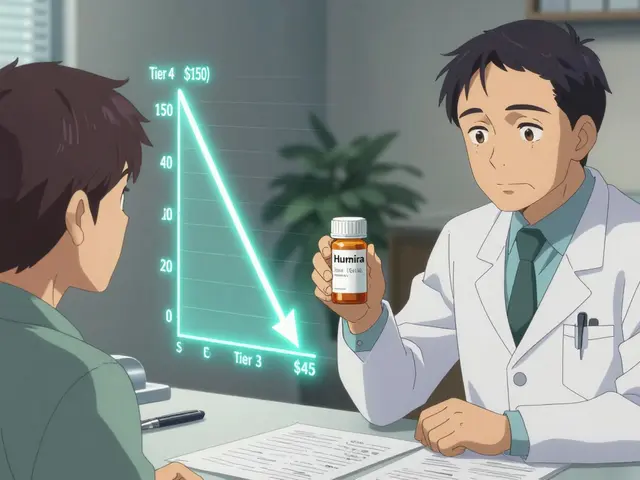
The financial toll isn’t just on your wallet-it’s on the whole system. In the U.S., nonadherence costs between $100 billion and $300 billion every year. That’s money spent on emergency rooms, ICU stays, and repeat hospitalizations that could have been avoided. One study found that 20% of Medicare patients who came back to the hospital within 30 days were there because they didn’t take their meds. Half of those readmissions were directly tied to skipping doses.And here’s the kicker: the average person who doesn’t follow their medication plan ends up paying $5,271 to $52,341 more in healthcare costs over time. That’s not a typo. That’s more than the price of a new car. Meanwhile, out-of-pocket drug costs rose 4.8% in 2021 alone, pushing more people to cut pills to make ends meet. The CDC found that 8.2% of adults under 65 skipped doses because they couldn’t afford them. For older adults, that number is even higher.
Who’s Most at Risk?
It’s not just about forgetting. It’s about systems failing people. Black, Latino, and other minority communities face higher rates of nonadherence-not because they’re less responsible, but because they’re more likely to live in areas with few pharmacies, have less access to doctors, or face distrust in the medical system due to historical discrimination. Language barriers and low health literacy make it harder to understand instructions. A single pill bottle with tiny print and complex directions can feel impossible to follow.Older adults are especially vulnerable. Up to 100,000 preventable deaths each year happen among seniors because they’re juggling five, ten, or even more pills a day. Some take too much by accident. Others skip doses because they don’t understand why they’re taking something that doesn’t make them feel better right away. And when side effects hit-dizziness, nausea, fatigue-they often stop without telling their doctor.
Why People Stop Taking Their Meds
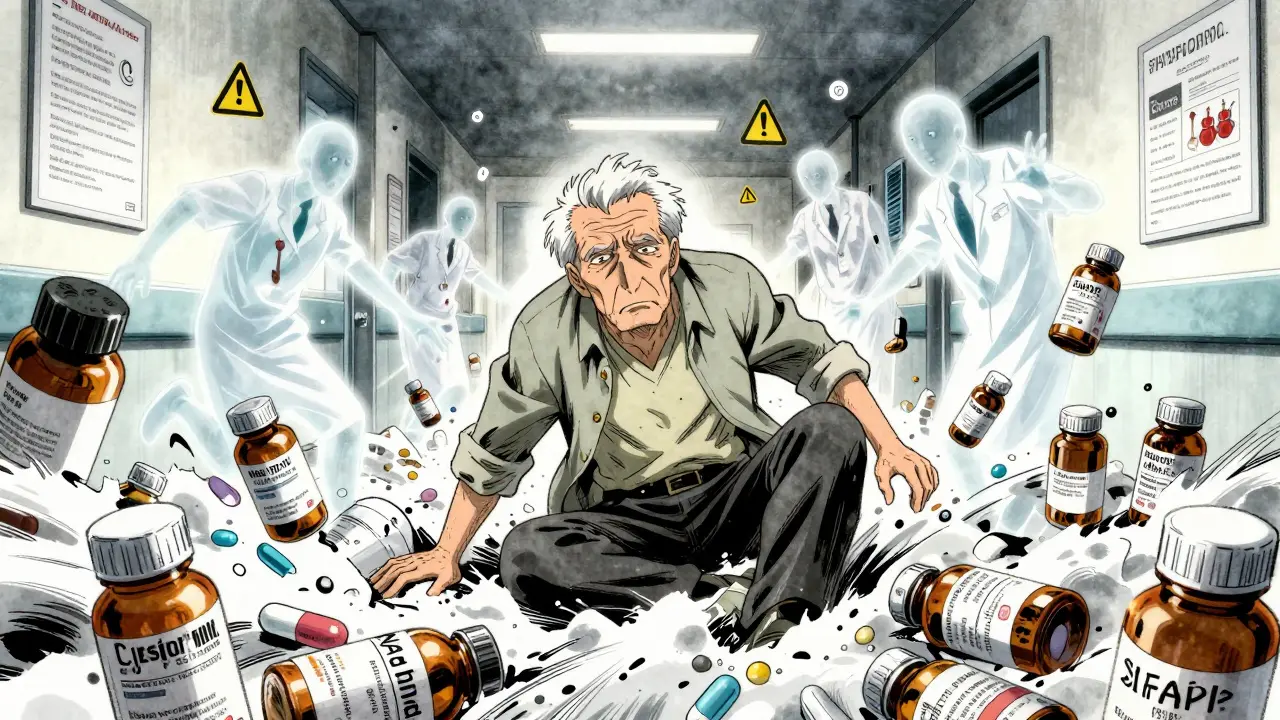
Cost is the biggest reason. But it’s not the only one. Fear of side effects is a close second. Many people stop antidepressants because they feel worse at first. Others quit statins because they think muscle pain means it’s dangerous-without realizing that the pain might be unrelated. Some stop antibiotics when they feel better, not knowing that stopping early can lead to drug-resistant infections.Complex regimens make it worse. If you have to take four different pills at three different times a day, with different food rules, it’s easy to get overwhelmed. One study showed adherence drops sharply after the first month. People start off motivated, but life gets in the way. Work, travel, family emergencies, or even just a bad day can break the routine.
And then there’s communication. Too often, doctors assume patients understand why a drug matters. But if no one explains that your cholesterol pill isn’t just a “nice to have”-it’s preventing a heart attack next year-patients won’t see the point. A simple conversation can change everything.
What Happens When You Stop Cold Turkey?
Some meds are safe to skip for a day or two. Others? Not even close. Blood thinners like warfarin? Missing a dose can lead to a clot. Anti-seizure drugs? One missed pill can trigger a seizure. Immunosuppressants after an organ transplant? Skip even one dose, and your body might start rejecting the new organ. For mental health medications like lithium or antipsychotics, stopping suddenly can cause psychosis, mania, or suicidal thoughts.And it’s not just the immediate danger. Long-term nonadherence rewires your body’s response. Your liver starts processing drugs differently. Your cells become resistant. What once worked might stop working entirely. That’s why some people end up on stronger, more expensive drugs-or need surgery-because they didn’t stick with the simpler, cheaper option.
What Actually Works to Help People Stay on Track
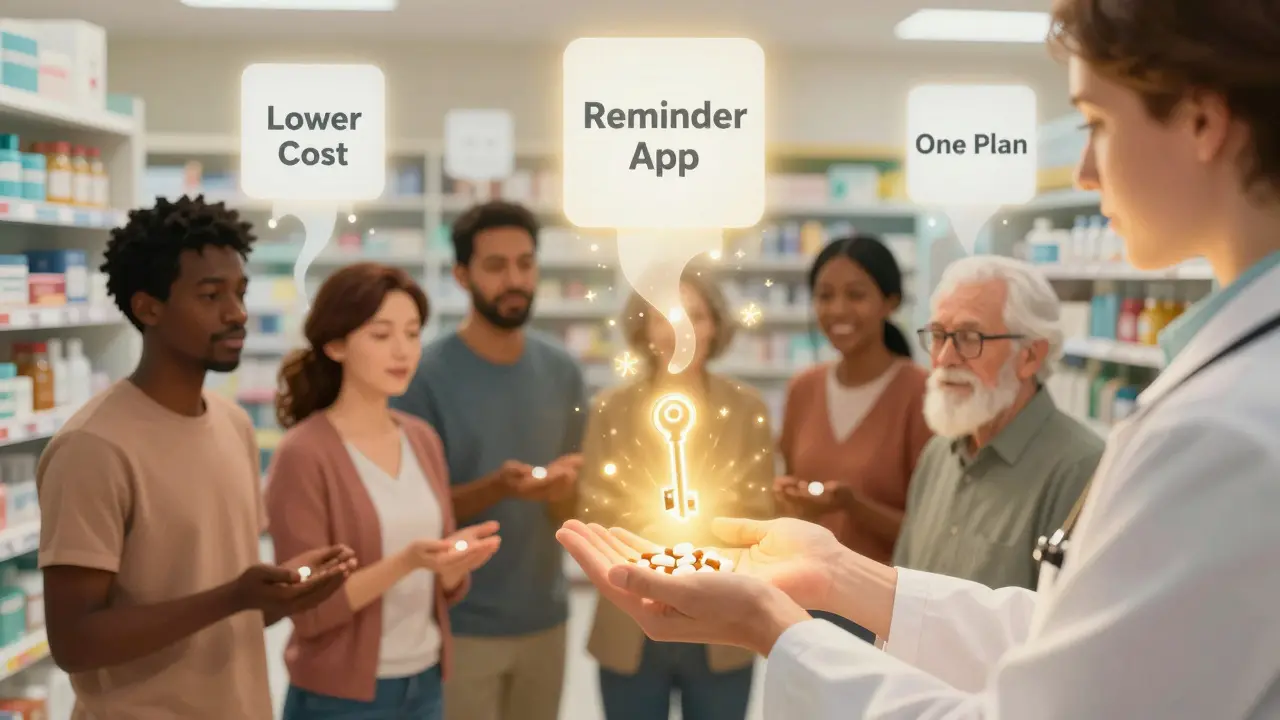
There’s good news: we know how to fix this. And it’s not about shaming people. It’s about making adherence easier.Pharmacists who check in with patients regularly can boost adherence by 15-20%. Simple tools like pill organizers with alarms, or smartphone apps that send reminders, help too. Text message reminders have improved adherence by 12-18% in clinical trials. Packaging that groups daily doses together-like blister packs labeled “Monday AM”-cuts confusion.
Cost matters. Medication therapy management programs, where pharmacists review all your meds and help you find cheaper alternatives, have shown a $3 to $10 return for every dollar spent. That’s because fewer hospital visits mean lower overall costs. Some clinics now offer free or low-cost prescriptions for high-risk patients. Others use AI to predict who’s likely to stop taking their meds-and reach out before they fall off track.
The most effective solution? Integrated care. When your doctor, pharmacist, and nurse talk to each other-and to you-about your meds, adherence goes up. That means no more silos. No more “take this from Dr. Smith” and “take that from Pharmacist Jones.” One team. One plan. One conversation.
You’re Not Alone
If you’ve ever skipped a pill because it was too expensive, too confusing, or because you felt fine, you’re not failing. The system is failing you. But you can fix it-starting today.Ask your pharmacist: “Is there a cheaper version of this?”
Ask your doctor: “What happens if I don’t take this?”
Ask yourself: “What’s one thing I can do to make this easier?” Maybe it’s setting a daily alarm. Maybe it’s asking for a 90-day supply instead of 30. Maybe it’s writing down your reasons for taking it and taping it to your bathroom mirror.
Medications aren’t magic. They’re tools. And like any tool, they only work if you use them right. Skipping doses doesn’t make you lazy. It makes you human. But you don’t have to stay stuck. Help is out there. You just have to ask for it.



Skipping meds isn't laziness-it's a systemic failure. I've seen patients choose between insulin and rent. No one wakes up wanting to die. The data here is brutal but accurate.