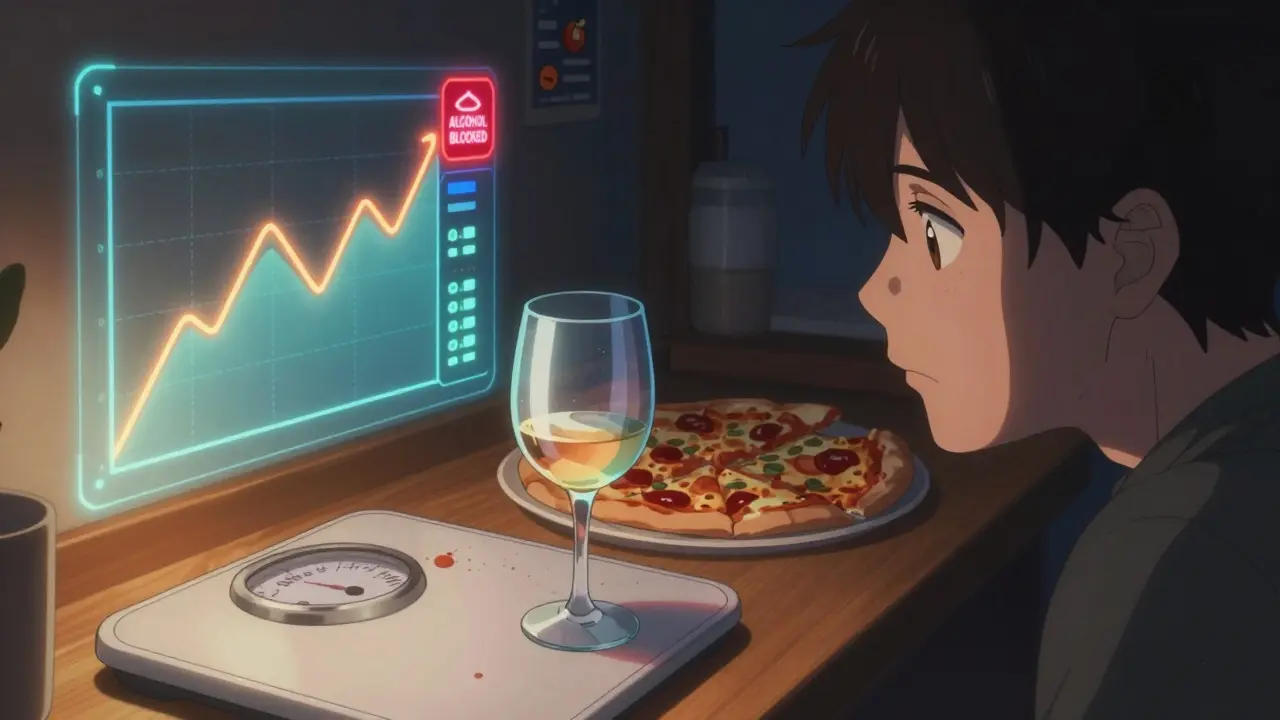
When you're trying to lose weight, alcohol might be the one thing you didn’t think was sabotaging your progress. It’s not just about the calories. It’s about what happens after you drink - how your body processes it, how it changes your hunger, and how it messes with your decisions. If you’ve been stuck on a weight loss plan and can’t figure out why the scale won’t budge, alcohol could be the missing piece.
Alcohol Is High in Calories - But Not Like Food
Alcohol has 7 calories per gram. That’s almost twice as much as protein or carbs (4 calories per gram) and close to fat (9 calories per gram). A 12-ounce beer? Around 150 calories. A 5-ounce glass of wine? About 120 to 125. A shot of vodka? Just 100. Sounds harmless, right? But here’s the catch: these calories don’t come with any nutrients. No protein. No fiber. No vitamins. Just energy.
That’s why experts call them “empty calories.” Unlike a banana or a chicken breast, alcohol doesn’t fill you up. Your body doesn’t register it the same way. You can drink a glass of wine and still feel hungry an hour later. Meanwhile, your body is busy breaking down the alcohol instead of burning fat.
Your Body Stops Burning Fat When You Drink
When you consume alcohol, your liver treats it like a toxin. It has to clear it out - fast. So, it pauses everything else, including fat burning. Research from the University of California San Diego shows that for every standard drink, your body stops oxidizing fat for about 1 to 2 hours. During that window, any extra fat you’ve eaten - even from your dinner - is more likely to be stored.
Studies in the American Journal of Clinical Nutrition found that fat storage increases by 30-40% after alcohol intake. That’s not a small bump. It’s a metabolic shift. And it doesn’t matter if you’re drinking light beer or a neat whiskey - the effect is the same. Your body doesn’t care about the type of alcohol. It only cares that it’s ethanol.
Alcohol Makes You Hungrier - And Poorer at Choosing Food
Ever notice that after a few drinks, you suddenly crave fries, pizza, or a midnight snack? That’s not just a craving. It’s biology.
Multiple studies, including one from the European Journal of Clinical Nutrition, show that alcohol increases appetite in 78% of people. In controlled experiments, people ate 20% more food after drinking alcohol compared to when they had a non-alcoholic drink. And it’s not just quantity - it’s quality. Alcohol lowers your self-control. You’re more likely to choose high-fat, high-sugar foods.
UC San Diego’s 2022 research found that alcohol increases late-night snacking by 45%. If you’re trying to stick to a calorie budget, that’s like adding a whole extra meal - without realizing it. And here’s the kicker: most people underestimate how many calories are in their drinks. One study showed drinkers misjudged cocktail calories by 47% on average.
How Much Is Too Much? The Numbers Don’t Lie
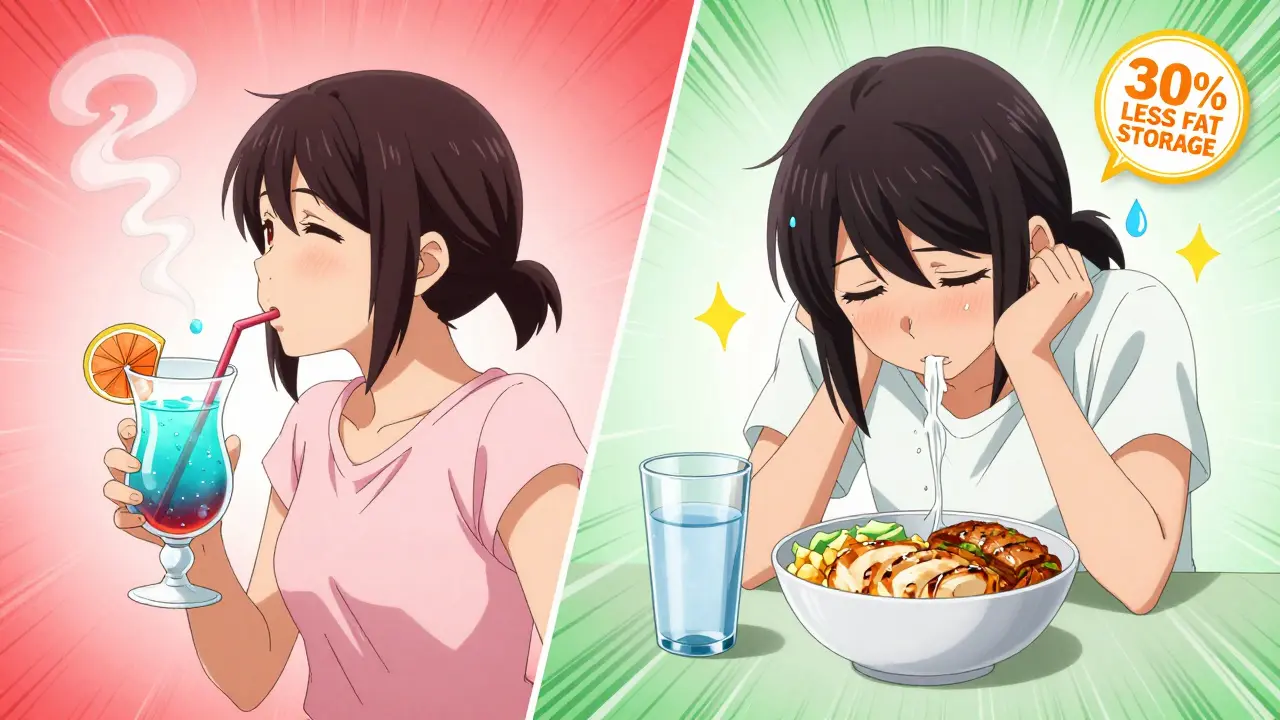
Let’s put this in perspective. A pint of lager? About 180-200 calories - roughly the same as a slice of pepperoni pizza. A large glass of wine (250ml)? Around 220 calories - equal to a small ice cream sundae. Now imagine having two drinks on Friday night. That’s 400-500 calories gone. Add in the extra food you eat because you’re tipsy? You’re easily over 700 extra calories in one night.
The National Health and Nutrition Examination Survey (NHANES) in 2022 found that people who drink 8 or more drinks per week have 23% higher rates of obesity than non-drinkers - even when their overall diet is similar. And a 2021 study tracking 12,500 adults over five years showed that simply cutting back from heavy to moderate drinking (from more than 14 drinks a week to 7 or fewer) led to an average weight loss of 3.7 pounds in a year - with no other changes.
That’s not magic. That’s math.
Strategies That Actually Work
You don’t have to quit alcohol completely to lose weight. But you do need to be smarter about it. Here’s what works, based on real data:
- Switch to lower-calorie options. Vodka or gin with soda water and lime? Around 100 calories. Skip the sugary mixers like tonic, juice, or syrups. A piña colada can hit 500 calories. That’s not a drink - that’s dessert.
- Set alcohol-free days. The Iowa Weight Loss Center found that people who go 3-4 days without alcohol each week cut 750-1,200 calories per week. That’s over 3,000 calories a month - enough to lose nearly a pound of fat.
- Watch your portions. Pouring wine at home? You’re likely serving 30% more than a standard 5-ounce glass. That’s 35 extra calories per glass. Use a measuring cup once. Then pour like that every time.
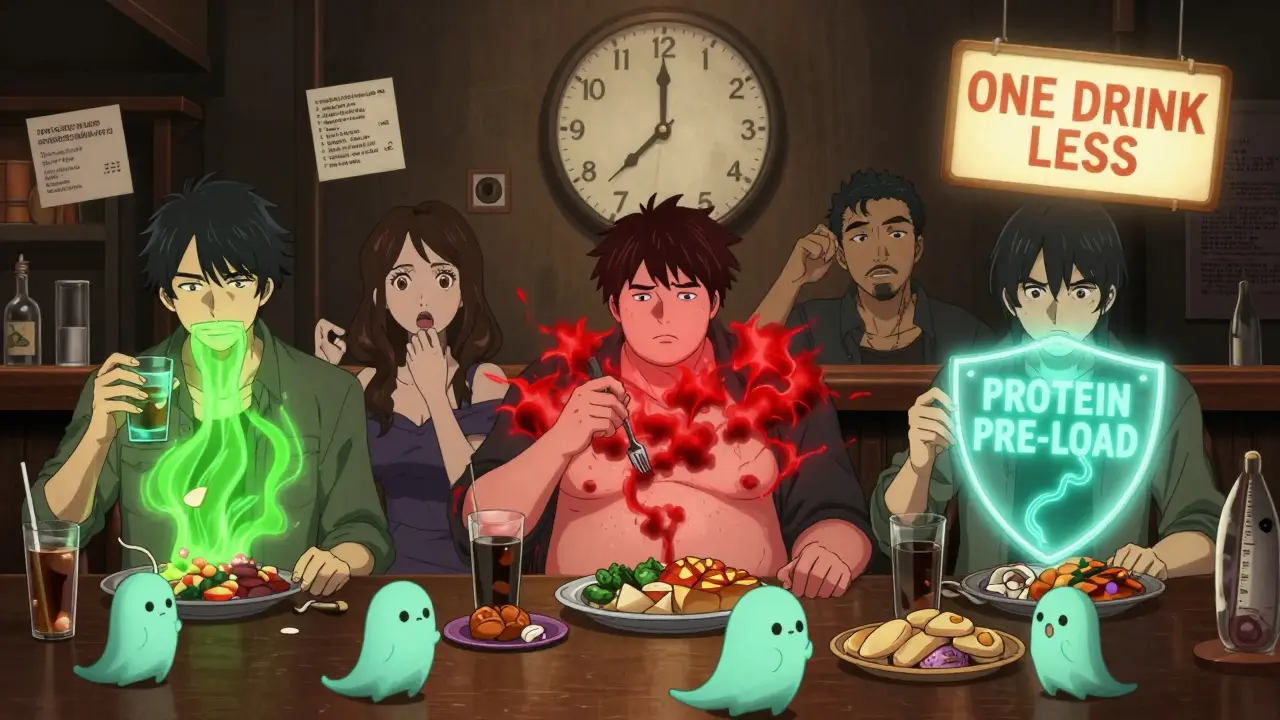
- Pre-load with protein. Eat 20-30 grams of protein before you drink - think chicken, eggs, or a protein shake. Research from the Cleveland Clinic shows this reduces food intake after drinking by 18%. It helps your body feel full before alcohol messes with your hunger signals.
- Track your drinks. Most people don’t. Use an app. Write it down. Include mixers. Alcohol calories add up fast, and if you’re not tracking them, you’re flying blind.
Why Some People Lose Weight - And Others Don’t
Not everyone responds the same way. Some people can have a glass of wine a few times a week and still lose weight. Others see the scale move the moment they cut back.
Why? It’s not just about willpower. Research from Nutrients in 2022 identified three different metabolic types when it comes to alcohol. Some people clear it quickly. Others store more fat after drinking. Genetic differences play a role - and future weight loss plans may soon include metabolic testing to guide alcohol recommendations.
But here’s what we know for sure: if you’re trying to lose weight and you’re drinking regularly, reducing alcohol is one of the most effective changes you can make. A 2022 trial in Obesity Science & Practice found that people who stopped drinking alcohol lost 3.2% more body fat over 12 weeks than others who cut the same number of calories from food.
Long-Term Success Requires More Than Just Cutting Out Drinks
Here’s the reality: if you stop drinking and go back to your old habits, the weight comes back. A 2023 study in the International Journal of Obesity found that 68% of people who lost weight by cutting alcohol regained it within a year.
But those who combined alcohol reduction with structured meal planning? 82% kept the weight off. That’s the key. Alcohol isn’t the only problem - it’s part of a pattern. If you’re drinking because you’re stressed, bored, or socializing, you need to replace the habit, not just remove the drink.
That’s why the best strategy isn’t about banning alcohol. It’s about making it intentional. Choose when, how much, and what you drink. Pair it with protein. Avoid late-night snacking. Stay consistent. And don’t let a single drink derail your whole week.
What’s Changing Now
More people are noticing. Google searches for “low calorie alcoholic drinks” have gone up 65% since 2019. The global market for low-alcohol beverages is expected to hit $19.2 billion by 2027. Brands are responding with lower-sugar, lower-calorie options. But the science hasn’t changed: alcohol still disrupts fat burning and increases appetite.
For now, the simplest, most effective move is this: cut back. Not tomorrow. Not next week. Start today. Skip one drink. Swap one cocktail for soda water. Track your calories. See how your hunger changes. You might be surprised how much progress you make - not because you’re starving yourself, but because you stopped giving your body a reason to hold onto fat.
Does alcohol make you gain belly fat specifically?
Yes. When your body processes alcohol, it prioritizes breaking it down over burning fat. This causes fat - especially around the abdomen - to be stored more easily. Studies show that regular drinkers often have higher waist-to-hip ratios, even if their overall weight doesn’t change much. This is why alcohol is often linked to what’s called a "beer belly." It’s not just about the calories - it’s about how your body handles them.
Can I still lose weight if I drink alcohol every weekend?
It’s possible, but unlikely unless you’re very strict with the rest of your diet. Two drinks on Friday and Saturday night could add 500-700 extra calories. Add in the extra food you eat afterward, and you’re easily over 1,000 weekly surplus calories. That’s about 1 pound of fat per month. If you’re eating at a deficit the rest of the week, you might still lose weight - but slowly. Cutting alcohol makes weight loss faster and easier.
Is wine better than beer for weight loss?
Not necessarily. A 5-ounce glass of wine has about 120-125 calories. A 12-ounce beer has 150. But beer often comes in larger servings - a pint is 16 ounces and can hit 200+ calories. Wine also doesn’t fill you up the way beer’s carbonation might, so you may end up eating more after it. The real difference comes down to what you pair it with. A glass of wine with a salad? Better than a pint of beer with chips.
Do low-alcohol drinks help with weight loss?
Yes - but only if they’re also low in sugar. Some "light" beers and low-alcohol wines still have added sugars or carbs to improve flavor. Always check the label. A drink with 4% ABV and 5g of sugar can have more calories than a 5% ABV drink with no added sugar. The goal isn’t just less alcohol - it’s fewer total calories and no hidden sugars.
How long does it take to see weight loss after quitting alcohol?
Many people notice changes within 1-2 weeks. The first drop is often water weight - alcohol causes dehydration and bloating. After that, fat loss starts if you’ve cut the calories. In studies, people lost 1-2 pounds in the first week of cutting alcohol, then continued losing 0.5-1 pound per week if they didn’t replace the calories with other foods. The biggest change usually happens in the first month.



sooo i drank a whole bottle of wine last night and then ate a whole pizza and i thought ‘well i’m already ruined so why not’ and then i woke up and the scale said +3 lbs and i cried into my oat milk latte. alcohol is the devil. also i can’t spell. sorry.